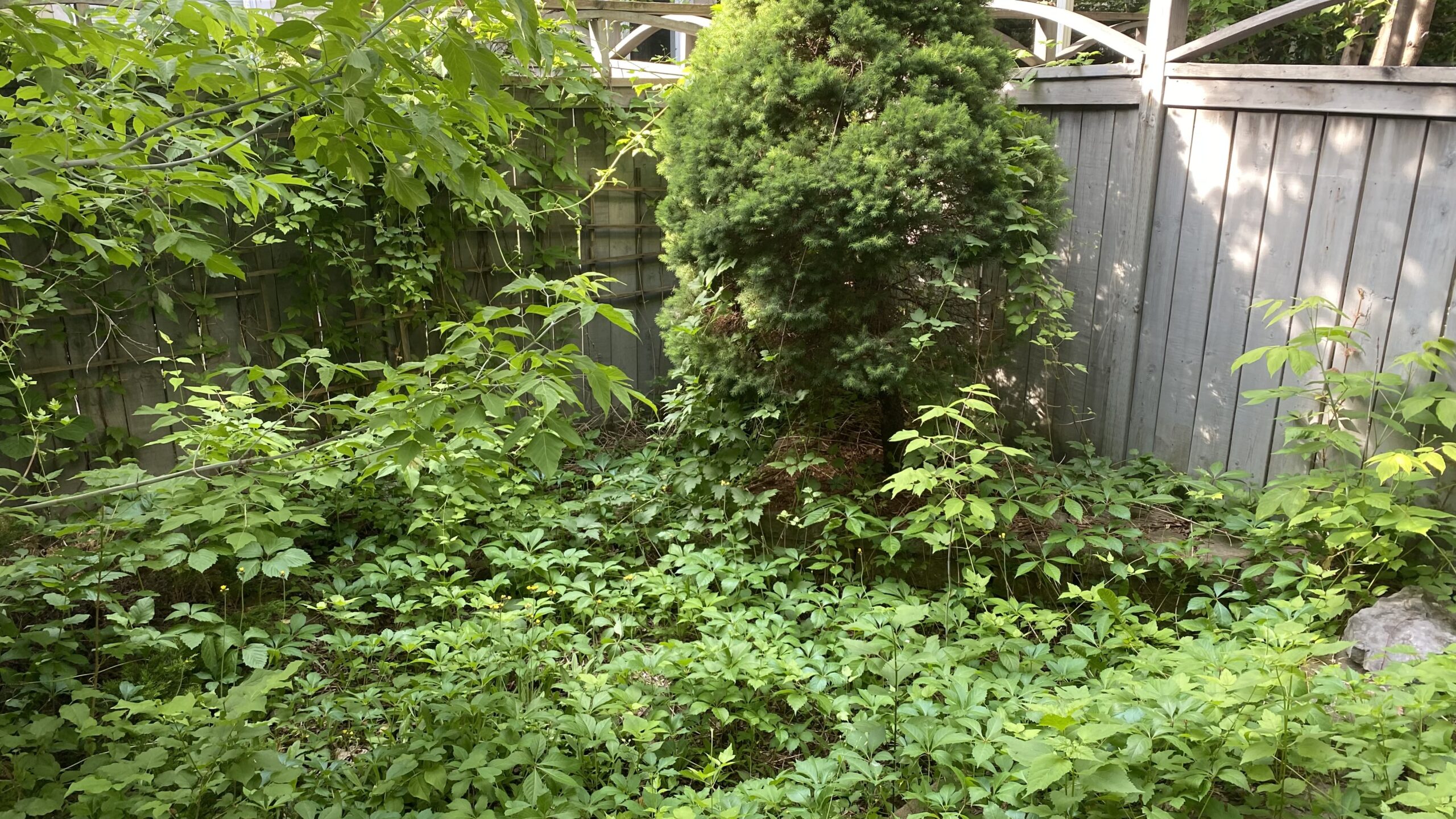
Revive Neglected Richmond Gardens: Spring Rehab Plan
Is your garden looking tired after winter? Let us help bring it back to life!
Request Your Free Quote Today- Assess winter damage & clear surface debris.
- Perform essential cleanup: rake leaves, prune dead/damaged wood, tackle early weeds.
- Improve soil with organic matter, especially for clay.
- Revitalize lawn: dethatch, aerate, and overseed if needed.
- Choose and plant hardy, zone-appropriate perennials and shrubs.
Introduction: Waking Up Your Richmond Garden From its Winter Slumber
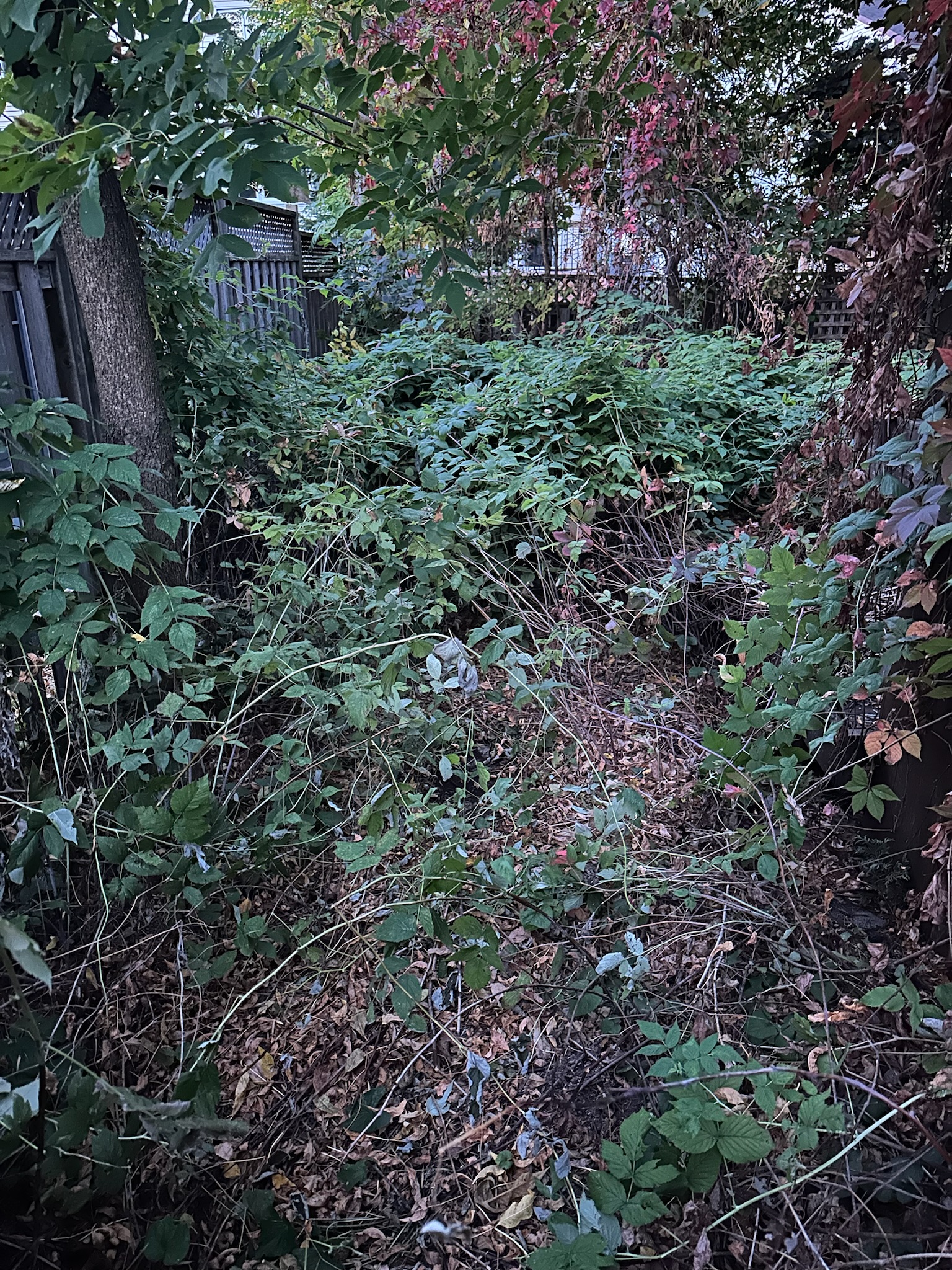
Okay, let's face it. After another long Ottawa winter, does your Richmond garden look a little... neglected? Maybe like it pulled the muddy blankets right over its head and hit snooze one too many times? Don't worry, you're definitely not alone! Many yards, whether here in Richmond, over in nearby Manotick, or across the capital, are showing the signs of winter wear and tear. Those soggy leaves, sad-looking shrubs, and that general feeling of meh? It happens to the best of us!

But the good news is, spring is officially shaking things up, and it’s the perfect time to gently wake up your outdoor space. Think of this as your friendly guide to a simple spring garden rehab. We'll walk through practical landscaping tips and easy steps to banish the winter blues from your yard, drawing on know-how suited right here for our local climate. Let's get ready to trade those snow boots for gardening gloves and bring your slice of paradise back to life!
Step 1: The 'Archaeological Dig' - Assessing Your Garden Battlefield
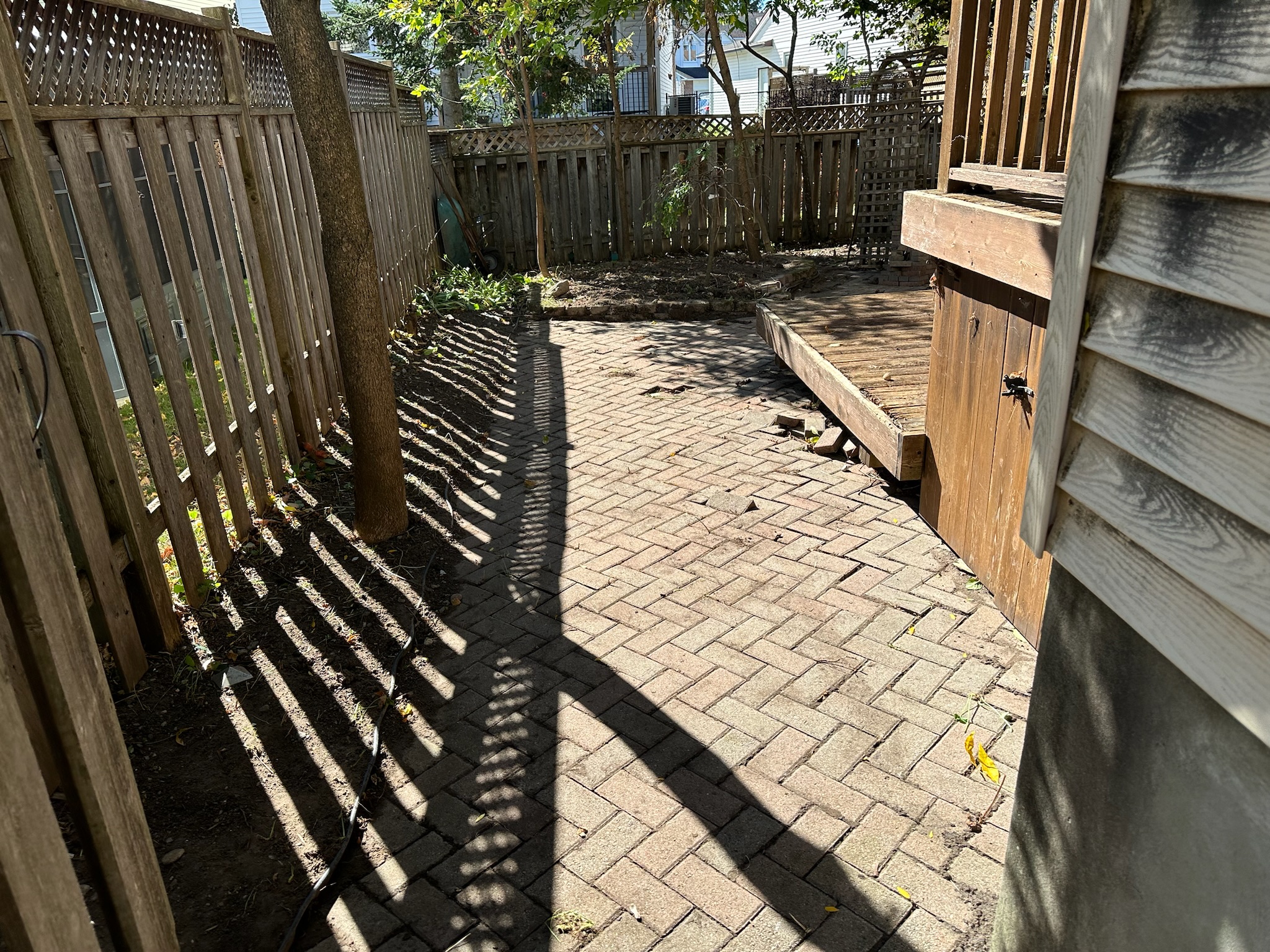
Okay, gloves on? Trowel ready? Welcome to Step 1, what we affectionately call the 'Archaeological Dig' – or maybe assessing your garden battlefield feels more accurate after a long Ottawa winter! Before you start planting or pruning with wild abandon, we need to figure out exactly what we're working with. Think of yourself as a garden detective, surveying the scene after the great thaw.
This initial assessment is super important. It helps you understand what survived the winter chill, what needs urgent care, and where potential problems might be hiding. Jumping in without a plan is like trying to bake a cake without checking if you have flour – could get messy! Our lovely Ottawa winters, with their freeze-thaw cycles, heavy snow load, and dreaded salt spray (especially noticeable in denser neighbourhoods like Nepean or Barrhaven), can leave behind specific challenges.
Let’s grab our metaphorical magnifying glass and start the dig:
- Clear the Surface: Gently rake away the soggy leaf litter, fallen twigs, and any old, matted mulch. This isn't just tidying up; it's uncovering the actual ground level and letting sunlight and air reach the soil and plant crowns. Be gentle around emerging perennial shoots!
- Structural Integrity Check: Give your fences, trellises, window boxes, and raised beds a once-over. Did the frost heave posts? Did heavy snow cause any buckling or breaks? Repairing these now saves headaches later.
- Plant Patrol: Inspect your woody friends – trees and shrubs. Look for branches broken by snow or ice. Check perennials for signs of life (swollen buds, green shoots). Gently scratch the bark on shrubs or trees you're unsure about; green underneath means life! Keep an eye out for lingering signs of trouble, like potential diseases that survived the winter. For example, if you struggled with roses last year, understanding Metcalfe rose black spot recovery strategies starts with checking for signs now. Also check for lingering signs of stress from previous seasons – knowing garden hail damage recovery tips can help identify plants needing extra TLC from past storms.
- Soil Situation: How does the ground feel? Is it still soggy in spots, indicating poor drainage? Or does it feel hard and compacted, like walking on pavement? Heavy snow and ice can really pack things down, especially the heavy clay soil common around Ottawa, like in Osgoode. If your soil feels like concrete, you might need to look into how to revive compacted clay soil for healthier plants. Compaction isn't just a clay soil issue; it can happen anywhere, even in areas like Embrun. Learning about garden soil compaction repair tips can make a huge difference for root growth this season. Notice any whitish crust near walkways or driveways? That could be salt damage.
- Critter Clues: Look for evidence of winter visitors – vole tunnels under the snow (now revealed), nibbled branches from deer or rabbits, especially common on larger lots like those found in Greely.
Once your 'dig' is complete, you'll have a much clearer picture of your garden's condition and a priority list for your spring cleanup campaign. If this initial assessment feels more like excavating a lost city than a simple garden tidy, don't sweat it! Sometimes calling in reinforcements is the smartest move. Check out the various professional landscaping and cleanup services available to lend a hand right here in the Ottawa area.
Step 2: Operation Clean Sweep - Banishing Winter Debris
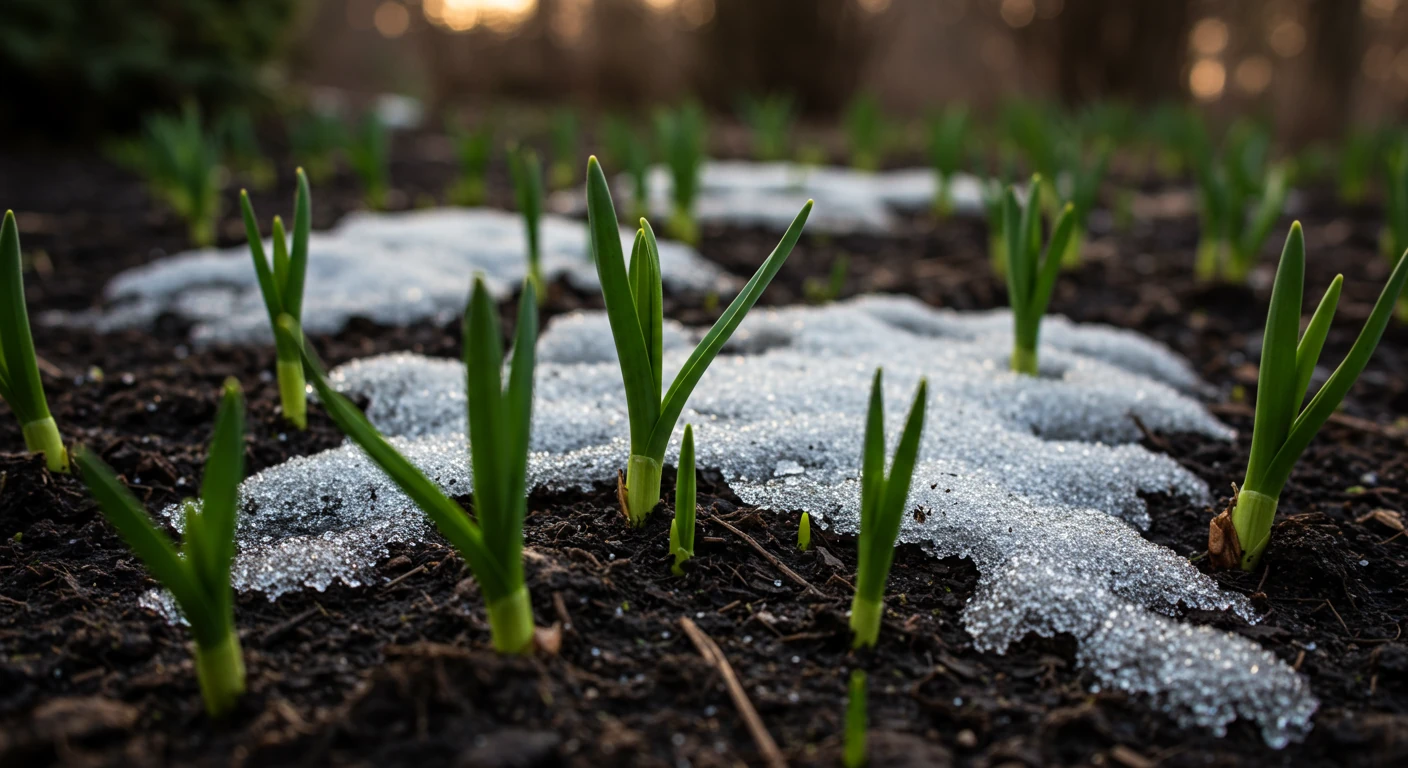
Okay, assessment complete? Great! Now for the fun part – Operation Clean Sweep! This is where we roll up our sleeves and politely, but firmly, evict winter's leftover mess. Think of it as giving your garden a much-needed spa day, starting with exfoliation. It's time to break up with last year's soggy leaves and give your plants room to breathe. Trust us, your emerging tulips and crocuses will thank you!
Here’s the game plan for banishing that winter debris:
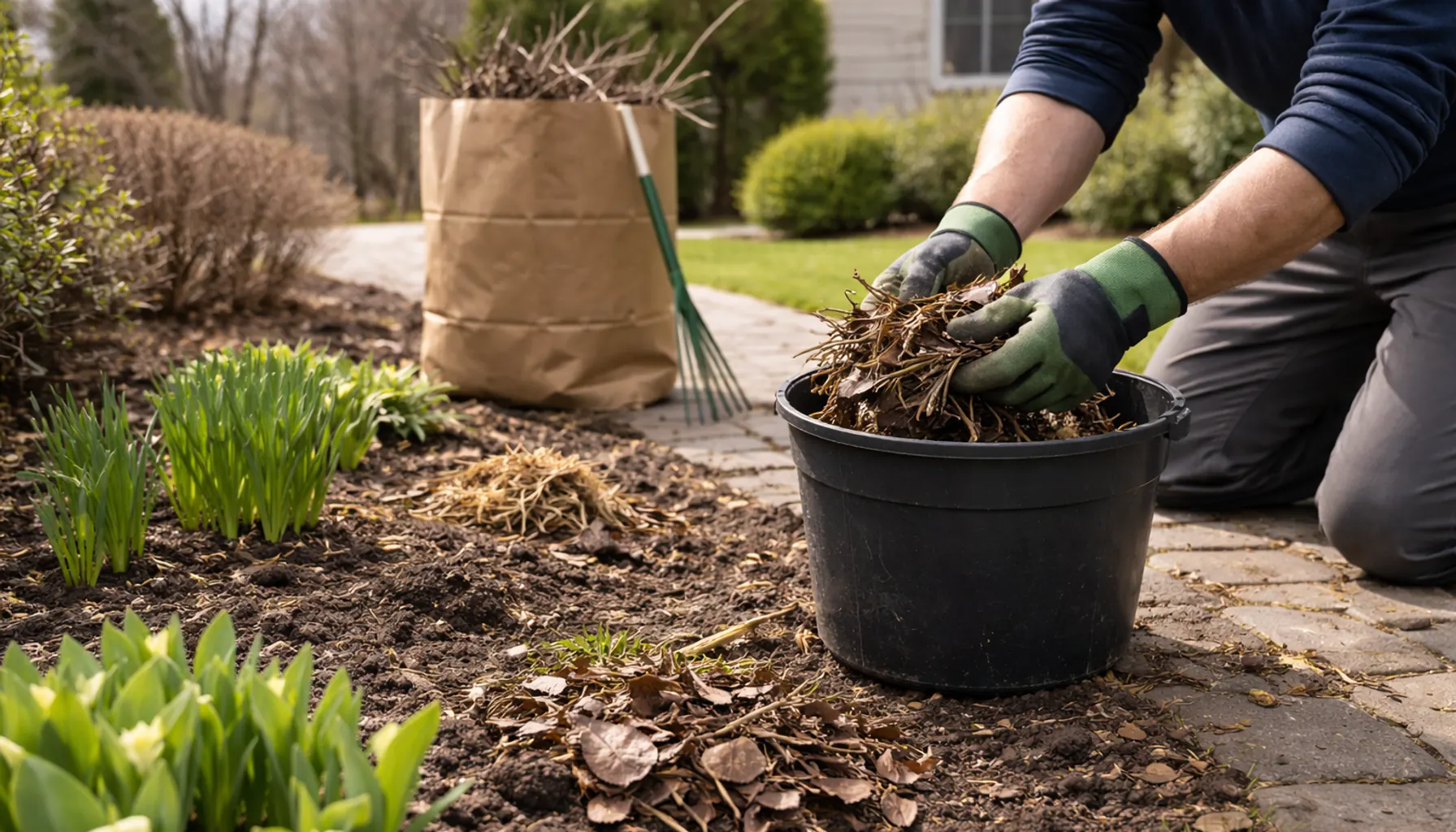
- The Great Leaf Vanquishing: Grab a leaf rake (the flexible kind, not the stiff garden rake just yet!) and gently gather all those decaying leaves, fallen twigs, dead plant stems from last year's perennials, and miscellaneous bits that winter blew in. Getting this matted layer off is crucial – it lets vital sunlight and air reach the soil surface and the crowns of your emerging plants. This helps prevent nasty fungal diseases from setting up shop and discourages sleepy pests from waking up in your flower beds. Wondering what to do with the mountain you've gathered? That's where the trusty City of Ottawa Green Bin program comes in! Bag it up properly (check City guidelines, usually paper yard waste bags are needed) or toss it directly in your green bin for curbside collection. It's recycling, garden style! For larger properties, like those you might find out near Vernon, this leaf and debris collection can feel like a major workout. If the debris pile seems more daunting than delightful, consider calling for backup from a professional Vernon property cleanup service.
- Strategic Snipping (The 3 D's): Remember those broken or suspicious-looking branches you spotted during your Step 1 assessment? Now's the time for some basic cleanup pruning. Focus only on removing the Dead, Damaged, or Diseased wood – the classic "3 D's" of pruning. Use clean, sharp bypass pruners or loppers for clean cuts. Snip off any branches clearly snapped by snow load or ice, or those that are obviously dead (try the scratch test – no green underneath means it's likely gone). Super Important Tip: Resist the urge to do major shaping on your spring-flowering shrubs (like Forsythia or Lilacs) right now! You could accidentally cut off this year's flower buds. This initial trim is purely about plant health and removing hazards.
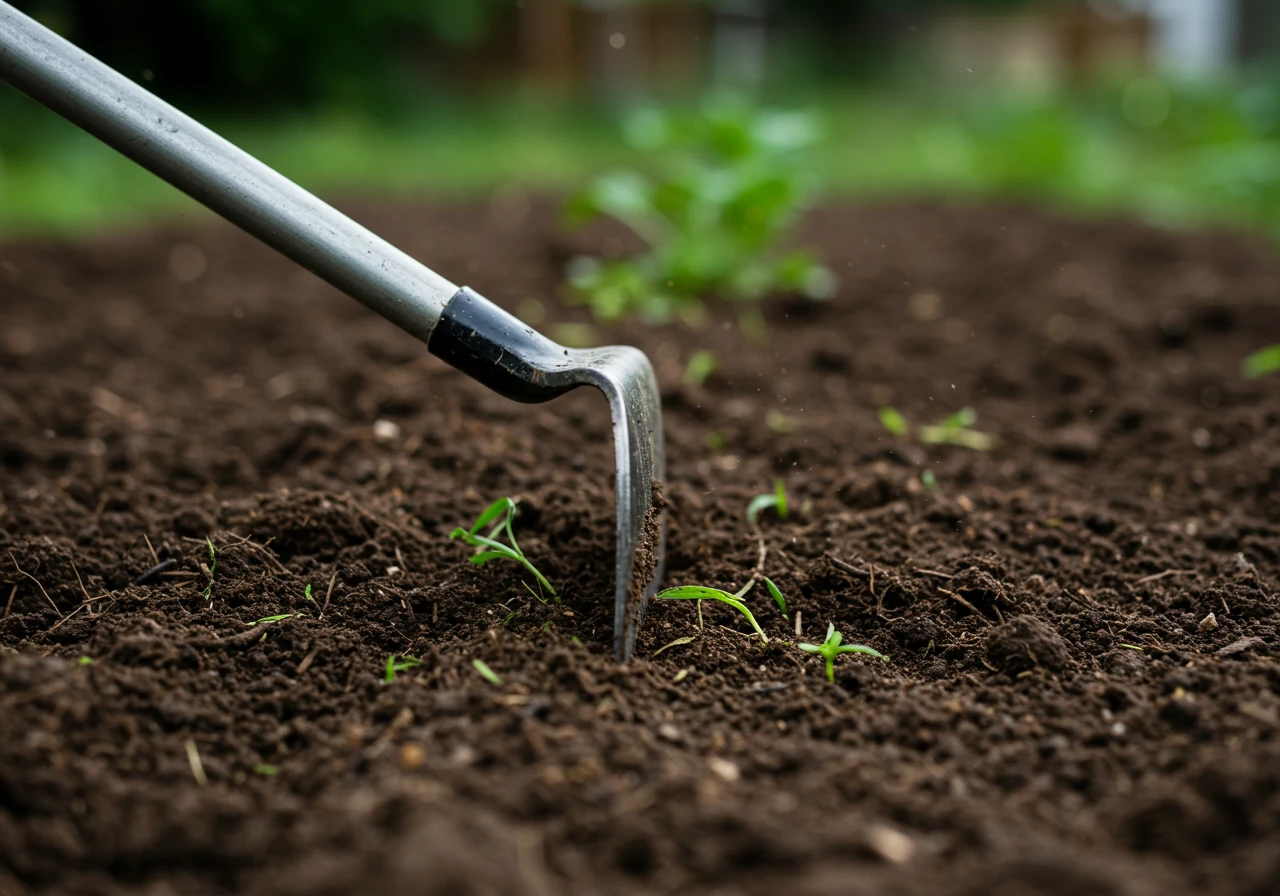
- Weed Warriors, Assemble!: Ah, weeds. They’re the uninvited guests who always seem to show up first to the spring garden party. You’ll likely spot eager beavers like dandelions, maybe some chickweed or early grasses, popping up in any bare spots. The good news is that tackling them now, while the soil is still cool and relatively moist, is usually much easier than waiting until they're firmly established. Gently pull them out, making sure you get as much of the root system as possible. A hand trowel or a specific dandelion weeder tool can be your best friend here.
Taking care of these cleanup tasks makes a huge visual difference right away and sets the stage for healthier plant growth all season long. While we're focused on removing unwanted debris now, thinking ahead about refreshing your garden beds with new mulch or adding decorative stone later involves careful landscape material selection. Getting a really thorough property clean up done in the spring prevents bigger headaches and more work down the road. If tackling this whole process feels like too much heavy lifting, remember that comprehensive yard maintenance services are available right here in the Ottawa area to help whip your garden into shape efficiently. Completing Operation Clean Sweep definitely deserves a mental high-five and maybe a peek at our virtual thank you card for inspiration on appreciating a job well done!
Step 3: Getting Your Hands Dirty - Prepping Soil and Beds
Okay, you've banished the winter mess (high five!), and your garden beds are looking cleaner. Now it's time for Step 3: Getting Your Hands Dirty - Prepping Soil and Beds! Think of this as giving your plants the best possible foundation to thrive. Good soil is like the pantry for your plants – stocked with goodies and easy for roots to explore. Neglect the soil, and well, your plants might just order takeout (which, sadly, isn't a thing for them).

Why Bother with Soil Prep?
After a long Ottawa winter, especially with our freeze-thaw cycles and heavy snow melt, soil can get seriously compacted. This is particularly true for the heavy clay soil common in many areas, including parts of Richmond and Metcalfe. Compacted soil makes it tough for roots to grow, water to drain properly (hello, soggy roots!), and air to circulate. Prepping your soil helps loosen it up, improve drainage *and* water retention (yes, good soil does both!), and infuse it with the nutrients your plants crave.
Timing is Everything (Seriously, Don't Mud Wrestle!)
Before you grab that shovel with gusto, do the squeeze test. Grab a handful of soil and squeeze it firmly. Does it form a sticky, muddy ball that holds its shape? Stop right there! Working wet soil, especially clay, can ruin its structure, creating hard clumps that are a nightmare later. Wait a few days for it to dry out a bit. If the squeezed ball crumbles easily when you poke it, you're good to go! Patience now saves headaches later.
The Magic Ingredient: Organic Matter
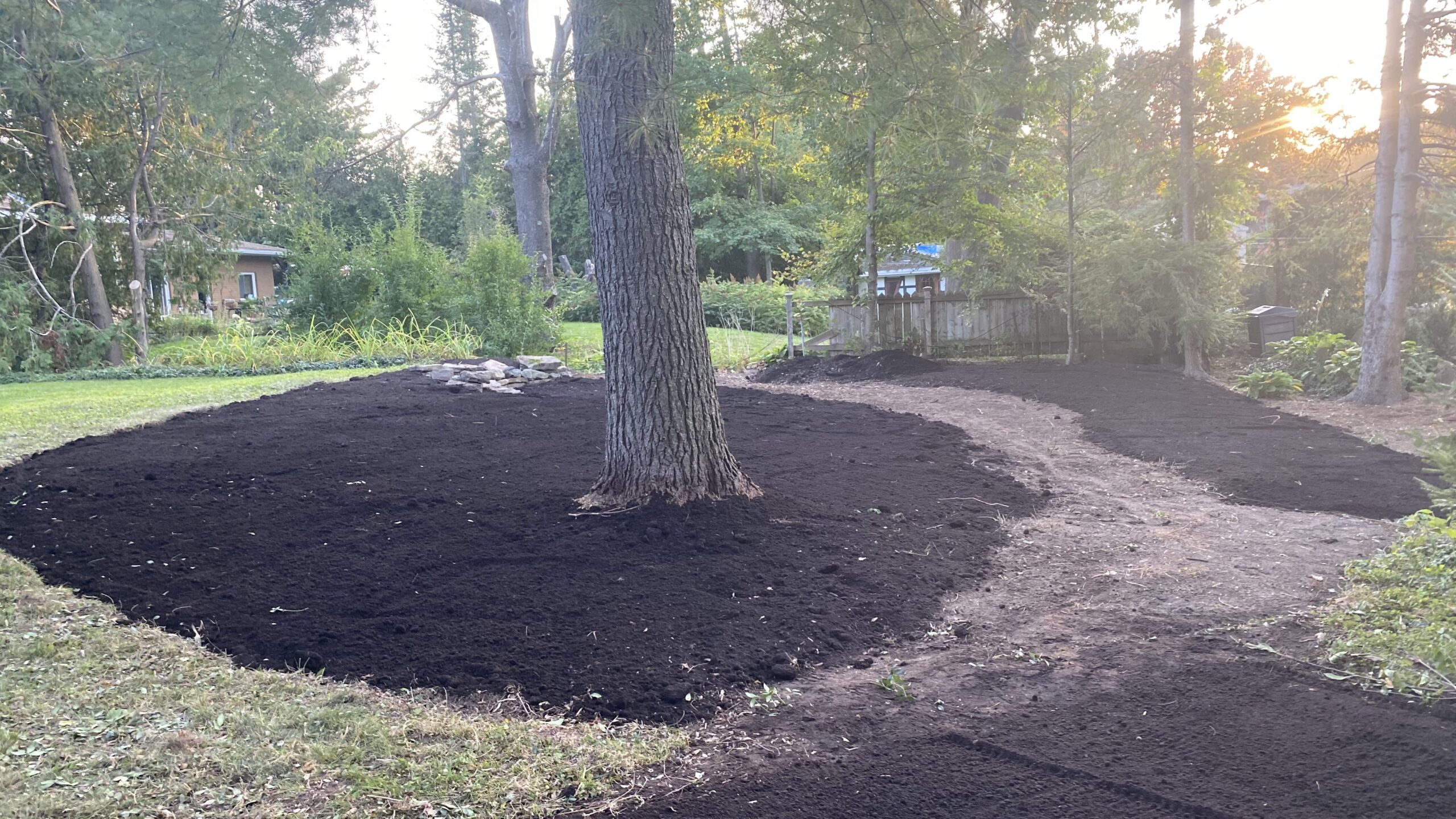
If there's one secret weapon in gardening, it's organic matter. Compost, well-rotted manure, leaf mold – this stuff is black gold! Adding organic matter is the best way to improve almost any soil type found around Ottawa:
- For Heavy Clay Soil: Often found around here, clay particles are tiny and pack tightly. Organic matter helps separate these particles, improving drainage and aeration so roots don't drown or suffocate. Think of it as adding little sponges and tunnels.
- For Sandy Soil: Less common, but sandy soil lets water and nutrients drain away too quickly. Organic matter acts like a sponge here too, helping the soil hold onto moisture and food for your plants.
Using compost made from your own yard waste (hello, Green Bin contributions!) or sourcing well-aged manure locally are fantastic, eco-friendly options. When considering amendments, thinking about the right landscape material selection ensures you're adding beneficial components, not just filler.
Getting Down to It
You don't need to till your soil into powder. Gently turn over the top 6-8 inches using a garden fork or spade, incorporating a generous layer (a few inches) of your chosen organic matter. If you have established perennial beds, you can simply top-dress by spreading the compost around the plants – the worms and weather will help work it in. This gentle approach helps maintain the soil's natural structure. Understanding local soil conditions is key, something we pride ourselves on; you can learn more about us and our local expertise.
Improving your soil is fundamental to stunning garden transformations. Healthy soil leads to vibrant plants, which makes the whole yard look fantastic – a great complement to dedicated lawn care efforts. Once your soil is amended and beds are shaped, the next logical step is applying a fresh layer of mulch and defining those edges, which is covered in our guide to professional mulching and edging techniques.
So, embrace getting a little dirt under your nails! Prepping your soil now sets the stage for a beautiful, thriving garden all season long.
Step 4: Lawn CPR - Resuscitating Your Patch of Green
Okay, garden beds are prepped, debris is banished... but what about the main event, the lawn itself? If your patch of green looks less like a lush carpet and more like it barely survived a rock concert, it's time for Step 4: Lawn CPR - Resuscitating Your Patch of Green! Don't worry, even lawns that look like they went twelve rounds with winter can often bounce back with a little targeted care.

After a typical Ottawa winter, with heavy snow pushing down for months and those lovely freeze-thaw cycles, your lawn soil can get seriously compacted. Think of it like trying to breathe with someone sitting on your chest – not fun for grassroots! Plus, a thick layer of dead grass stems and roots, called thatch, can build up, acting like a waterproof barrier preventing water, air, and nutrients from reaching the soil.
Here’s how we perform lawn resuscitation:
- Give it Breathing Room (Dethatching): If that thatch layer is thicker than about half an inch, it’s choking your lawn. You can rent a power rake (dethatcher) or use a stiff-tined thatch rake for smaller areas. Rake vigorously to pull up that dead material. It looks messy initially, but it’s crucial for letting the good stuff in. This kind of heavy lifting can feel like a big job, almost like needing a dedicated Marionville property cleanup service if the area is large or the thatch is severe!
- Deep Breaths (Aeration): This is key for compacted soil, especially common around here. Core aeration involves pulling small plugs of soil out of the lawn. It sounds dramatic, but these holes allow oxygen, water, and fertilizer to penetrate deep into the root zone, encouraging stronger growth. It’s a bit like essential soil preparation for garden beds, but for your turf! You can rent an aerator or hire a service. This step makes everything else you do way more effective.
- Patching and Thickening (Overseeding): Got thin spots or bare patches? Now’s the perfect time to overseed, especially after aerating. Choose a high-quality grass seed mix suitable for Ottawa's climate – blends containing Kentucky Bluegrass, Fine Fescues (especially shade tolerant ones), and Perennial Ryegrass (for quick germination) work well. Rake the seed lightly into the soil, ensuring good seed-to-soil contact, and keep the area consistently moist until the new grass establishes. A thicker lawn is your best natural defence against weeds!
Eco-Friendly Lawn Love:
Remember, a healthy lawn doesn't need to be a chemically dependent one. Water deeply but infrequently to encourage deep roots. Mow high (around 3 inches) – taller grass shades the soil, reduces weeds, and is more drought-tolerant. Consider natural fertilizers or a light top dressing of compost. This approach is all part of holistic garden maintenance.
Whether you have a sprawling lawn in Greely or a more modest patch in Barrhaven, these steps make a huge difference. If tackling dethatching, aeration, *and* overseeding feels overwhelming, remember that reliable Ottawa yard cleanup services often include lawn care options. And once your lawn is recovering beautifully, consider framing it with sharp borders using techniques like professional mulching and edging for that truly polished look. Your lawn will be breathing easy (and looking great) in no time!
Estimated Effort Distribution (Example)
Step 5: Planting Power - Choosing Hardy Beauties for Your Renewed Garden
Okay, deep breath! You've cleared the debris, prepped the soil, and maybe even given your lawn some much-needed CPR. Now comes the really fun part, the payoff for all that hard work: Step 5, Planting Power! This is where we choose the hardy beauties that will bring your renewed garden bursting back to life. Let's transform those beautifully prepped beds into vibrant displays.
Playing by the Rules (Mother Nature's Rules, That Is)
First things first, we need to talk hardiness zones. Ottawa sits comfortably (or sometimes uncomfortably!) in Zone 5a, with some surrounding areas dipping into 4b. What does this mean? It means we need plants tough enough to handle our chilly winters and bounce back smiling in the spring. Choosing plants rated for Zone 5 or lower is like giving them a warm winter coat – it dramatically increases their chances of survival. Ignoring the zone is like sending your plants out in a blizzard wearing flip-flops... not usually a happy ending! You can check reliable sources like Natural Resources Canada Plant Hardiness Zones for specifics.
Choosing Your Garden All-Stars
When selecting plants, think tough love. Hardy perennials (plants that come back year after year) are your best friends. They settle in and get stronger over time. Consider these reliable performers:
- Sun Lovers: Coneflowers (Echinacea), Black-Eyed Susans (Rudbeckia), Daylilies (Hemerocallis), Sedum 'Autumn Joy', Peonies. These guys lap up the sunshine.
- Shade Tolerant: Hostas (so many varieties!), Astilbe, Bleeding Hearts (Dicentra), Coral Bells (Heuchera). Perfect for tucking under trees or on the north side of your house.
- Hardy Shrubs: These form the backbone of your garden. Think Spirea, Potentilla, Hydrangeas (look for hardy varieties like 'Annabelle' or Panicle types), Weigela, and native Dogwoods.
Bonus Tip: Consider incorporating some native plants! Species like Purple Coneflower, Wild Geranium, or Serviceberry are naturally adapted to our Ottawa climate and soil, often requiring less fuss. Plus, they're fantastic for supporting local birds and pollinators. Check out resources from the Rideau Valley Conservation Authority for ideas on local native species.
Sometimes, planting involves removing stubborn old plants first. If you're facing a jungle of unwanted roots or overgrown shrubs before you can even think about planting, a professional touch might save your back. Getting help from a specialized Marionville garden clean up service can clear the way beautifully. For larger scale clearing, especially on bigger lots like those found out near Metcalfe, a comprehensive Metcalf property cleanup service might be what you need to truly reset the stage.
Timing and Technique: Planting Like a Pro
When can you plant? Hardy perennials and shrubs can often be planted in early spring as soon as the soil is workable (remember the squeeze test!). However, wait until the risk of frost has passed (usually mid-to-late May in Ottawa) to plant tender annuals (plants that last one season) or vegetables.
Here’s a quick planting cheat sheet:
- Dig Smart: Make the hole about twice as wide as the plant's pot, but generally no deeper.
- Loosen Up: Gently tease apart any circling roots at the bottom of the root ball. Help them spread out!
- Level Check: Place the plant in the hole so the top of its root ball is level with the surrounding soil.
- Backfill Gently: Fill the hole back in with the soil you removed (mixed with that lovely compost you added in Step 3!). Pat down gently – don't stomp!
- Water Well: Give your new plant a good, long drink to settle the soil and hydrate the roots.
If all this sounds like a wonderful dream but the reality of digging, planting, and sourcing feels overwhelming after the initial cleanup, remember help is available. A reliable Ottawa yard cleanup service can often assist with planting tasks too, bringing your garden vision to life. Even focused help like a dedicated Metcalfe yard cleanup service can make managing planting projects much easier. And remember, a thriving garden often sits beside a healthy lawn; if parts of your green space are beyond repair, sometimes the best route is professional lawn replacement through sod installation or considering a new garden installation.
Simple Seasonal Planting Planner:
- Early Spring: Plan layout. Plant hardy perennials, shrubs, trees (workable soil).
- Late Spring (After Frost): Plant annuals, tender perennials, veggies, herbs. Finish trees/shrubs.
- Summer: Water new plants. Fill gaps. Deadhead flowers.
- Fall: Plant spring bulbs (tulips, daffodils). Good time for trees/shrubs.
Planting Tips Recap:
- Dig hole 2x wider, same depth as pot.
- Gently loosen circling roots.
- Plant level with surrounding soil.
- Backfill with amended soil, pat gently.
- Water thoroughly after planting.
Choosing the right plants and planting them correctly sets your garden up for a season (and many seasons!) of success. Happy planting!
Pro Tip Highlight Box: Richmond Rehab Quick Wins

Need some fast results to kickstart your Richmond garden revival this spring? Don't sweat the small stuff just yet! Focus on these high-impact quick wins for maximum visual payoff with minimal weekend commitment:
- Edge Power: Honestly, nothing tidies up a garden faster than crisp, clean edges around your flower beds and walkways. Grab a sharp spade or half-moon edger and redefine those lines. It’s amazing the difference it makes! This kind of attention to detail is a key part of any professional City Garden Clean Up Service.
- Mulch Magic: Got tired-looking soil or a few early weeds? A fresh 2-3 inch layer of dark mulch works wonders. It suppresses weeds, holds moisture (critical for Ottawa summers!), improves soil over time, and makes your plants look like superstars. If hauling bags isn't your jam, getting help from a thorough Marionville yard cleanup service often covers mulching too. Consider our Mulching and Edging service for a perfect finish.
- Visible Victory: Start your cleanup where it shows the most. Clear leaves and debris from your front entrance, patio, or any high-traffic spots first. Instant gratification! Tackling a really big mess, perhaps needing the kind of work covered by our Metcalf property cleanup service? It's always smart to understand what's included; check our general service details and terms, review our privacy policy or simply ask our Ottawa team for clarification – we're happy to help! You can also check out our Google My Business page for reviews and updates. We value your feedback on estimates too.
Spring Rehab Timeline (Example)
Early Spring (Post-Thaw)
Assess damage, clear major debris (Step 1 & 2). Check soil workability.
Mid-Spring (Soil Workable)
Prep soil, amend beds (Step 3). Dethatch/Aerate lawn (Step 4). Plant hardy perennials/shrubs (Step 5).
Late Spring (Post-Frost)
Plant annuals/veggies (Step 5). Overseed lawn (Step 4). Edge & Mulch beds.
Early Summer
Monitor new plantings, water consistently. Enjoy the results!
Richmond & Ottawa Garden Rehab FAQs
Take a deep breath – you're not alone! First step is a gentle rake-over to remove lingering soggy leaves, twigs, and any other winter surprises. This lets sunlight and air reach the soil. Look out for any greyish, matted patches (snow mold). Once the ground isn't squishy, assess compaction. If your whole yard seems overwhelmed, getting a professional opinion from an Ottawa property cleanup service can help identify major issues like severe thatch or soil compaction and guide your next steps.
Ah, the age-old Ottawa gamble! While we all get spring fever, the safest bet is usually to wait until *after* the Victoria Day long weekend (around the third or fourth week of May). Our region has a sneaky habit of throwing late frosts our way. Hardy perennials and shrubs can often go in earlier once the soil is workable, but hold off on those tender annuals!
Welcome to the club – heavy clay is a signature feature from Richmond to Greely! The undisputed champion for improving clay soil is adding organic matter. Think compost, aged manure, or leaf mold. Gently work a few inches into the top layer *every year* (but wait until it's not soaking wet!). This gradually improves drainage and aeration. Don't overwork it into dust. If wrestling with clay feels like too much, getting help with garden bed prep from a local Ottawa garden clean up service can be a real back-saver. Also relevant is our service covering nearby areas, like the Metcalf garden clean up service.
Time for Operation Bag-It! Gather those leaves and smaller twigs into paper yard waste bags – these can typically go into your City of Ottawa Green Bin collection (always double-check the city's guidelines and schedule!). Larger branches often need to be bundled according to city specs or potentially taken to a waste facility. If the amount of debris feels overwhelming, like you'd need a specialized crew similar to a Marionville yard cleanup service for a major rural clearing, know that local services can handle large residential jobs too. You can find more details on the City of Ottawa Green Bin program website.
Pesky critters! Honestly, fencing is your most reliable, non-lethal defence. Even a simple, low (about 2 feet high) chicken wire fence, installed *before* plants fully emerge, can deter them from prize plantings. Scent-based repellents can offer some help, but you'll need to reapply them often, especially after rain. Sometimes planting things they dislike (like daffodils or alliums) nearby can also help. For more tips on dealing with garden pests, check resources from the Ontario Ministry of Agriculture, Food and Rural Affairs (OMAFRA).
Ugh, salt damage is a frequent issue! Once the ground thaws in spring, give that area a good, slow soaking with fresh water a few times. This helps dilute and flush away some of the residual salt. Adding gypsum can sometimes help repair soil structure damaged by sodium. For future planting, choosing salt-tolerant perennials or grasses for that border is wise. Addressing tough spots like these is often part of what a comprehensive City property cleanup service tackles, including soil care and plant recommendations. The Ottawa Horticultural Society may also have resources on salt-tolerant plants suitable for our area. We also offer general City yard cleanup services and specific City garden maintenance.
Conclusion: From Neglected to Nurtured - Enjoy Your Revived Space!
Okay, take a deep breath and look around. You did it! You've guided your garden from looking like it barely survived the Ottawa winter deep-freeze to a space that’s ready to thrive. Seriously, give yourself a pat on the back (maybe *after* washing the dirt off). From that initial 'archaeological dig' to prepping the soil, maybe even wrestling with the lawn, you've laid the groundwork (pun intended!) for a fantastic season of gardening joy. Remember those sad, soggy leaves? They're history! Now, it's all about watching those hardy plants take hold and anticipating those beautiful blooms.
Your outdoor space, whether it's a cozy corner in Richmond or a larger landscape out in Greely, has officially transitioned from neglected to nurtured. The real reward? Getting to actually enjoy it! Picture yourself relaxing out there, drink in hand, surrounded by the fruits (and flowers!) of your labour.
Now, keeping it looking this great is the next step. If the initial landscaping push felt like a marathon, or if you’d rather spend more time enjoying and less time maintaining, we're here to help!
- Need regular upkeep to keep things looking sharp? Check out our Comprehensive Yard Maintenance Services.
- Dreaming bigger, like a total garden makeover or tackling a larger project? Explore our Landscaping Transformations.
- Just want someone to handle the ongoing lawn care? We've got Lawn Care Solutions too.
Ready to hand off the heavier lifting or plan your next project?
Call Us: 613-601-5620 Get Your Free Estimate OnlineWe service Ottawa and surrounding areas, including Richmond, Manotick, Greely, Barrhaven, Nepean, and more. Go on, enjoy your beautifully revived space – you've earned it!