/* Reset and Basic Styling */ :root { --color-primary: #93C020; /* Bright Green */ --color-black: #000000; --color-dark-grey: #2D2C2C; --color-light-grey: #EBEBEB; --color-dark-green: #287734; --color-white: #FFFFFF; --color-accent: #B7FE00; /* Lime Green */--font-primary: 'Arial', sans-serif; --max-width: 900px; }*, *::before, *::after { box-sizing: border-box; margin: 0; padding: 0; }/* Self-contained wrapper for styles */ .article-wrapper { font-family: var(--font-primary); line-height: 1.6; color: var(--color-dark-grey); background-color: var(--color-white); }.article-container { max-width: var(--max-width); margin: 0 auto; padding: 20px; overflow: hidden; /* Contains floats and margins */ }/* Headings */ .article-wrapper h1, .article-wrapper h2, .article-wrapper h3, .article-wrapper h4, .article-wrapper h5, .article-wrapper h6 { color: var(--color-dark-green); margin-top: 1.5em; margin-bottom: 0.8em; line-height: 1.3; }.article-wrapper h1 { font-size: 2.2em; border-bottom: 2px solid var(--color-light-grey); padding-bottom: 0.3em; margin-top: 0; /* No top margin for main H1 */ }.article-wrapper h2 { font-size: 1.8em; border-bottom: 1px solid var(--color-light-grey); padding-bottom: 0.2em; }.article-wrapper h3 { font-size: 1.4em; color: var(--color-primary); }/* Paragraphs and Links */ .article-wrapper p { margin-bottom: 1em; color: var(--color-dark-grey); }.article-wrapper a { color: var(--color-dark-green); text-decoration: none; transition: color 0.3s ease; }.article-wrapper a:hover, .article-wrapper a:focus { color: var(--color-primary); text-decoration: underline; }/* Lists */ .article-wrapper ul, .article-wrapper ol { margin-bottom: 1em; padding-left: 2em; /* Indentation */ }.article-wrapper li { margin-bottom: 0.5em; }/* Images */ .article-wrapper figure { margin: 25px auto; text-align: center; }.article-wrapper img { max-width: 100%; height: auto; border-radius: 5px; box-shadow: 0 2px 5px rgba(0,0,0,0.1); }.article-wrapper figcaption { font-size: 0.9em; /* Adjusted from 13px to be relative */ color: #777; margin-top: 5px; }/* Progress Bar */ .progress-container { position: fixed; top: 0; left: 0; width: 100%; height: 6px; background-color: var(--color-light-grey); z-index: 1000; }.progress-bar { height: 100%; width: 0%; background-color: var(--color-primary); transition: width 0.1s linear; }/* Back to Top Button */ #backToTopBtn { position: fixed; bottom: 20px; right: 20px; background-color: var(--color-primary); color: var(--color-white); border: none; padding: 10px 15px; border-radius: 5px; cursor: pointer; opacity: 0; visibility: hidden; transition: opacity 0.3s ease, visibility 0.3s ease, background-color 0.3s ease; z-index: 999; font-size: 1.2em; }#backToTopBtn:hover { background-color: var(--color-dark-green); }#backToTopBtn.show { opacity: 1; visibility: visible; }/* Collapsible Sections (Using
) */ .article-wrapper details { background-color: var(--color-light-grey); border: 1px solid #ddd; border-radius: 4px; margin-bottom: 1em; overflow: hidden; /* Helps with smooth animation */ }.article-wrapper summary { padding: 1em; font-weight: bold; cursor: pointer; background-color: #f9f9f9; color: var(--color-dark-green); outline: none; /* Remove default focus outline if desired */ position: relative; /* For indicator */ transition: background-color 0.3s ease; } .article-wrapper summary:hover { background-color: #eee; }.article-wrapper summary::marker { /* Hides default marker */ content: ""; } .article-wrapper summary::before { /* Custom indicator */ content: '+'; position: absolute; right: 1em; font-size: 1.2em; line-height: 1; transition: transform 0.3s ease; }.article-wrapper details[open] summary::before { transform: rotate(45deg); }.article-wrapper details > div { padding: 1em; border-top: 1px solid #ddd; background-color: var(--color-white); }/* Smooth expand/collapse for details (basic approach) */ .article-wrapper details[open] > summary ~ * { animation: sweep .3s ease-in-out; } @keyframes sweep { 0% {opacity: 0; max-height: 0;} 100% {opacity: 1; max-height: 500px;} /* Adjust max-height if needed */ } /* Note: More complex JS might be needed for perfect height animation *//* Tab Interface */ .tab-container { border: 1px solid var(--color-light-grey); border-radius: 5px; margin: 2em 0; overflow: hidden; /* Clearfix */ }.tab-buttons { display: flex; flex-wrap: wrap; /* Allow buttons to wrap on small screens */ background-color: var(--color-light-grey); border-bottom: 1px solid #ccc; /* Separator */ }.tab-button { padding: 10px 15px; cursor: pointer; border: none; background-color: var(--color-light-grey); /* Default background */ color: var(--color-dark-grey); /* Default text color */ font-weight: bold; transition: background-color 0.3s ease, color 0.3s ease; flex-grow: 1; /* Allow buttons to share space */ text-align: center; border-bottom: 3px solid transparent; /* Indicator space */ }.tab-button:hover { background-color: #ddd; /* Slightly darker hover */ color: var(--color-black); }.tab-button.active { background-color: var(--color-white); /* Active tab background */ color: var(--color-dark-green); /* Active tab text color */ border-bottom: 3px solid var(--color-primary); /* Active indicator */ border-right: none; /* Remove right border for active */ }.tab-content { display: none; /* Hidden by default */ padding: 20px; background-color: var(--color-white); animation: fadeIn 0.5s ease; /* Fade animation */ }.tab-content.active { display: block; /* Show active content */ }@keyframes fadeIn { from { opacity: 0; } to { opacity: 1; } }/* Responsive Data Visualization (Bar Chart) */ .chart-container { background-color: var(--color-light-grey); padding: 20px; margin: 2em 0; border-radius: 5px; box-shadow: 0 2px 5px rgba(0,0,0,0.05); } .chart-container h4 { text-align: center; margin-bottom: 1.5em; color: var(--color-dark-green); } .bars { display: flex; justify-content: space-around; align-items: flex-end; /* Align bars to bottom */ height: 200px; /* Fixed height for reference */ border-bottom: 1px solid #ccc; padding-bottom: 5px; } .bar-wrapper { display: flex; flex-direction: column; align-items: center; flex: 1; /* Distribute space */ text-align: center; margin: 0 5px; /* Spacing between bars */ } .bar { background-color: var(--color-primary); width: 80%; /* Relative width */ max-width: 50px; /* Max width for larger screens */ height: 0; /* Initial height for animation */ transition: height 1s ease-out; /* Animation */ border-radius: 3px 3px 0 0; } .bar-label { font-size: 0.8em; color: var(--color-dark-grey); margin-top: 5px; white-space: nowrap; /* Prevent wrapping */ } .bar-value { font-size: 0.9em; font-weight: bold; color: var(--color-dark-green); margin-bottom: 3px; /* Position above bar */ }/* Timeline Component */ .timeline { position: relative; max-width: var(--max-width); margin: 2em auto; } .timeline::before { /* Central Line */ content: ''; position: absolute; width: 3px; background-color: var(--color-light-grey); top: 0; bottom: 0; left: 50%; margin-left: -1.5px; /* Center the line */ } .timeline-item { padding: 10px 40px; position: relative; background-color: inherit; width: 50%; margin-bottom: 30px; } .timeline-item::after { /* Dot on the line */ content: ''; position: absolute; width: 15px; height: 15px; right: -8.5px; /* Adjust for dot size and line width */ background-color: var(--color-white); border: 4px solid var(--color-primary); top: 15px; border-radius: 50%; z-index: 1; } .timeline-item.left { left: 0; } .timeline-item.right { left: 50%; } .timeline-item.left::before { /* Arrow pointing right */ content: " "; height: 0; position: absolute; top: 18px; width: 0; z-index: 1; right: 30px; border: medium solid var(--color-light-grey); border-width: 10px 0 10px 10px; border-color: transparent transparent transparent var(--color-light-grey); } .timeline-item.right::before { /* Arrow pointing left */ content: " "; height: 0; position: absolute; top: 18px; width: 0; z-index: 1; left: 30px; border: medium solid var(--color-light-grey); border-width: 10px 10px 10px 0; border-color: transparent var(--color-light-grey) transparent transparent; } .timeline-item.right::after { left: -8.5px; /* Adjust for dot size and line width */ } .timeline-content { padding: 15px 20px; background-color: var(--color-light-grey); position: relative; border-radius: 6px; box-shadow: 0 2px 5px rgba(0,0,0,0.1); } .timeline-content h4 { margin-top: 0; color: var(--color-dark-green); } /* Responsive Timeline */ @media screen and (max-width: 768px) { .timeline::before { left: 20px; /* Move line to the left */ } .timeline-item { width: 100%; padding-left: 50px; /* Space for line and dot */ padding-right: 15px; left: 0 !important; /* Override inline style */ } .timeline-item::after { left: 12.5px; /* Position dot on the line */ } .timeline-item.right::after { left: 12.5px; } .timeline-item.left::before, .timeline-item.right::before { left: 40px; /* Position arrow */ border-width: 10px 10px 10px 0; border-color: transparent var(--color-light-grey) transparent transparent; } }/* Highlight Boxes */ .highlight-box { background-color: #f0f8ff; /* Light blue, adjust as needed */ border-left: 5px solid var(--color-primary); padding: 15px 20px; margin: 1.5em 0; border-radius: 0 5px 5px 0; } .highlight-box h4 { margin-top: 0; color: var(--color-dark-green); margin-bottom: 0.5em; font-size: 1.2em; } .highlight-box ul { padding-left: 1.5em; margin-bottom: 0; }/* Call-to-Action (CTA) Buttons */ .cta-section { text-align: center; margin: 2em 0; padding: 1.5em; background-color: var(--color-light-grey); border-radius: 5px; }.cta-button { display: inline-block; background-color: var(--color-primary); color: var(--color-white) !important; /* Important to override default link color */ padding: 12px 25px; border-radius: 5px; text-decoration: none; font-weight: bold; font-size: 1.1em; transition: background-color 0.3s ease, transform 0.2s ease; border: none; cursor: pointer; }.cta-button:hover, .cta-button:focus { background-color: var(--color-dark-green); color: var(--color-white) !important; text-decoration: none; /* No underline on hover for buttons */ transform: translateY(-2px); box-shadow: 0 4px 8px rgba(0,0,0,0.15); }/* Responsive Tables */ .responsive-table-container { overflow-x: auto; /* Enable horizontal scroll on small screens */ margin: 1.5em 0; border: 1px solid var(--color-light-grey); border-radius: 4px; }.article-wrapper table { width: 100%; border-collapse: collapse; min-width: 600px; /* Ensures table has decent width before scrolling */ }.article-wrapper th, .article-wrapper td { border: 1px solid var(--color-light-grey); padding: 10px 12px; text-align: left; }.article-wrapper th { background-color: var(--color-dark-green); color: var(--color-white); font-weight: bold; }.article-wrapper tbody tr:nth-child(even) { background-color: #f9f9f9; }.article-wrapper tbody tr:hover { background-color: var(--color-light-grey); }/* Snippet Summary */ .snippet-summary { background-color: var(--color-light-grey); padding: 15px; margin-bottom: 1.5em; border-radius: 4px; border-left: 4px solid var(--color-dark-green); } .snippet-summary h3 { margin-top: 0; margin-bottom: 0.5em; font-size: 1.2em; color: var(--color-dark-green); } .snippet-summary ul { margin-bottom: 0; padding-left: 1.2em; } .snippet-summary li { margin-bottom: 0.3em; }/* Utility */ .text-center { text-align: center; } { "@context": "https://schema.org", "@graph": [ { "@type": "Article", "headline": "Maintain Richmond Yard Space: Prevent Element Crowding", "author": { "@type": "Organization", "name": "Clean Yards", "url": "https://cleanyards.ca/" }, "image": "https://cleanyards.ca/wp-content/uploads/2025/04/Professionally_landscaped_gard_3834.webp", "datePublished": "2024-05-15", // Example date - adjust if needed "dateModified": "2024-05-15", // Example date - adjust if needed "description": "Learn how to prevent element crowding in your Richmond yard for healthier plants, easier maintenance, and a more relaxing outdoor space. Understand the signs, costs, and solutions.", "mainEntityOfPage": { "@type": "WebPage", "@id": "https://cleanyards.ca/blog/richmond-yard-space-element-crowding/" // Assuming a potential URL, adjust if known }, "publisher": { "@type": "Organization", "name": "Clean Yards", "logo": { "@type": "ImageObject", "url": "https://cleanyards.ca/wp-content/uploads/2024/04/Clean-Yards-Logo.webp" // Replace with actual logo URL if available } } }, { "@type": "HowTo", "name": "How to Declutter and Maintain Yard Harmony", "description": "A step-by-step guide to assessing, planning, and executing yard decluttering to prevent element crowding and maintain a balanced landscape.", "step": [ { "@type": "HowToStep", "name": "Honest Assessment", "text": "Walk around your yard and identify crowded areas, overgrown plants, hidden features, or unused items. Note down specific problem spots.", "url": "#taking-action" // Link to the relevant section ID }, { "@type": "HowToStep", "name": "Make a Plan", "text": "Prioritize tasks based on your assessment. Decide what needs pruning, moving, or removal. Start with one manageable area.", "url": "#taking-action" }, { "@type": "HowToStep", "name": "Pruning", "text": "Remove dead, damaged, or diseased branches. Thin dense areas for air circulation. Prune at the appropriate time for each plant type (spring, summer, fall).", "url": "#taking-action" }, { "@type": "HowToStep", "name": "Divide Perennials", "text": "Divide overcrowded perennials like hostas or daylilies in spring or early fall to rejuvenate them and create more plants.", "url": "#taking-action" }, { "@type": "HowToStep", "name": "Remove Unwanted Plants", "text": "Remove plants that are struggling, misplaced, or too large for their location. Dig out the root ball.", "url": "#taking-action" }, { "@type": "HowToStep", "name": "Tidy Up and Organize", "text": "Gather stray tools, pots, and decorations. Organize storage areas.", "url": "#taking-action" }, { "@type": "HowToStep", "name": "Dispose of Waste", "text": "Compost disease-free plant matter, use Ottawa's Green Bin program, or mulch branches.", "url": "#taking-action" }, { "@type": "HowToStep", "name": "Maintain Harmony", "text": "Establish a regular maintenance schedule for weeding, pruning, and cleanup throughout the seasons.", "url": "#taking-action" } ] }, { "@type": "FAQPage", "mainEntity": [ { "@type": "Question", "name": "How do I know when it's the right time to thin out my crowded plants in the Ottawa climate?", "acceptedAnswer": { "@type": "Answer", "text": "Timing depends on the plant type. Divide many perennials (Hostas, Daylilies) in early spring or early fall. Prune spring-blooming shrubs (Lilacs) right after flowering. Prune summer-blooming shrubs (Potentilla) in late winter/early spring before new growth. Avoid heavy fall pruning that encourages vulnerable new growth before winter." } }, { "@type": "Question", "name": "My shrubs near the walkway are massive! Can I prune them way back drastically, or should I just remove them entirely?", "acceptedAnswer": { "@type": "Answer", "text": "It depends on the shrub's tolerance for hard pruning (renewal pruning). For severely overgrown shrubs blocking paths or touching the house, removal might be the simpler long-term solution. Assess the plant's health and landscape value first. Sometimes starting fresh is less stressful." } }, { "@type": "Question", "name": "Okay, I've cleared some space! How do I keep my yard looking neat and prevent everything from getting crowded again?", "acceptedAnswer": { "@type": "Answer", "text": "Maintenance is key! Define bed lines with professional mulching and edging. Perform regular weeding and timely light pruning. Consistent upkeep prevents small issues from becoming large ones. Consider ongoing support like a city garden maintenance service." } }, { "@type": "Question", "name": "My flower beds look like a jungle – weeds, overgrown perennials, the works! Where do I even begin tackling this mess?", "acceptedAnswer": { "@type": "Answer", "text": "Start small! Pull obvious weeds and remove dead matter. Focus on one section. Identify plants to keep, divide, or remove. If overwhelmed, an expert Ottawa garden clean up service can efficiently reset the beds." } }, { "@type": "Question", "name": "After a big decluttering session, what's the best way to dispose of all the plant waste here in Ottawa?", "acceptedAnswer": { "@type": "Answer", "text": "Use Ottawa's Green Bin program for most clippings, leaves, and small branches (check size limits). Compost disease-free material in your backyard bin. Bag diseased plants or invasive weeds for regular garbage or follow City guidelines. Reputable resources like the City of Ottawa's Green Bin page have details." } }, { "@type": "Question", "name": "I live a bit outside the city centre, closer to Metcalfe or Osgoode. Can you still help if my large property needs a major cleanup?", "acceptedAnswer": { "@type": "Answer", "text": "Yes, absolutely! We serve surrounding communities. We offer services like a comprehensive Metcalfe yard cleanup service or targeted help from our Marionville property cleanup service to tackle large or overgrown spaces." } } ] } ] }

Maintain Richmond Yard Space: Prevent Element Crowding

Quick Guide to Preventing Yard Crowding

  • Recognize the Signs: Look for plants merging ("blob effect"), lopsided growth, dead zones, hidden features, and maintenance difficulties.
  • Understand the Costs: Crowding leads to poor plant health (disease, pests), competition for resources, difficult maintenance, and reduced usability.
  • Plan for Space: Know plants' mature sizes, use negative space effectively, zone your yard by function, and define areas with pathways.
  • Take Action: Assess, plan, prune correctly, divide perennials, remove unwanted elements, and tidy up regularly.
  • Maintain Harmony: Implement seasonal maintenance routines and consider professional help for large tasks or ongoing care.

Is element crowding stressing you out? Request a free quote today!

Introduction: Reclaiming Your Richmond Yard – More Space, Less Stress!

Hey there, Richmond neighbours! Does stepping into your yard sometimes feel less like a peaceful retreat and more like navigating a crowded room? Maybe that lovely shrub you planted years ago is now staging a hostile takeover of the walkway, or your garden beds resemble a plant free-for-all. We see it all over the Ottawa area, from here in Richmond right over to Manotick – it's a common landscaping challenge we call element crowding.

So, what's element crowding? Simply put, it’s when plants, decorations, or landscape features are placed too close together. Think of it like your plants needing a bit more elbow room! When things get too packed, your greenery can struggle. They compete fiercely for sunlight, water, and nutrients, leading to weaker plants. It can also make yard care a real headache (ever tried pruning a bush trapped behind three others?) and can even impact airflow, potentially inviting pests or diseases. Especially with our distinct Ottawa seasons, giving plants proper space helps them make the most of our shorter growing window and better withstand winter stress.

Don't worry, untangling this green jumble doesn't have to be stressful. Let's explore how reclaiming space in your yard can lead to healthier plants, easier maintenance, and a more relaxing outdoor haven for you. Time to give your landscape elements some breathing room! Need tips on preparing your soil for healthier growth? Check out our guide on soil preparation.

What Exactly IS Element Crowding? Recognizing the Signs in Your Yard

A photograph illustrating the 'Blob Effect' described in the text. Several medium-sized shrubs (e.g., spireas or potentillas) planted too closely together, merging into one indistinct green mass. The lower branches might show some yellowing or thinness due to lack of light. The edge of a stone walkway is partially obscured by the encroaching foliage.
The "Blob Effect" - when individual plants lose definition due to overcrowding.

Alright, let's dig a bit deeper into this "element crowding" business. We touched on it earlier, but think of it this way: you know how sometimes you invite a few friends over, and suddenly your living room feels like a packed concert? Your yard elements can feel the same way! Element crowding happens when the different parts of your landscape – living and non-living – are just too close together for comfort, health, or practicality. It’s not just about plants bumping elbows; it involves everything in your yard.

So, what kind of "elements" are we talking about? It’s a pretty broad mix:

  • Plants: This is the big one! Trees, shrubs, perennials, even eager annuals can all get too cozy. This often requires specific garden maintenance strategies.
  • Hardscaping: Walkways, patios, retaining walls, fences, garden edging – the structural bones of your yard. Proper material selection can influence spacing needs.
  • Decor & Features: Bird baths, statues, benches, garden gnomes (we don't judge!), trellises, ponds, and rock gardens.

Recognizing the signs is key before your yard starts resembling an overgrown jungle gym. It's something we see across Ottawa, whether it’s a dense suburban planting in Barrhaven or even spacious properties out in Kars where foundation plantings get unintentionally dense over time. Here’s what to look out for:

Visual Cues – What Your Eyes Will Tell You:

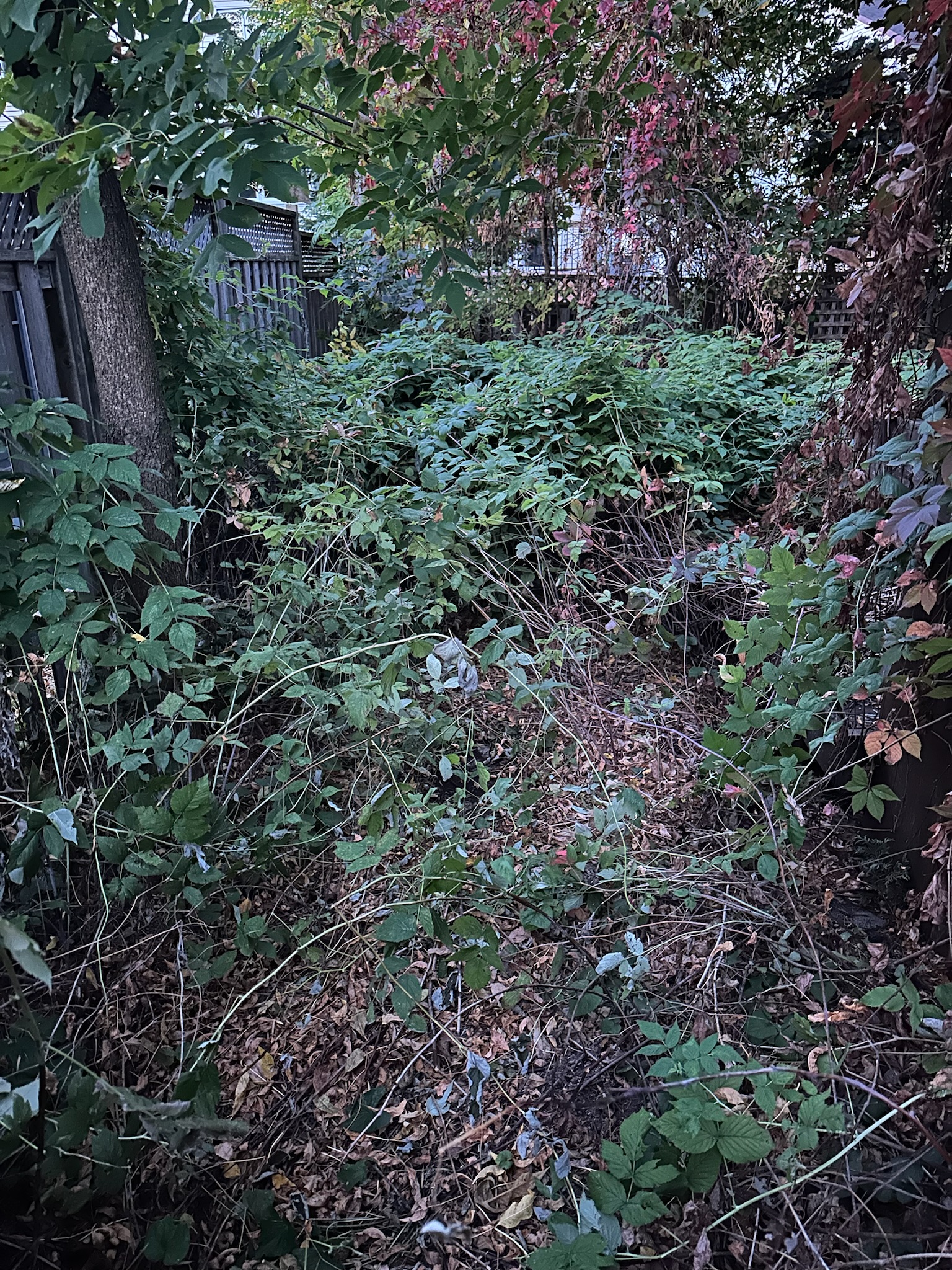
  • The "Blob" Effect: Instead of distinct shapes, your shrubs or perennials merge into one giant, shapeless mass. Think less "specimen plant," more "green amoeba."
  • Lopsided Growth: Plants reaching desperately for sunlight might grow unevenly, looking thin on one side and overly dense on the other.
  • Dead Zones: You might notice bare ground or dead lower branches underneath tightly packed plants where sunlight and air just can't penetrate.
  • Hidden Treasures: That lovely garden statue or bird bath is now playing hide-and-seek behind an overgrown lilac. Walkways might look narrower, or patio edges disappear under plant spillover. This can detract from planned garden installations.
  • General Overgrowth: It just looks messy and unkempt, even if individual plants are healthy. Think "needs a haircut, badly."

Functional Clues – How Crowding Affects Yard Use & Health:

  • Maintenance Hurdles: Trying to prune a shrub that’s sandwiched between two others is a recipe for frustration (and maybe scratched arms!). Getting the mower or trimmer around crowded edges becomes an obstacle course. Ensuring you have the right tools helps, but space is better; check out tips for Kars garden tool maintenance in the fall or even Metcalfe fall garden cleanup and tool maintenance to keep your gear ready.
  • Health Problems: Poor airflow is a major invitation for fungal diseases like powdery mildew, especially during humid Ottawa summers. Pests also love the shelter of dense foliage. Crowding stresses plants, making them more susceptible, which is why a good Kars garden maintenance preventative health plan often involves managing space. Find local resources at the Master Gardeners of Ottawa-Carleton.
  • Water Woes: Dense planting can prevent rain or irrigation from reaching the soil evenly. You might also see water pooling oddly or running off surfaces because its natural path is blocked. Even features like ponds need space; crowded aquatic plants or surrounding foliage can impact water quality – something to consider alongside these Metcalfe pond care fall clear water tips.
  • Competition: Plants fight for limited resources like sunlight, water, and soil nutrients. The "losers" in this battle might look weak, yellowed, or produce fewer flowers or fruit.

If you're nodding along thinking, "Yep, that sounds like my yard," don't sweat it! Recognizing these signs is the first step. Whether it requires some strategic pruning, transplanting, or a more significant overhaul, addressing element crowding can drastically improve your yard's health and usability. Tackling a big overgrown situation can feel daunting, which is why many homeowners opt for professional help. Check out our general landscaping services or specific offerings like our Embrun property cleanup service if you need a hand restoring order to your outdoor space. A clean yard often leads to visiting our thank you page!

The Hidden Costs of a Cluttered Landscape: Beyond Just Looking Messy

Okay, so we know a jam-packed yard can look a bit… chaotic. Like trying to find your favourite garden trowel in a shed full of everything but the trowel. But the impact of element crowding goes way beyond just looking untidy. There are real, hidden costs lurking beneath those overlapping leaves and tangled branches, affecting everything from plant health to your weekend relaxation time.

First off, let's talk plant health – especially important with our lovely, humid Ottawa summers! When plants are crammed together, air can't circulate properly. This creates a perfect playground for fungal diseases like powdery mildew, which just loves stagnant, damp conditions. Think of it as giving mould a VIP invitation! Furthermore, stressed plants fighting for space are like us running on fumes – they become weaker and much more susceptible to annoying pests. Come winter, these overcrowded plants might not have the resilience to handle our sometimes-brutal freezes, especially if their roots haven't had space to establish properly. Proper spacing gives them a fighting chance!

Then there's the underground battle royale. Plants need water and nutrients, right? When they're packed in cheek-by-jowl, especially in some of the clay-heavy or sandy soils we often find around areas like Greely or Barrhaven, they're in fierce competition. Some plants inevitably lose out, leading to stunted growth or sad-looking leaves. Good soil preparation is key for any garden, but it's incredibly difficult to amend soil properly when you can barely get a spade between the plants.

Beyond plant problems, a cluttered landscape just makes life harder. Remember trying to prune that rose bush hiding behind the overgrown juniper? Yeah, not fun. Simple tasks like weeding, mulching and edging, or even just watering effectively become frustrating chores. Forget the simple satisfaction of good lawn care on an open patch; navigating crowded beds is an obstacle course. This hassle factor often means maintenance gets skipped, leading to… you guessed it, more clutter and unhealthier plants. It’s a vicious cycle! Overgrown shrubs can even block pathways or scratch siding, potentially impacting your home's curb appeal and maybe even its value over time.

Planning ahead or correcting existing crowding can make a huge difference. Sometimes it involves careful pruning or even transplanting. When adding new features or plants, thinking about their mature size and considering smart material selection can prevent future headaches. If your yard feels more like a jungle expedition than a relaxing retreat, tackling a major declutter might be in order. For those bigger jobs, sometimes calling in the pros is the least stressful route – services like an Marionville yard cleanup service or Metcalfe property cleanup service can help reset your space. Feel free to reach out if you need advice; simply contact us and let us help you reclaim your yard! You can review our commitments in our terms and conditions.

Planning for Breathing Room: Design Strategies for Uncrowded Richmond Yards

A visually appealing garden bed demonstrating the concept of 'negative space'. Healthy, distinct perennial plants (like hostas, coral bells, and ferns) are spaced well apart with a thick layer of dark brown mulch covering the ground between them. The defined edge of the garden bed, perhaps made of natural stone or crisp edging material, is clearly visible against a neat lawn.
Well-spaced plants with mulch create visual appeal and promote health.

So, you want a Richmond yard that feels spacious, calm, and easy to manage? Excellent! The secret often lies in planning *before* you plant or place anything. Think of it like interior design, but with more dirt and potential bees. A little foresight goes a long way in preventing that "everything-on-top-of-everything" feeling down the road. Let's look at some design tricks to keep your landscape feeling open and inviting, not like rush hour on the 417.

Know Thy Plant (And Its Future Self!)

This is Landscape Design 101, folks! That adorable little shrub or tiny tree sapling looks perfect *now*, but what about in 5, 10, or 15 years? Always, *always* check the plant tag or do a quick search for its **mature height and spread**. Planting a future giant too close to your house or walkway is a classic mistake we see all over Ottawa, from established Richmond yards to newer builds in Barrhaven. Give plants the space they'll *eventually* need, not just the space they need today. Your future self, not having to constantly prune things back from the brink, will thank you.

Embrace the Space Between

It might feel weird leaving "empty" space between new plants, but trust us, it's essential. Think of it as planned emptiness, or *negative space*. This isn't wasted space; it's breathing room! It allows air circulation (goodbye, powdery mildew!), lets sunlight reach lower branches, and makes tasks like weeding and mulching infinitely easier. For our Ottawa climate, proper spacing also means snow has somewhere to go without crushing tightly packed shrubs. A simple guideline is to space plants based on half their mature width – if two shrubs grow 6 feet wide, plant their centers at least 6 feet apart. This planned openness is also key if you're dreaming of lush green areas requiring sod installation; defining these spaces clearly prevents garden beds from encroaching later.

The Beauty of Nothing: Using Negative Space

Speaking of negative space, it’s not just for practical spacing. Visually, areas of lawn, pathways, or even simple mulched ground give our eyes a place to rest. It helps highlight the plants and features you *do* have, making them stand out rather than getting lost in a jumble. A well-placed bench with open space around it feels inviting; a bench crammed between three overgrown hostas feels… well, cramped. Use pathways, patios, and lawn areas intentionally to create these visual breaks.

Zone Out (In a Good Way!)

Think about how you use your yard. Do you need a play area? A spot for grilling? A quiet reading corner? A dedicated veggie patch? Mentally (or physically!) dividing your yard into *zones* based on function helps organize the space and naturally prevents elements from sprawling into each other. Assigning areas makes planning easier and keeps things tidy. Plus, knowing your zones simplifies upkeep, allowing for more targeted garden maintenance specific to each area's needs. For inspiration, check out some successful Transformations.

Walk This Way: The Power of Pathways

Clear pathways do more than just guide your feet. They act as strong visual dividers, creating defined edges for garden beds and separating different zones. Whether it’s stone, gravel, mulch, or just a neatly edged lawn path, walkways enforce breathing room between planted areas. They ensure you can actually *get* to your plants for care and make general property clean up much less of an obstacle course.

Planning for space from the start saves a lot of headaches (and backaches!) later. But hey, sometimes we inherit a crowded situation or things just get away from us. If your yard already feels overgrown and you need help reclaiming the space, services exist to tackle those bigger jobs, whether it's a general overhaul or something more specific like a city property cleanup service or even the dedicated Marionville property cleanup service. Don't hesitate to contact us if you'd like to chat about design ideas or need a hand bringing spaciousness back to your Richmond oasis! Learn more About Us and our approach.

A Timeline for Establishing an Uncrowded Yard

Year 1: Planning & Planting

Research mature plant sizes. Create a zoned layout. Install hardscaping (paths, patios). Plant trees and shrubs with ample future spacing. Use temporary fillers like annuals if desired.

Year 2-3: Initial Growth & Observation

Monitor plant growth. Perform light shaping pruning as needed. Keep up with weeding and mulching to maintain defined spaces. Adjust annual fillers.

Year 4-5: First Divisions & Adjustments

Some faster-growing perennials may need dividing. Assess shrub spacing – minor pruning or relocation might be needed if estimates were slightly off. Ensure pathways remain clear.

Year 6+: Ongoing Maintenance & Maturity

Continue regular pruning based on plant needs. Divide perennials every few years. Remove any plants that become diseased or outgrow their welcome. Enjoy your well-spaced, mature landscape!

Taking Action: Your Step-by-Step Guide to Decluttering and Maintaining Yard Harmony

Okay, deep breath! Ready to transform that cluttered corner into your own piece of paradise? Taking action is the most satisfying part. Let's roll up our sleeves and walk through the process step-by-step. Think of this as your friendly guide to achieving yard harmony, whether you're in busy Nepean or enjoying the spacious lots out in Greely.

A close-up action shot illustrating perennial division. A large clump of daylily or hosta perennials has been partially lifted from the garden soil with a clean garden fork or spade resting nearby (no hands visible). The dense root system is visible, clearly showing how the plant could be divided into smaller sections. Rich, dark soil surrounds the plant.
Dividing perennials like hostas or daylilies rejuvenates them and prevents overcrowding.

Step 1: The Honest Assessment (No Judgment!)

Grab a notepad (or your phone) and take a slow walk around your yard. What jumps out as crowded, overgrown, or just… there but not serving a purpose? Note down plants that are too big, features hidden by greenery, pathways being eaten alive, or maybe just that pile of old pots you meant to deal with last year. Be honest! This isn't about blame; it's about identifying the starting point for your property clean up. Sometimes, seeing the whole picture laid out helps you decide if tackling it yourself or calling in an Ottawa property cleanup service for an initial reset makes more sense.

Step 2: Make a Plan, Stan (Or Jean, Or Dave…)

Don't try to do everything at once – that's a recipe for overwhelm! Look at your assessment notes and prioritize. What bothers you most? What's impacting plant health? Maybe start with one garden bed or one specific problem area. Decide what needs pruning, what needs moving, what needs to go entirely, and what just needs tidying. Having a simple plan makes the whole process feel much more manageable.

Step 3: Pruning Power – The Art of the Snip

Pruning is crucial for managing size and health. Focus on the "Three Ds": removing any Dead, Damaged, or Diseased branches first. Then, thin out dense areas to improve air circulation – vital in our humid Ottawa summers! Timing matters:

  • Spring: Prune summer-flowering shrubs (like potentilla or spirea) before new growth starts. Remove winter damage from evergreens and perennials.
  • Summer: Prune spring-flowering shrubs (like lilac or forsythia) after they finish blooming. Light shaping can be done now.
  • Fall: Focus on cleanup, removing dead annuals and cutting back some perennials (leave others for winter interest and wildlife!). Avoid heavy pruning that encourages new growth late in the season.

Step 4: Divide and Conquer (Your Perennials!)

Are your hostas forming a giant blob? Daylilies looking crowded? Many perennials benefit from being divided every few years. This rejuvenates the plant and gives you more plants for free! Generally, spring or early fall are the best times in Ottawa. Carefully dig up the clump, gently tease or cut the roots apart into smaller sections (each with roots and shoots), and replant them with proper spacing or share with neighbours! If dealing with extensive overgrown beds, an Ottawa garden clean up service can expertly handle division and replanting.

Step 5: The Great Removal

Sometimes, a plant just isn't working, or it's gotten way too big for its spot. Be brave! Removing struggling, misplaced, or overgrown plants can dramatically open up space. Dig out the root ball as much as possible. For larger shrubs or small trees, or if the sheer volume of cleanup feels daunting, getting professional help might be wise. An experienced Ottawa yard cleanup service has the tools and know-how for efficient removal.

Step 6: Tidy Up and Organize

Decluttering isn't just about plants. Gather stray tools, broken decorations, old pots, and random bits and bobs. Designate a spot in your shed or garage for garden supplies. Neat stacks, clean tools, and clear surfaces reduce visual clutter instantly.

Step 7: Eco-Friendly Goodbyes

What to do with all that green waste?

  • Compost: Compost disease-free plant matter, leaves, and small twigs right in your backyard.
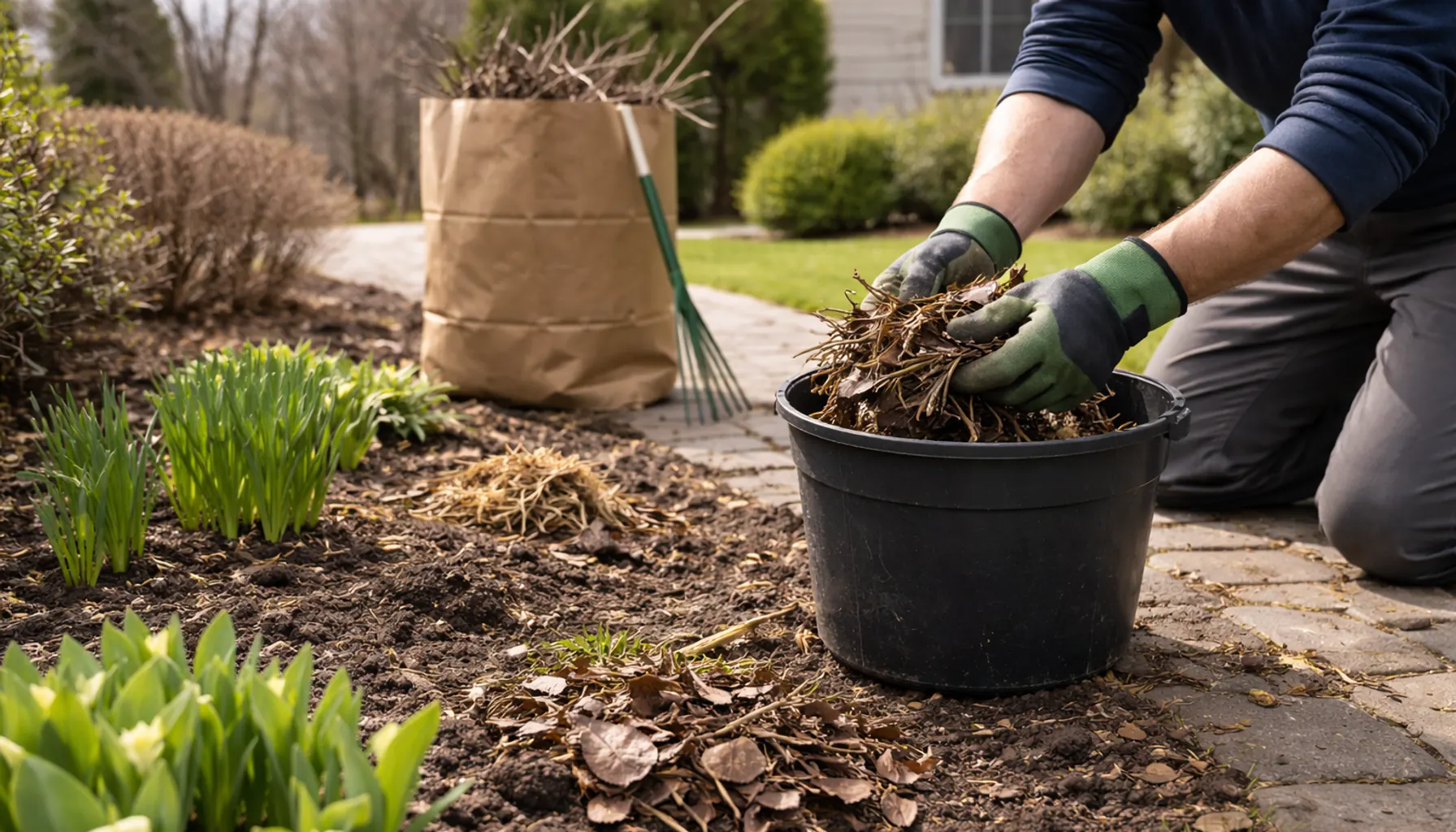
  • Green Bin: Ottawa's Green Bin program takes most yard waste, including branches (check size limits).
  • Mulch: Use a chipper/shredder for branches to create your own mulch.
  • Leaf Management: Rake leaves onto garden beds as mulch or compost them. Avoid diseased leaves in compost. Need help with leaves? Consider a city yard cleanup service.

Step 8: Keep the Harmony Flowing

Decluttering isn't a one-time event. Create a simple maintenance reminder list:

  • Spring: Major cleanup, pruning, dividing, edging.
  • Summer: Weeding, deadheading flowers, light trimming.
  • Fall: Leaf cleanup, cutting back perennials, tool cleaning, protecting sensitive plants.
  • Winter: Dream and plan for next year! Maybe browse some inspiring Transformations to visualize the possibilities.

Taking these steps might take time, but the reward is a yard that feels spacious, healthy, and relaxing. And if you need a hand at any stage, remember there are folks who love doing this stuff – you can learn more About Us and our approach to bringing harmony back to Ottawa yards. You've got this! Check out what others say on our Google My Business page!

Common Yard Crowding Issues Observed

0%
Overgrown Shrubs
0%
Crowded Perennials
0%
Blocked Paths
0%
Hidden Features
0%
Difficult Mowing

Key Insights: Your Cheat Sheet to an Uncrowded Yard

Quick Tips for Avoiding Crowding

  • Check Mature Size: Always prioritize a plant's future size when planting.
  • Prune & Divide Regularly: Keep plants in check and healthy with timely maintenance.
  • Embrace Negative Space: Use mulch, lawn, or paths to create visual breaks and breathing room.
  • Remove Bullies: Don't be afraid to remove plants that consistently cause problems.
  • Plan Your Layout: Zone your yard and use pathways to define spaces.

Okay, let's cut to the chase! You've read about the woes of a crowded yard, now here's your quick reference guide – the cheat sheet to reclaiming your space and sanity.

Question: Okay, bottom line, what's the #1 tip to avoid a crowded yard disaster in Ottawa?
Answer: Easy peasy! Always, always check the mature size tag before planting. That tiny shrub won't stay tiny forever! Give plants the room they'll actually need in 5 years, not just today. Ignoring this is the fast track to plant wars and extra yard care headaches down the line.

Question: My garden bed already looks like a wrestling match. What are the quickest fixes?
Answer: Your best bets are strategic pruning (removing dead/damaged stuff and thinning for airflow – crucial for plant health!), dividing overgrown perennials (hello, free plants!), and sometimes, just bravely removing a plant bully that's taking over. If it feels like too much to handle, getting a professional Ottawa garden clean up service can give you a much-needed fresh start.

Question: Is leaving "empty" mulch or lawn space between plants actually good? Seems wasteful!
Answer: Absolutely! Landscape designers call it "negative space," and it's your secret weapon for an uncrowded look. It gives plants breathing room (goodbye, potential diseases!), makes weeding way less painful, and actually highlights the beauty of the plants you do have. Think of it as planned breathing room, not wasted space.

Question: Won't removing plants reduce my privacy? I like my neighbours in Barrhaven, but...
Answer: It might temporarily, but think long-term! Overcrowded, potentially unhealthy plants aren't effective screening anyway. Well-spaced, thriving plants can be placed strategically for better, healthier privacy screens down the road. When considering options, know that we always respect your property and information; you can read about how we handle client details in our privacy policy.

Question: Some of this overgrown mess seems to be creeping onto the city boulevard or easement. Can you help with that?
Answer: Yup, that happens! Overgrowth doesn't always respect property lines, especially along sidewalks or ditches. We offer a specific city property cleanup service designed to help tidy up those tricky edge areas and keep things neat between your yard and public spaces.

Question: I live out near Metcalfe. Do you offer services there if I decide I need help digging out?
Answer: You bet! We help homeowners all around the Ottawa region, including the lovely rural areas, regain control of their yards. We definitely provide a dedicated Metcalfe garden clean up service to tackle those overgrown garden beds, unruly shrubs, and general yard clutter.

Question: Getting an estimate for help sounds good, but how do I know it'll be fair and clear?
Answer: Great question! We believe in being upfront and making sure you understand the scope of work and the cost involved. Transparency is key for us. Don't just take our word for it; you can actually review comments from other clients and check our estimate feedback to see what people think about our quoting process.

Richmond & Ottawa Yard FAQs: Tackling Your Crowding Concerns

<!-- Using
for FAQ -->
How do I know *when* it's the right time to thin out my crowded plants in the Ottawa climate?

Great question! Timing depends on the plant. For many perennials like Hostas or Daylilies, early spring or early fall after the summer heat breaks is ideal for dividing. For shrubs, prune spring bloomers (like Lilacs) right *after* they flower. Prune summer bloomers (like Potentilla) in late winter or early spring *before* new growth starts. Avoid heavy pruning late in fall, as new growth won't harden off before our Ottawa winter hits.

My shrubs near the walkway are massive! Can I prune them way back drastically, or should I just remove them entirely?

It depends! Some shrubs tolerate hard pruning (renewal pruning) better than others. For really overgrown specimens, especially those blocking paths or hitting the house siding (a common sight in areas like Richmond or established parts of Nepean!), removal might be the simpler, cleaner long-term solution. Assess the plant's health and importance to your landscape before making the chop. Sometimes starting fresh is less stressful!

Okay, I've cleared some space! How do I keep my yard looking neat and prevent everything from getting crowded again?

Fantastic job! Maintaining that space is key. Defining garden bed lines with crisp professional mulching and edging not only looks sharp but helps contain plants and suppress weeds. Regular weeding and light, timely pruning are crucial. Staying on top of it prevents small issues from becoming big ones. Think about ongoing support; a regular city garden maintenance service can handle the routine tasks, ensuring your yard stays beautifully balanced.

My flower beds look like a jungle – weeds, overgrown perennials, the works! Where do I even begin tackling this mess?

Take a deep breath – you can do this! Start by pulling the most obvious weeds and removing any clearly dead plant matter. Then, focus on one small section at a time. Identify what you want to keep, what needs dividing, and what needs to go. If the task feels overwhelming, consider getting professional help. An expert city garden clean up service can efficiently reset overgrown beds, giving you a clean slate.

After a big decluttering session, what's the best way to dispose of all the plant waste here in Ottawa?

Ottawa makes it pretty easy! Most disease-free plant clippings, leaves, and smaller branches (check size limits) can go right into your Green Bin for municipal composting. You can also compost leaves and non-diseased plant matter in your own backyard compost bin. Avoid composting diseased plants or invasive weeds – bag those for regular garbage or check City guidelines for disposal. Reputable resources like the City of Ottawa's Green Bin page have details. Another helpful resource is Ottawa Horticultural Society for local gardening advice.

I live a bit outside the city centre, closer to Metcalfe or Osgoode. Can you still help if my large property needs a major cleanup?

Absolutely! We understand that properties further out can sometimes face bigger crowding challenges. We definitely serve surrounding communities. Whether you require a comprehensive Metcalfe yard cleanup service for a sprawling lot or targeted help like our Marionville property cleanup service provides, we’re equipped and happy to travel to help you tackle that overgrown space and restore order to your landscape.

Seasonal Focus for Maintaining Space

Spring: Cleanup & Assessment

Remove winter debris and dead growth. Assess plant spacing now that foliage is emerging. Edge beds cleanly using mulching and edging techniques. Divide overcrowded perennials. Perform necessary pruning for summer bloomers and repair winter damage. Apply fresh mulch.

Summer: Pruning & Weeding

Prune spring-blooming shrubs after flowering. Stay on top of weeding to prevent competition. Deadhead flowers to encourage more blooms and maintain tidiness. Monitor for pests or diseases favoured by dense growth, especially important for effective city garden maintenance.

Fall: Cutback & Protection

Cut back specific perennials (leave some for winter interest/wildlife). Rake leaves – use as mulch or compost. Perform final light cleanup. Protect sensitive plants if necessary. Consider a final city yard cleanup service before winter sets in.

Conclusion: Enjoy Your Beautifully Balanced Richmond Retreat

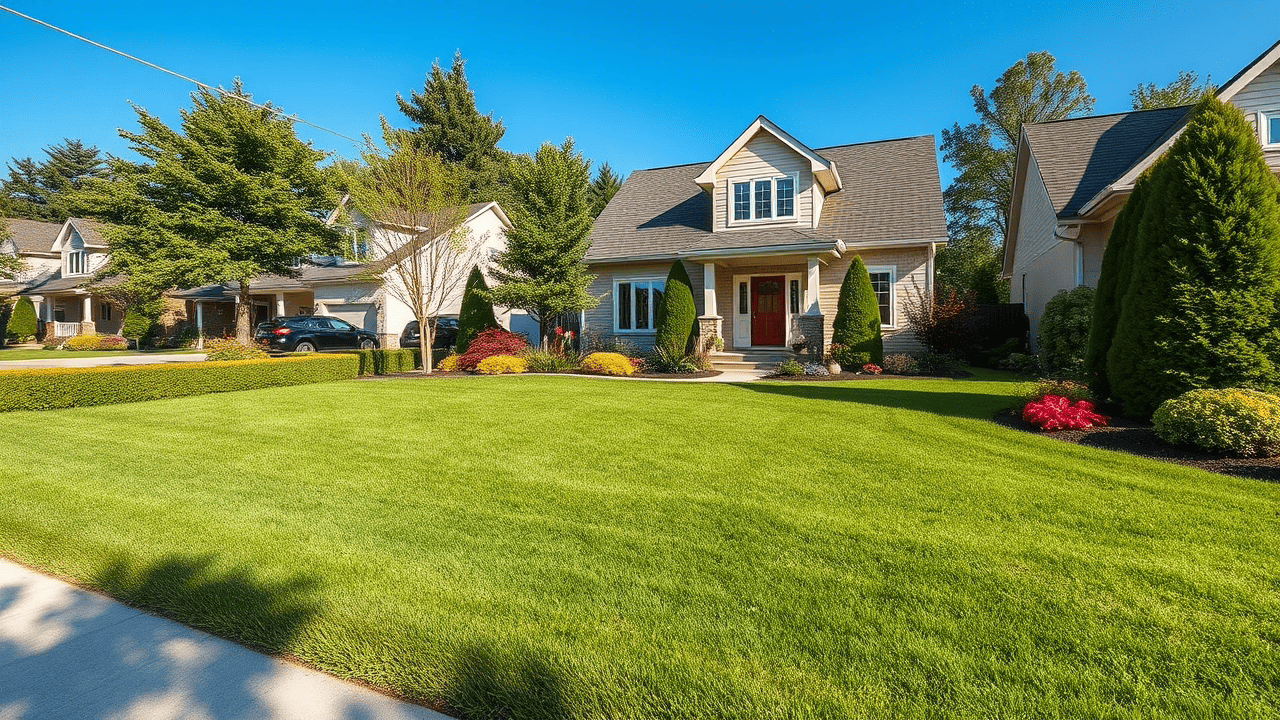
Whew! So there you have it. Giving your landscape elements a little elbow room isn't just about making things look tidier – it's about creating a healthier, happier outdoor space right here in Richmond. Remember, a less crowded yard means plants that can actually thrive, yard care that doesn't feel like an obstacle course, and more space for you to simply relax and enjoy your property. No more battling overgrown shrubs just to get to the front door – unless you enjoy that sort of thing, then carry on!

From the heart of Richmond to neighbouring spots like Manotick and across the wider Ottawa area, giving your garden and landscape features room to breathe transforms your yard from a source of stress into a genuine retreat. Proper spacing, thoughtful pruning, and occasional decluttering are your tickets to that beautifully balanced look and feel.

Feeling inspired but maybe a tad overwhelmed? Don't sweat it! If tackling the tangle yourself isn't quite your cup of tea, we're here to help bring that spacious harmony back. Whether you need a full property clean up, strategic pruning services, or ongoing garden maintenance, give Clean Yards a shout.

Ready for a yard you truly love spending time in?

Let's work together to make your Richmond retreat the best it can be!

document.addEventListener('DOMContentLoaded', function() {// --- Progress Bar --- const progressBar = document.getElementById('progressBar'); function updateProgressBar() { const scrollTotal = document.documentElement.scrollHeight - document.documentElement.clientHeight; const scrolled = window.scrollY; const progress = (scrolled / scrollTotal) * 100; progressBar.style.width = `${progress}%`; } window.addEventListener('scroll', updateProgressBar); updateProgressBar(); // Initial calculation// --- Back to Top Button --- const backToTopBtn = document.getElementById('backToTopBtn'); function toggleBackToTopButton() { if (window.scrollY > 300) { backToTopBtn.classList.add('show'); } else { backToTopBtn.classList.remove('show'); } } window.addEventListener('scroll', toggleBackToTopButton); backToTopBtn.addEventListener('click', () => { window.scrollTo({ top: 0, behavior: 'smooth' }); });// --- Collapsible Sections (Animation enhancement - basic) --- // The basic smooth animation is handled by CSS @keyframes. // More complex JS can calculate exact height for perfect animation, // but CSS approach is simpler for this requirement.// --- Tab Interface --- const tabContainer = document.querySelector('.tab-container'); if (tabContainer) { const tabButtons = tabContainer.querySelectorAll('.tab-button'); const tabContents = tabContainer.querySelectorAll('.tab-content');tabContainer.addEventListener('click', function(event) { if (event.target.classList.contains('tab-button')) { const targetTab = event.target.dataset.tab;// Remove active class from all buttons and content tabButtons.forEach(button => button.classList.remove('active')); tabContents.forEach(content => content.classList.remove('active'));// Add active class to clicked button and corresponding content event.target.classList.add('active'); const activeContent = document.getElementById(targetTab); if (activeContent) { activeContent.classList.add('active'); } } }); }// --- Animate Bar Chart on Scroll --- const chartContainer = document.getElementById('yardIssuesChart'); if (chartContainer) { const bars = chartContainer.querySelectorAll('.bar'); const values = chartContainer.querySelectorAll('.bar-value');const observerOptions = { root: null, // relative to viewport rootMargin: '0px', threshold: 0.5 // Trigger when 50% of the chart is visible };const observerCallback = (entries, observer) => { entries.forEach(entry => { if (entry.isIntersecting) { bars.forEach((bar, index) => { const value = bar.dataset.value; const valueDisplay = values[index]; setTimeout(() => { bar.style.height = value + '%'; // Animate value display let currentVal = 0; const increment = parseFloat(value) / 50; // Adjust 50 for speed const interval = setInterval(() => { currentVal += increment; if (currentVal >= parseFloat(value)) { currentVal = parseFloat(value); clearInterval(interval); } valueDisplay.textContent = Math.round(currentVal) + '%'; }, 20); // Adjust 20 for speed}, index * 100); // Stagger animation }); observer.unobserve(chartContainer); // Stop observing once animated } }); };const chartObserver = new IntersectionObserver(observerCallback, observerOptions); chartObserver.observe(chartContainer); }// Ensure all event listeners are active console.log("Clean Yards article enhancements loaded.");});
Share This Article
Facebook
X
Pinterest
Email
Print

Thank you for sharing!

Contact Us Today

To request a quote, kindly fill out the form below.

Where Can we Reach you?
Which Service Do You Require? (Click all that apply)
Provide a Breif Description of The Work You'd Like Done

Before You Go

We’re confident in our services, we offer a 30-day money-back guarantee. Not 100% satisfied? We’ll swiftly refund all labor costs. Your satisfaction is our top priority!

Get in touch today for expert service and satisfaction guaranteed. You won't regret it!

Where Can we Reach you?
Which Service Do You Require? (Click all that apply)
Provide a Breif Description of The Work You'd Like Done
Where Can we Reach you?
Which Service Do You Require? (Click all that apply)
Provide a Breif Description of The Work You'd Like Done
Where Can we Reach you?
Which Service Do You Require? (Click all that apply)
Provide a Breif Description of The Work You'd Like Done