The Challenge
When the by-law enforcement call came in, I knew we were in for something special. But nothing prepared me for what awaited behind that narrow side gate—a property that would set a new record in our restoration portfolio.
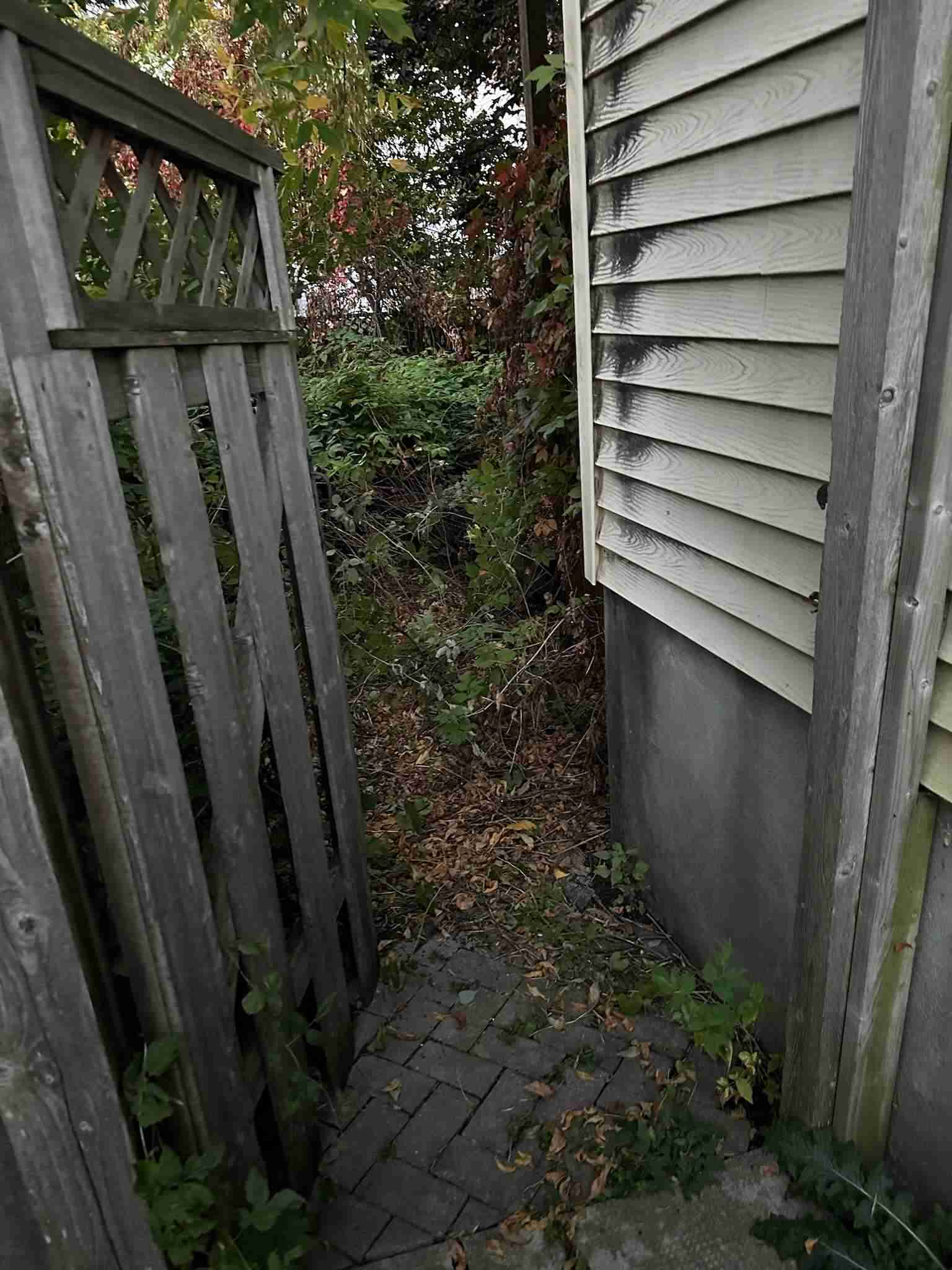
The barely accessible side entrance, completely blocked by vegetation
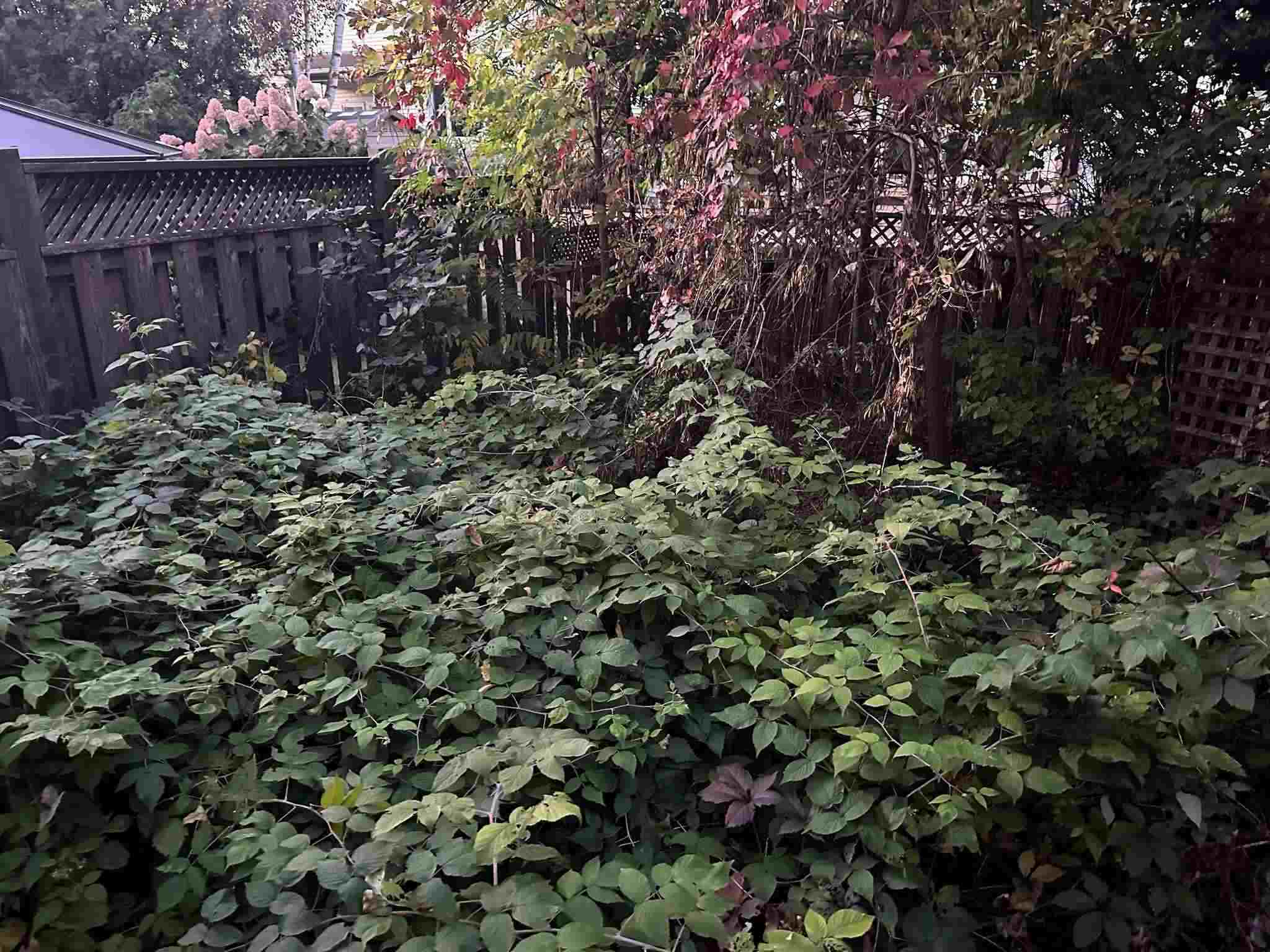
The homeowner, had purchased the house in winter, when snow conveniently masked the jungle that had been steadily claiming the backyard for years. By summer, he found himself living next to a thriving wilderness that had effectively rendered his outdoor space unusable.
The first challenge? Simply getting into the yard. The side entrance had become nature's fortress, requiring careful navigation just to conduct our initial assessment. What lay beyond was both a restoration specialist's nightmare and dream—a canvas of possibilities buried beneath years of aggressive growth.
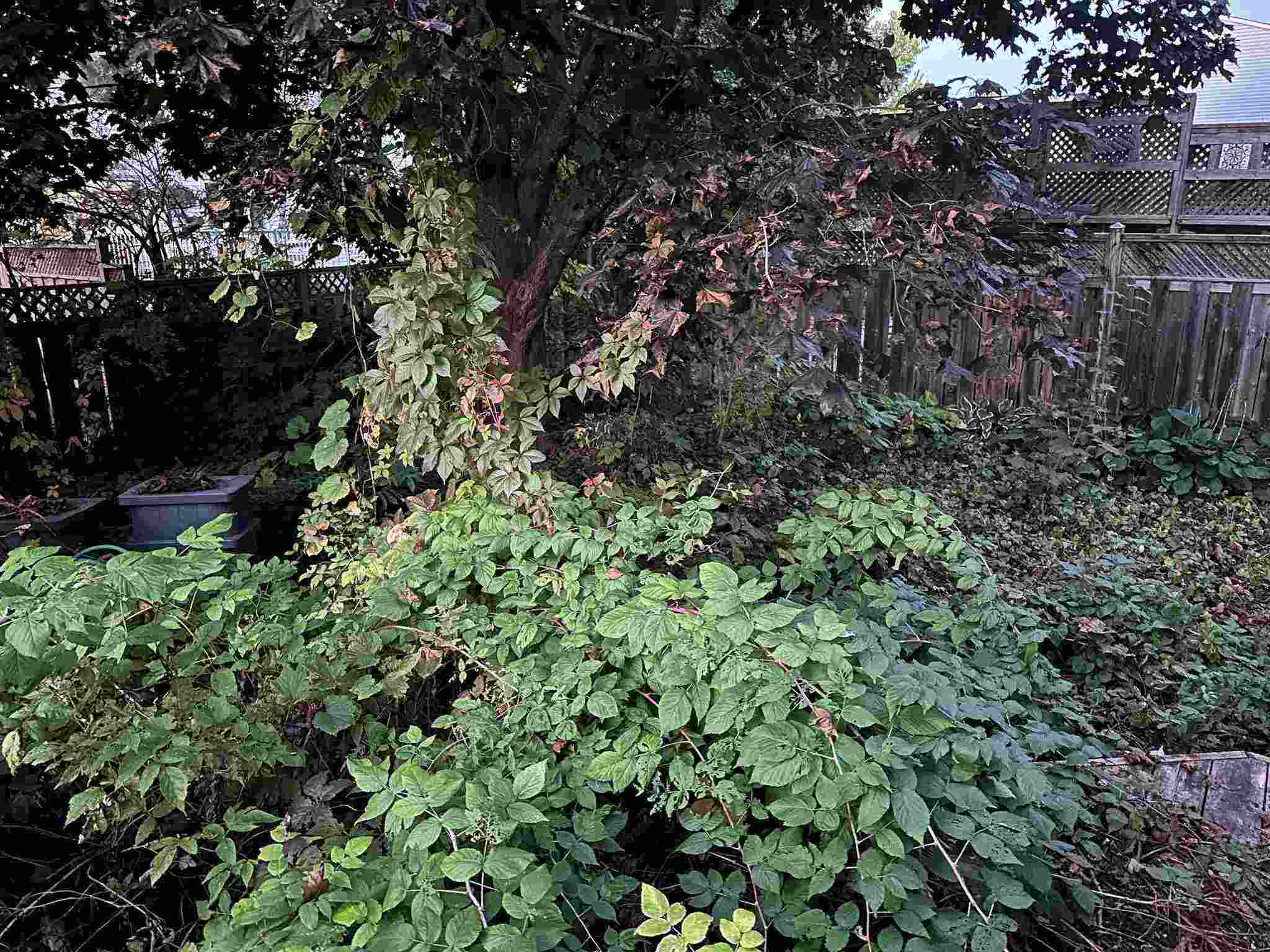
The impenetrable wall of raspberry bushes and brambles
"When we first saw the property, we couldn't even identify the boundaries of the yard. Nature had completely reclaimed every inch of usable space, leaving no trace of the garden that once existed."
Nature's Takeover
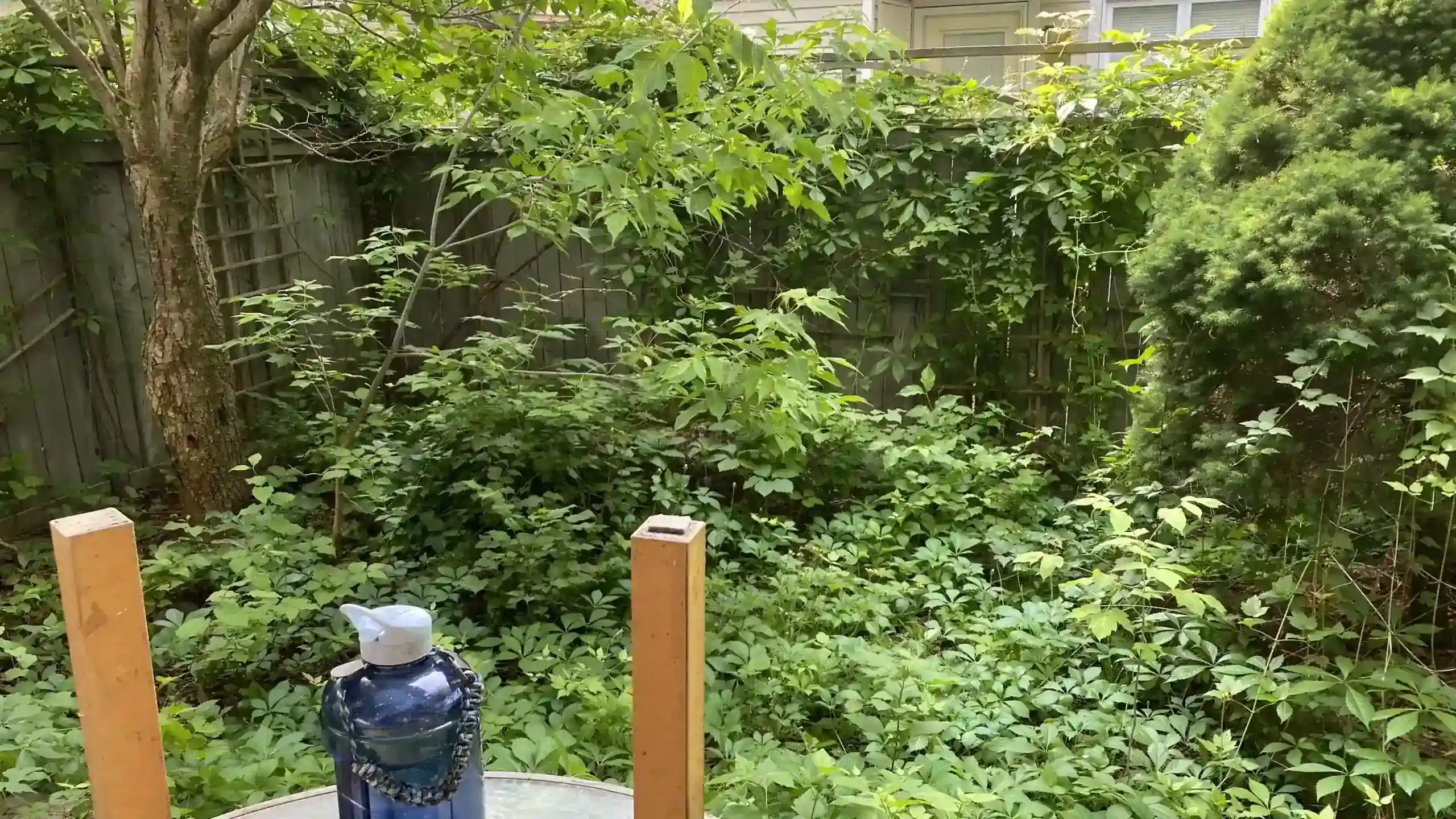
A large tree surrounded by lush undergrowth
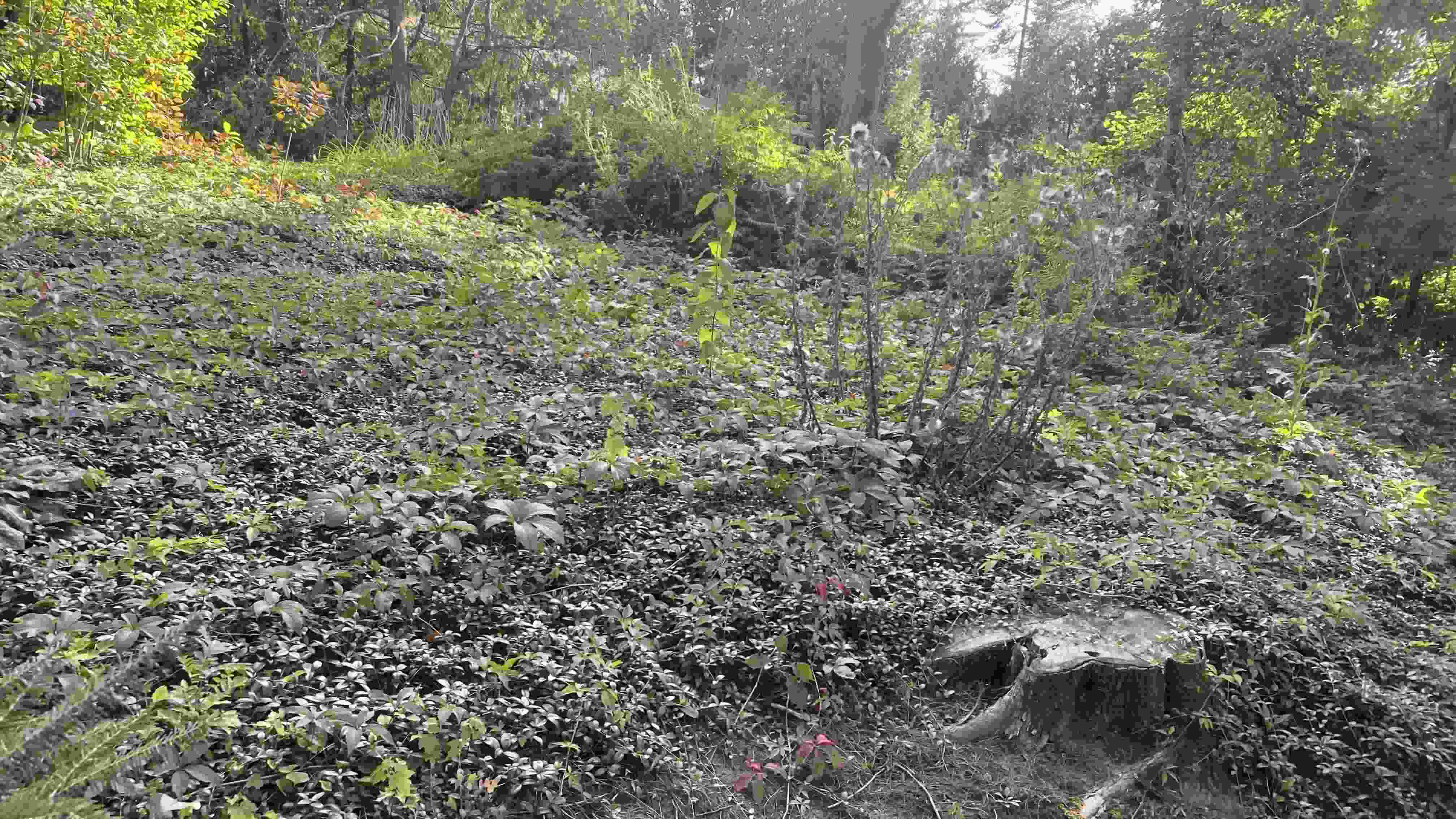
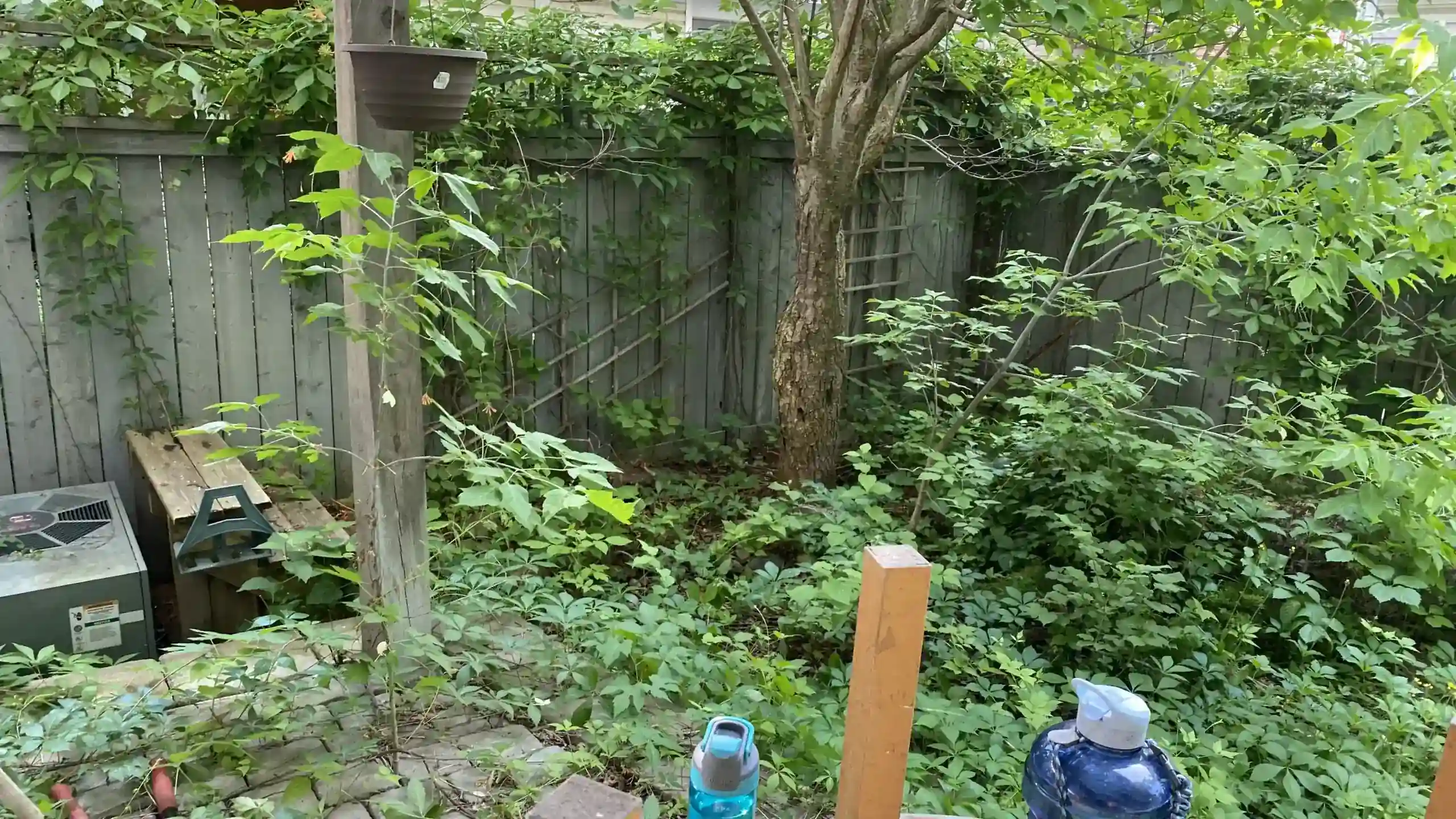
Vines and invasive species claiming the yard
What made this project uniquely challenging wasn't just the volume of overgrowth, but its strategic invasion. A complex network of raspberry canes had established dominance, sending runners throughout the entire yard to create an interconnected defense system against human intervention.
Varied species competed in vertical races—Virginia creeper and climbing vines scaling trees, fences, and even the house itself. The wooden pergola had surrendered to their advance years ago, now serving as merely structural support for the true rulers of this domain.
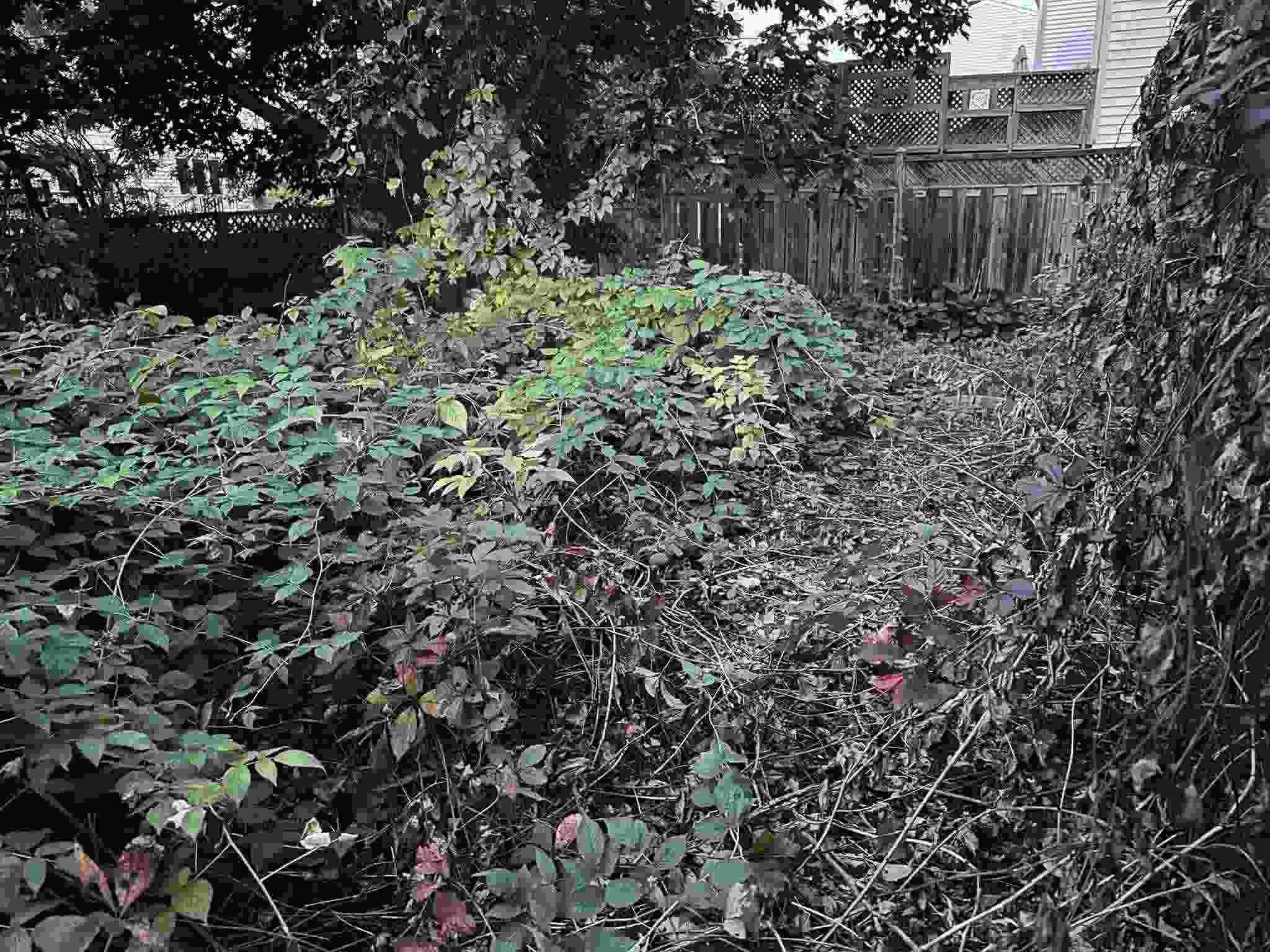
The view from the back door - a sea of uncontrolled vegetation
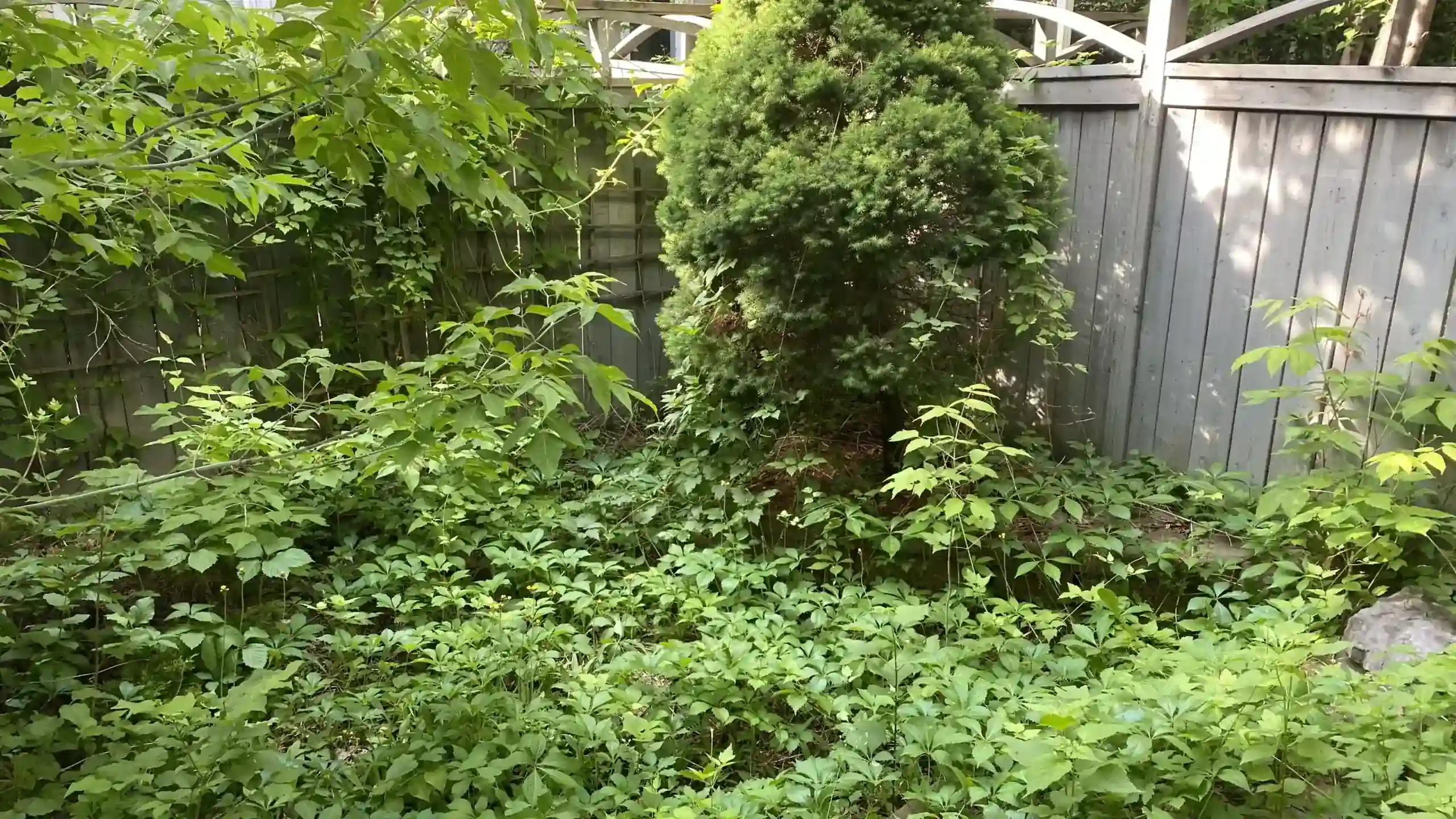
This unchecked growth had created its own microclimate in the yard, with layers of vegetation competing for light and nutrients. The lower layers thrived in shade created by their taller competitors, resulting in an ecosystem that had completely obscured any trace of the original landscape design.
Strategic Intervention
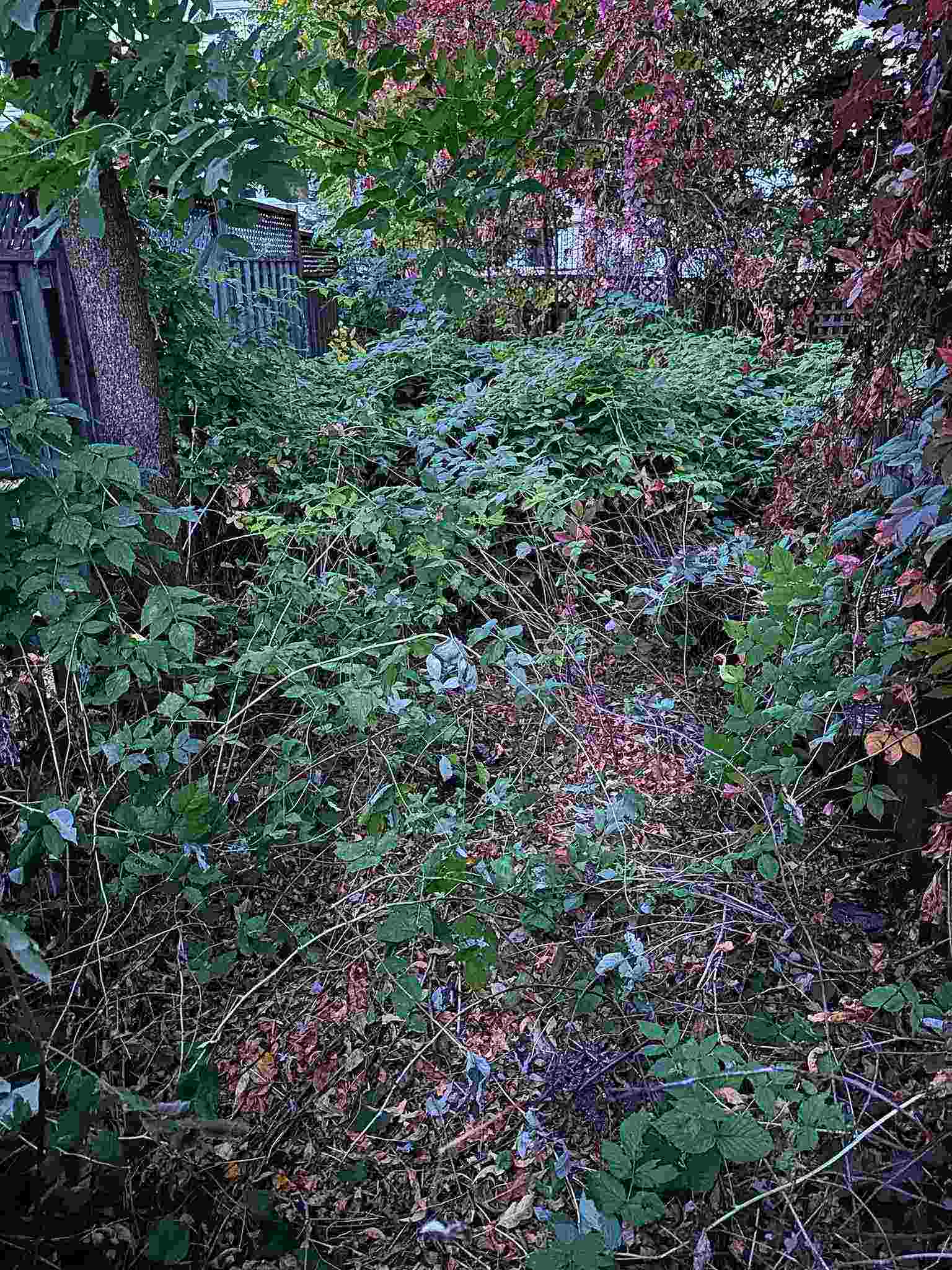
Dense vines and climbing plants overtaking the yard
Our first priority was establishing an entry point. With careful precision, we carved a pathway through the thickest growth, creating just enough space to bring in our essential equipment.
The removal process required both strategy and patience. Random clearing would only invite aggressive regrowth, so we worked systematically in sections, targeting not just the visible chaos but the extensive root systems that would otherwise ensure nature's swift return.
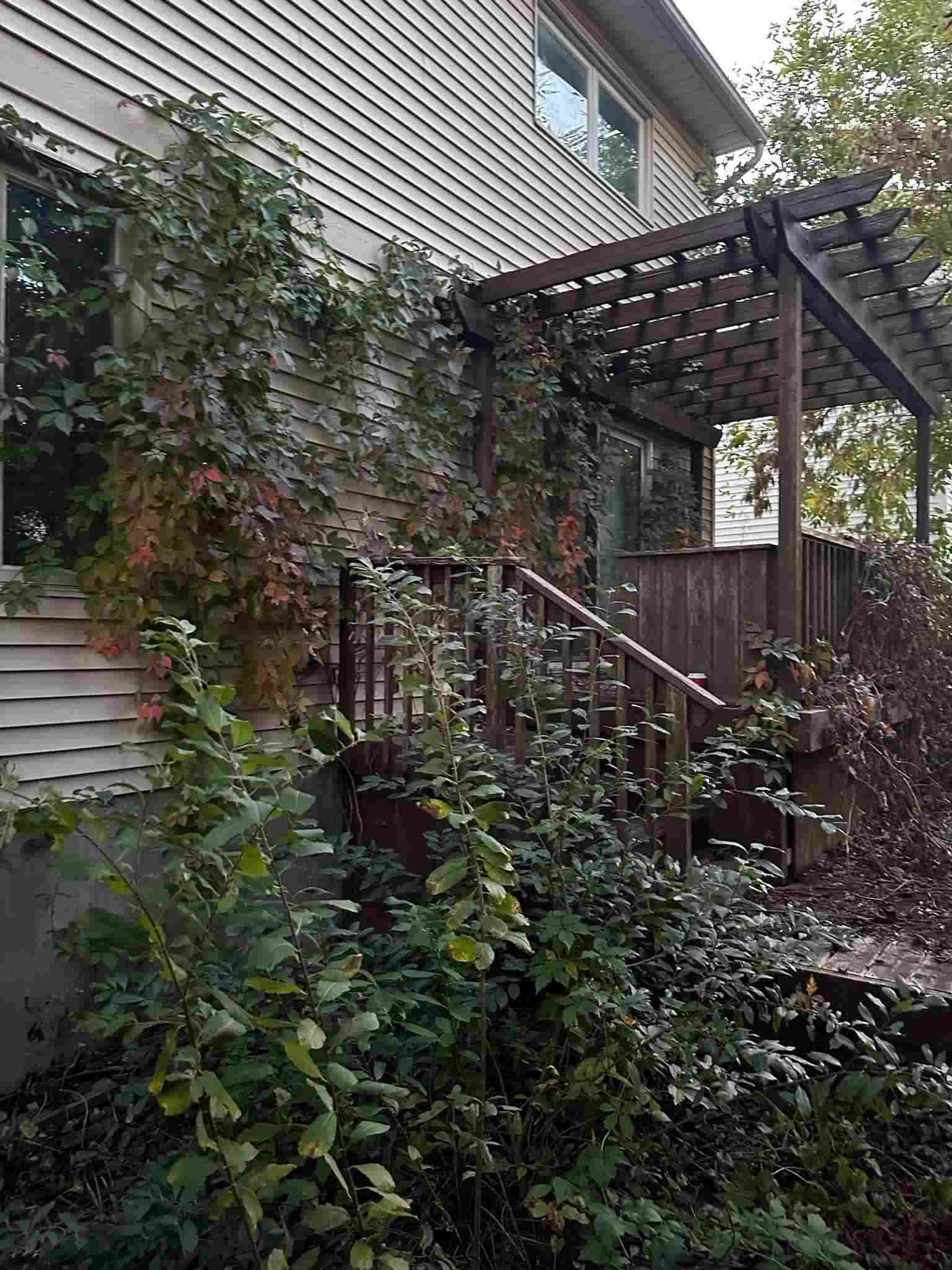
Vines had aggressively claimed the house's siding and pergola
As we cut through the first layers of brambles, we discovered something unexpected—this wasn't just a neglected yard, but one with hidden features completely concealed by time and vegetation. The first hints of interlocking stonework began to emerge, hinting at the yard's forgotten potential.
The most delicate phase involved the house itself, where vines had attached themselves to the siding. Here, our team used specialized techniques to safely separate the vegetation without damaging the structure, methodically working our way around the building's perimeter.
Sometimes the most beautiful spaces are hidden beneath years of unchecked growth, waiting to be rediscovered.
The Revelation
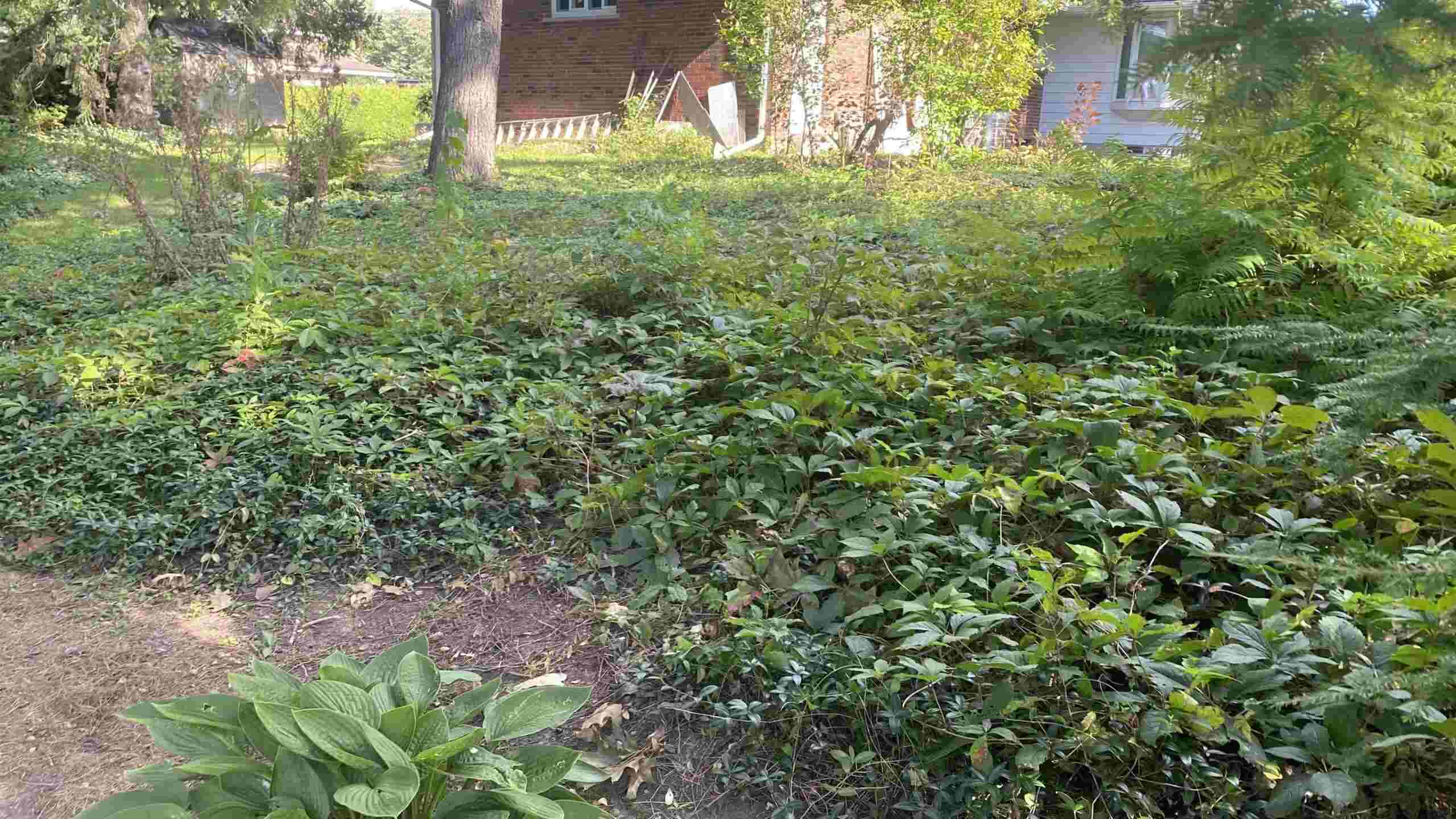
The overwhelming extent of overgrowth before our intervention
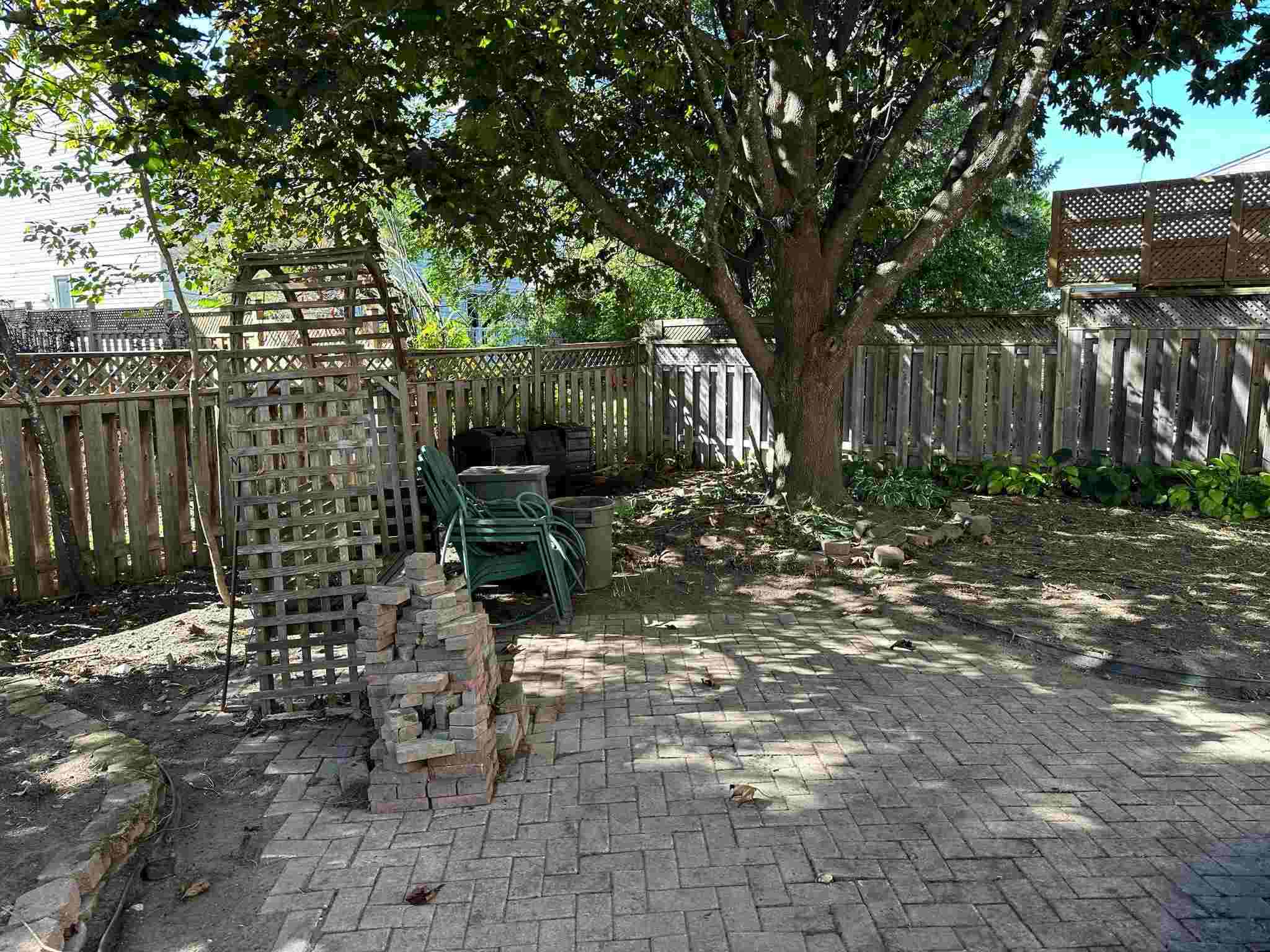
Every restoration tells a story, but this one delivered a genuine plot twist. As we cleared the final sections of ground cover, we uncovered an extensive interlocking stone patio—a feature I had no idea existed when doing the initial assesment.
The discovery transformed our approach. What began as a standard cleanup evolved into an archaeological excavation of sorts, carefully uncovering and preserving the original design elements that had been buried beneath years of neglect.
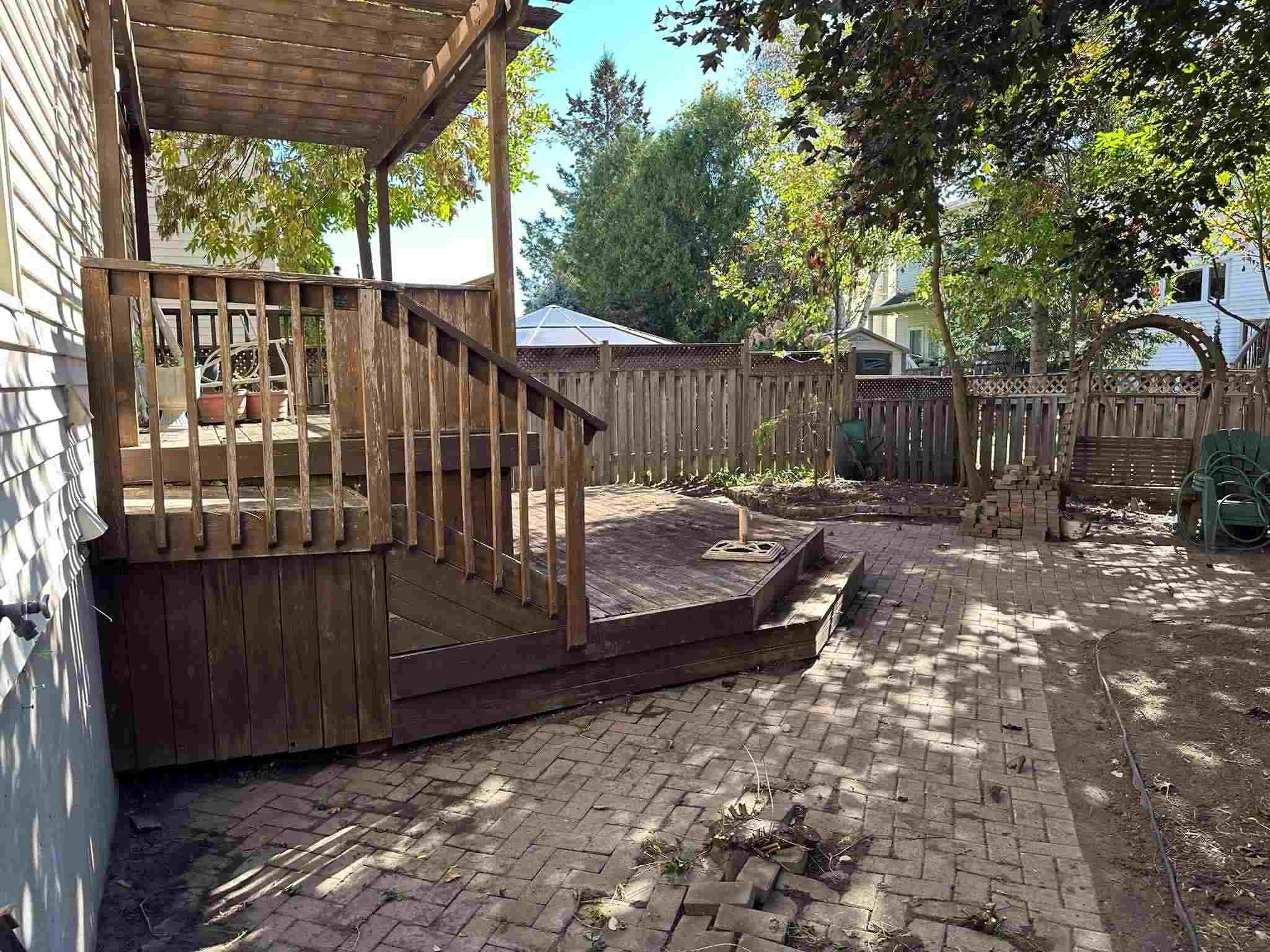
Uncovering the brick pathway
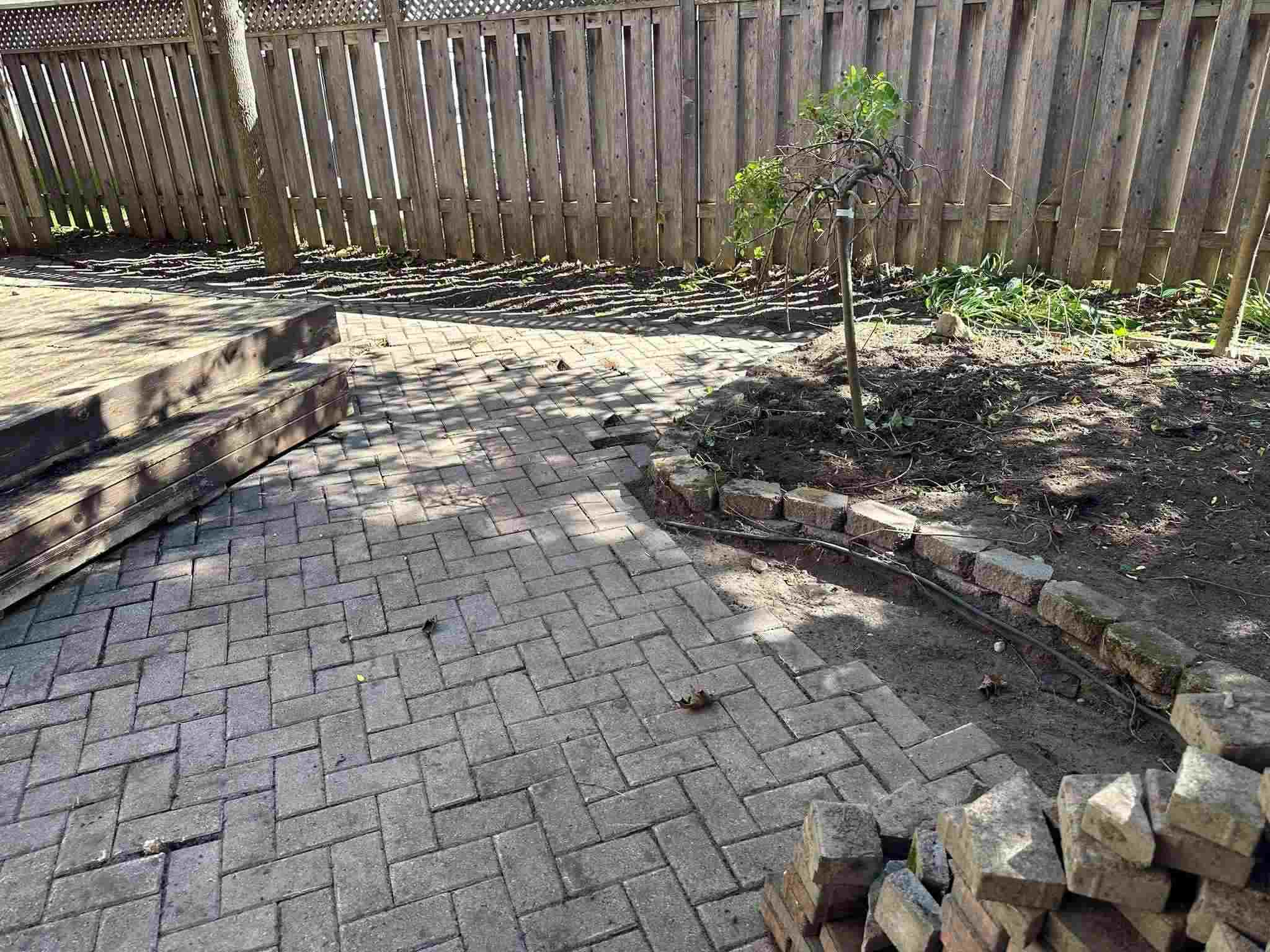
Creating defined garden spaces
Beneath the chaos, an intentional layout emerged: defined garden beds, a brick pathway along the wooden deck, and seating areas strategically positioned to enjoy different aspects of the yard. The space had once been thoughtfully designed, only to be reclaimed by nature in the absence of maintenance.
Perhaps most impressive were the resilient hostas we discovered along the back fence—plants that had somehow survived the aggressive competition and continued to thrive despite being almost completely overshadowed. These hardy survivors provided an immediate point of beauty in the newly reclaimed space.
The Transformation
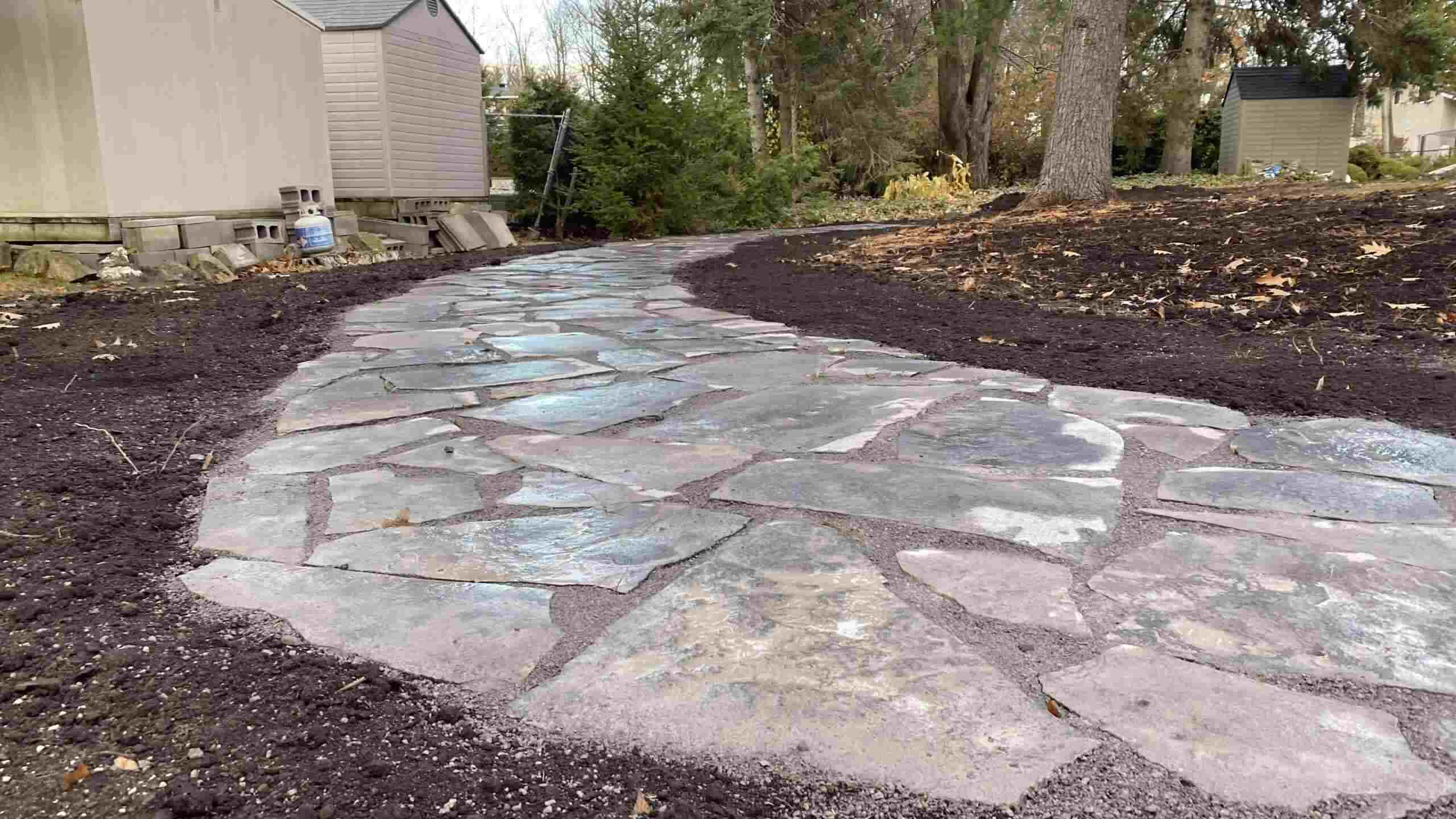
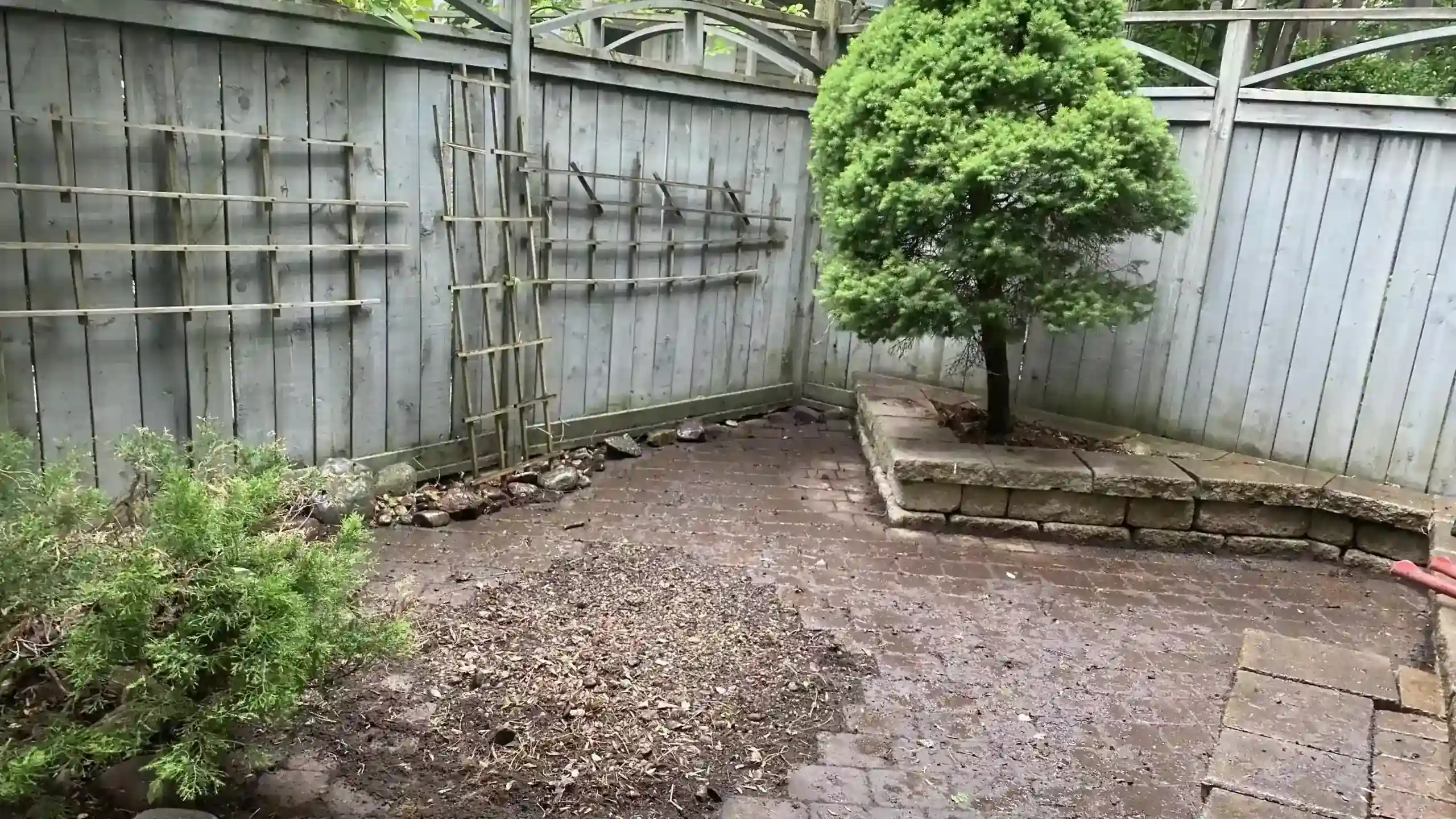
The rediscovered interlocking stonework patio
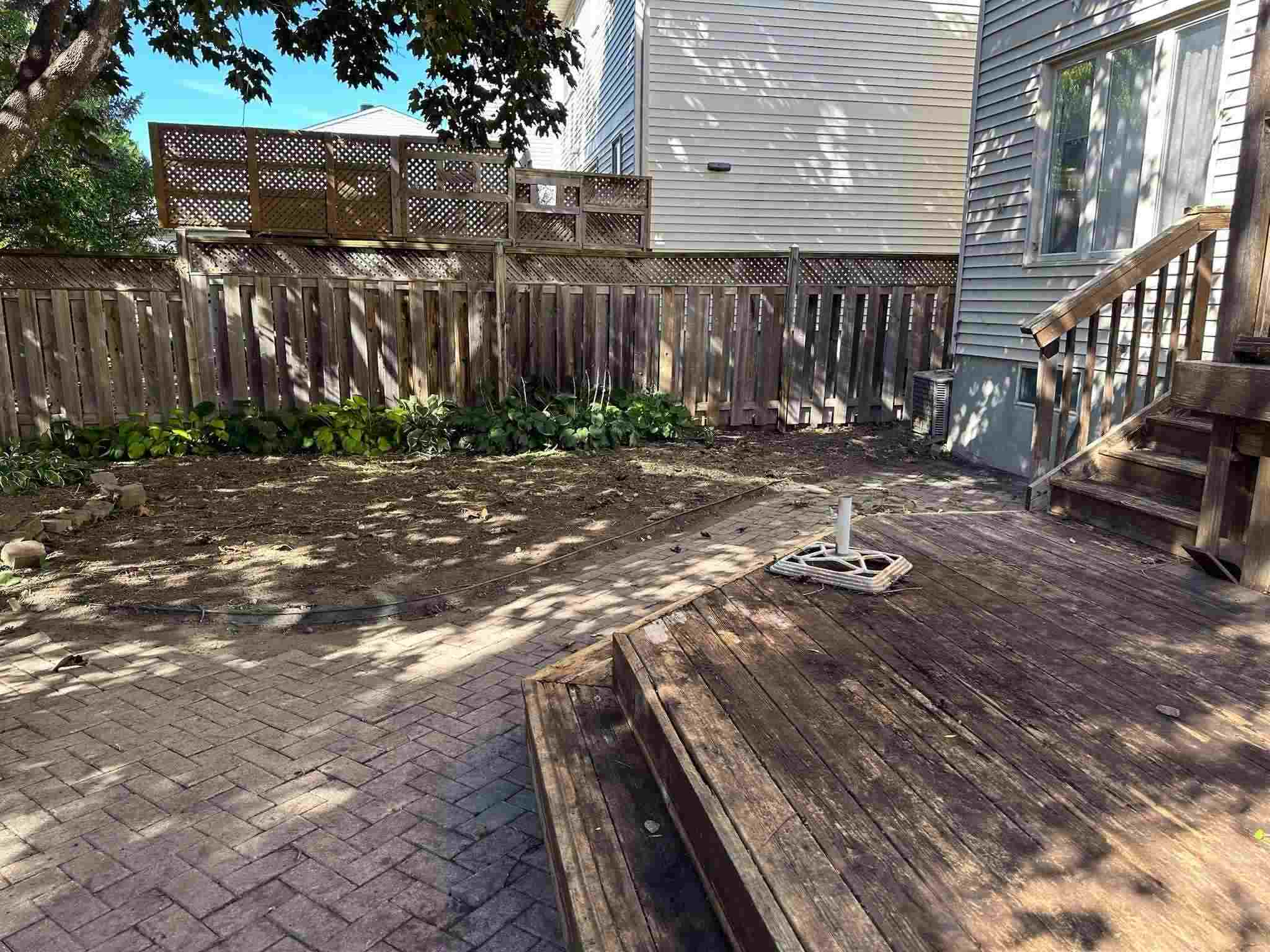
A usable outdoor space emerges from the chaos
The before-and-after contrast was stunning. Where tangled brambles once created an impenetrable barrier, a functional outdoor living space now welcomed its owner. The wooden deck, once inaccessible, offered an elevated view of the clean brick patio below.
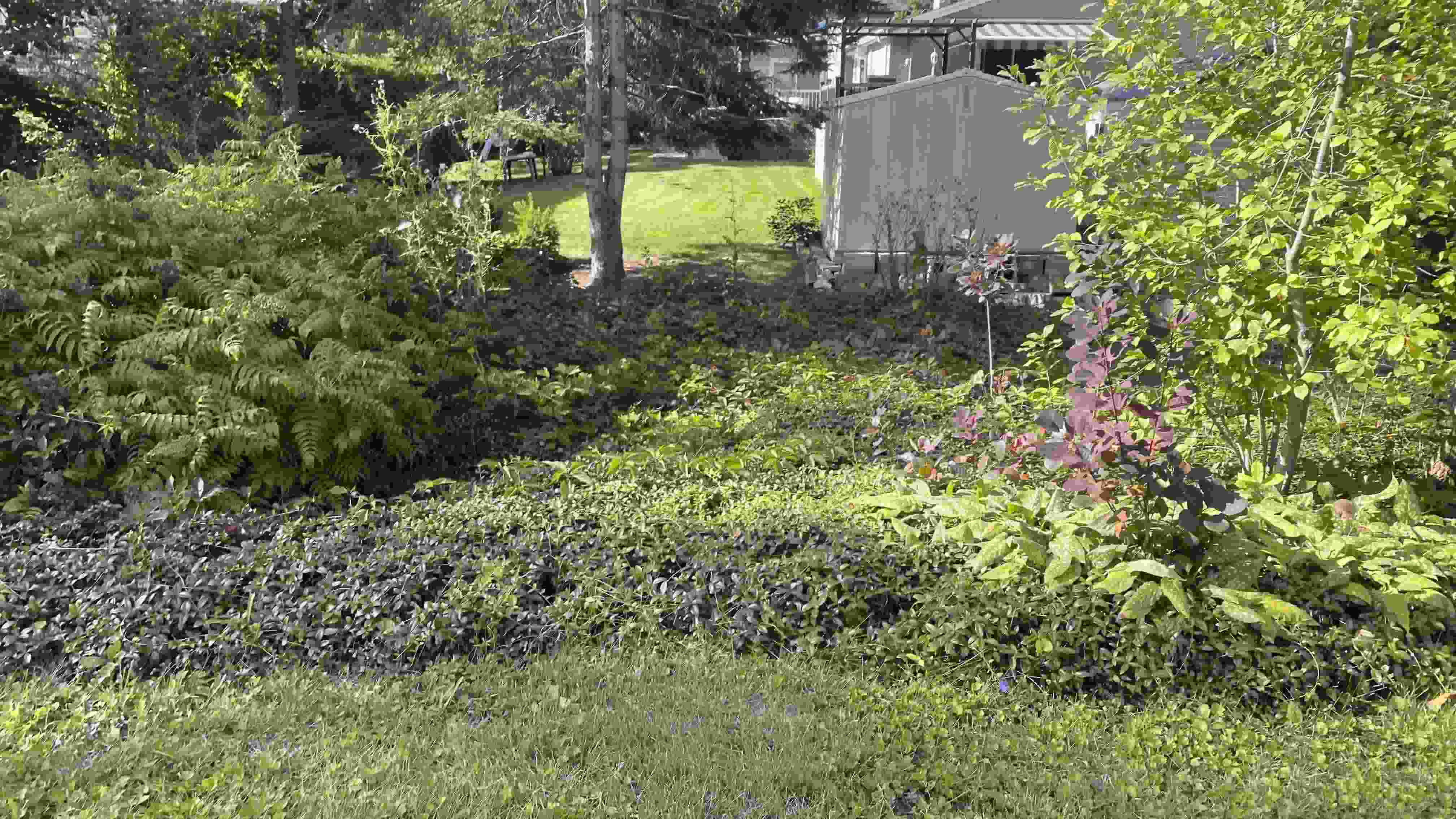
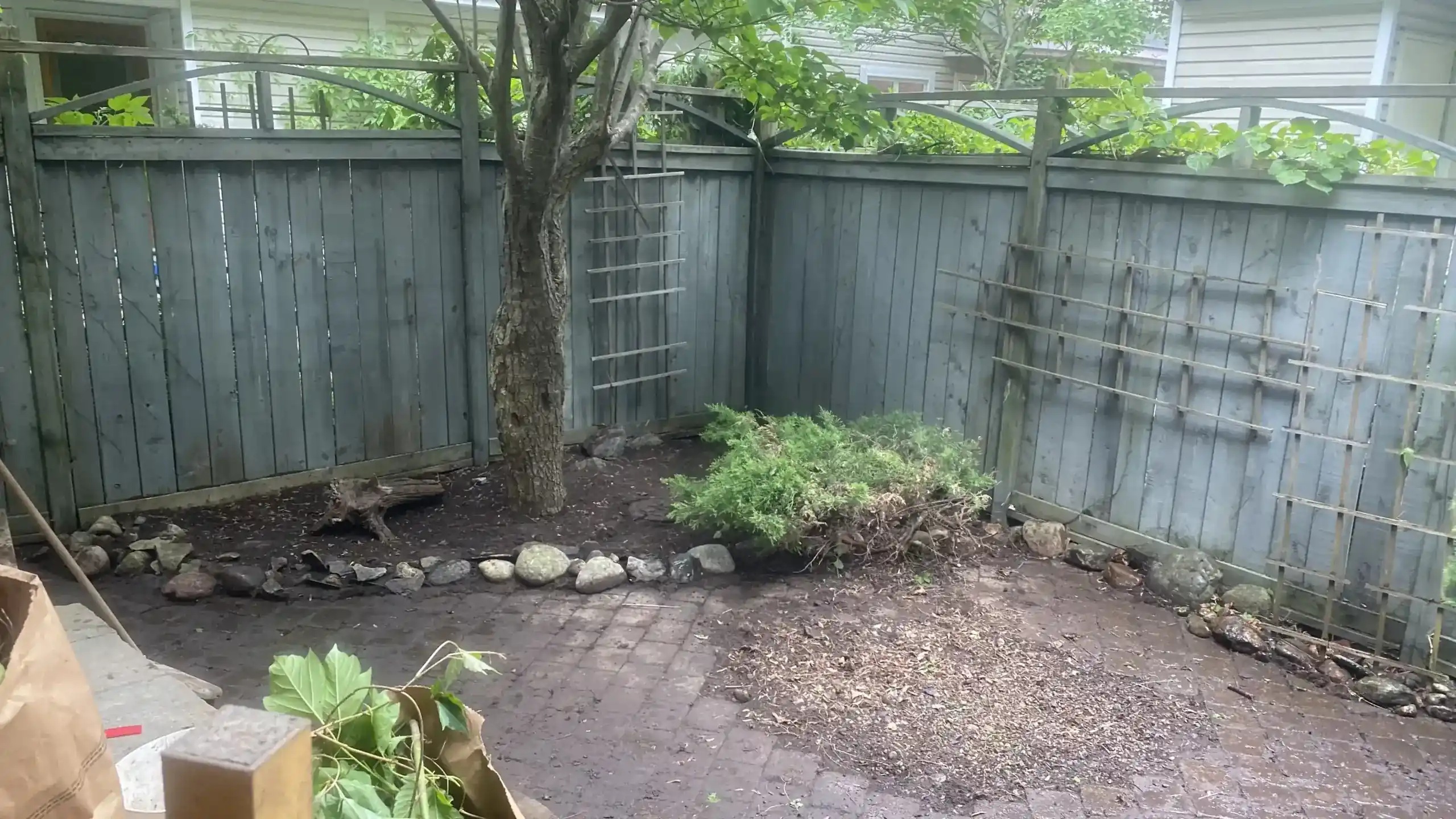
We maintained the mature tree as the yard's natural centerpiece, now complemented by curved garden bed edging that created definition and flow throughout the space. The young trees that had been struggling beneath the aggressive ground covering were now properly positioned, with room to grow and flourish.

Hostas thriving along the back fence
The most remarkable aspect wasn't what we added, but what we revealed—the yard's original character and charm that had been waiting patiently beneath the wilderness to be rediscovered.
When our work was complete, neighbors emerged to express their appreciation. Many had watched the property's slow surrender to nature with mounting concern about potential pest issues and impacts on surrounding property values. The transformation brought collective relief to the entire street.
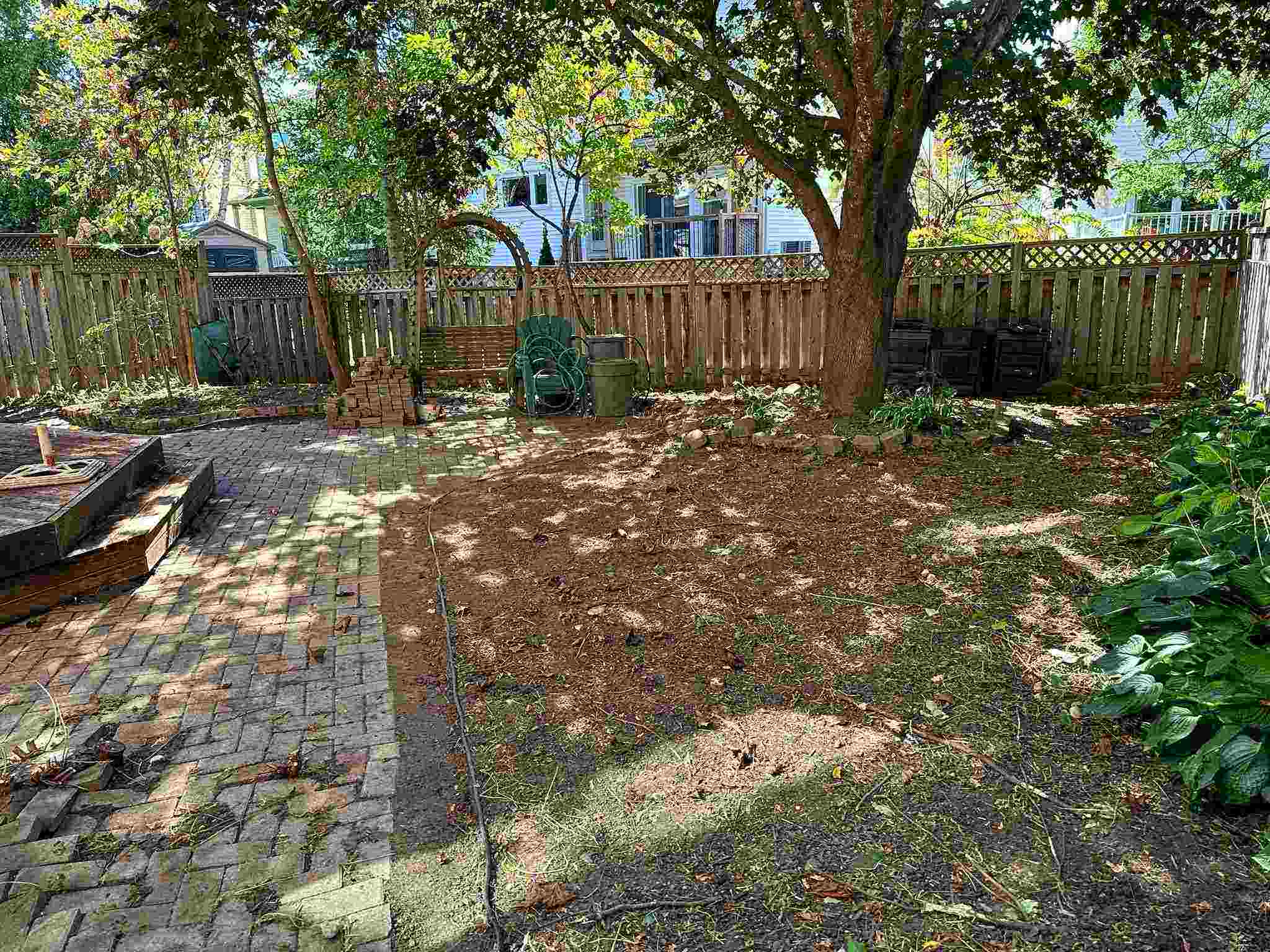
Defined spaces ready for enjoyment
I'm genuinely delighted to see the property restored to a clean, livable condition. We can't believe the difference—this yard hasn't looked this good in years!.
Projects like this remind us why we do what we do. Beyond the physical transformation, there's something profoundly satisfying about revealing potential that's been hidden in plain sight—reclaiming not just space, but possibility. Sometimes the most beautiful landscapes aren't created from scratch, but uncovered with patience and care, waiting just beneath the surface to be rediscovered.