
/* CSS Reset (minimal) */ *, *::before, *::after { box-sizing: border-box; margin: 0; padding: 0; }/* Brand Colors */ :root { --brand-primary: #93C020; --brand-black: #000000; --brand-dark-gray: #2D2C2C; --brand-light-gray: #EBEBEB; --brand-green: #287734; --brand-white: #FFFFFF; --brand-accent: #B7FE00; }/* Self-contained styles within .article-container */ .article-container { font-family: -apple-system, BlinkMacSystemFont, "Segoe UI", Roboto, Helvetica, Arial, sans-serif, "Apple Color Emoji", "Segoe UI Emoji", "Segoe UI Symbol"; line-height: 1.6; color: var(--brand-dark-gray); background-color: var(--brand-white); max-width: 900px; /* Increased max-width for better desktop view */ margin: 0 auto; padding: 20px; overflow: hidden; /* Contains floats and margins */ }/* Progress Bar */ .progress-container { position: fixed; top: 0; left: 0; width: 100%; height: 5px; background-color: var(--brand-light-gray); z-index: 1000; }.progress-bar { height: 100%; width: 0; background-color: var(--brand-primary); transition: width 0.1s linear; }/* Headings */ .article-container h1, .article-container h2, .article-container h3, .article-container h4, .article-container h5, .article-container h6 { margin-top: 1.5em; margin-bottom: 0.8em; color: var(--brand-green); line-height: 1.3; font-weight: 600; }.article-container h1 { font-size: 2.2rem; border-bottom: 2px solid var(--brand-light-gray); padding-bottom: 0.3em; margin-top: 0.5em; /* Reduced top margin for H1 */ }.article-container h2 { font-size: 1.8rem; }.article-container h3 { font-size: 1.5rem; }/* Paragraphs */ .article-container p { margin-bottom: 1.2em; color: var(--brand-dark-gray); }/* Links */ .article-container a { color: var(--brand-green); text-decoration: none; transition: color 0.3s ease; }.article-container a:hover, .article-container a:focus { color: var(--brand-primary); text-decoration: underline; }/* Lists */ .article-container ul, .article-container ol { margin-bottom: 1.2em; padding-left: 25px; /* Indentation for lists */ }.article-container li { margin-bottom: 0.6em; }/* Images & Figures */ .article-container figure { margin: 25px auto; text-align: center; }.article-container img { max-width: 100%; height: auto; border-radius: 8px; /* Softer corners */ box-shadow: 0 4px 8px rgba(0, 0, 0, 0.1); }.article-container figcaption { font-size: 0.85rem; /* Slightly larger caption */ color: #555; /* Darker gray caption */ margin-top: 8px; }/* Tables */ .article-container .responsive-table-container { overflow-x: auto; /* Allows horizontal scroll on small screens */ margin-bottom: 1.5em; }.article-container table { width: 100%; border-collapse: collapse; margin-bottom: 1em; }.article-container th, .article-container td { border: 1px solid var(--brand-light-gray); padding: 10px 12px; /* Slightly more padding */ text-align: left; vertical-align: top; }.article-container th { background-color: var(--brand-light-gray); font-weight: 600; color: var(--brand-dark-gray); }.article-container tr:nth-child(even) { background-color: #f9f9f9; /* Subtle row striping */ }/* Highlight Box */ .article-container .highlight-box { background-color: #f0f8f1; /* Light green background */ border-left: 5px solid var(--brand-primary); padding: 20px; margin: 2em 0; border-radius: 5px; } .article-container .highlight-box h2, .article-container .highlight-box h3 { margin-top: 0; /* Remove top margin for headings inside highlight box */ color: var(--brand-green); }/* CTA Button */ .article-container .cta-button { display: inline-block; background-color: var(--brand-primary); color: var(--brand-white) !important; /* Important to override link color */ padding: 12px 25px; border-radius: 5px; font-weight: bold; text-align: center; text-decoration: none !important; /* Important to override link style */ transition: background-color 0.3s ease, transform 0.2s ease; cursor: pointer; border: none; font-size: 1rem; /* Base font size */ }.article-container .cta-button:hover, .article-container .cta-button:focus { background-color: var(--brand-green); color: var(--brand-white) !important; transform: translateY(-2px); text-decoration: none !important; }.article-container .cta-center { display: block; /* Make it block to center */ text-align: center; margin: 2em auto; /* Center block element */ max-width: 350px; /* Limit width */ }/* Back to Top Button */ .back-to-top { position: fixed; bottom: 20px; right: 20px; background-color: var(--brand-primary); color: var(--brand-white); border: none; border-radius: 50%; width: 50px; height: 50px; font-size: 24px; line-height: 50px; text-align: center; cursor: pointer; opacity: 0; visibility: hidden; transition: opacity 0.3s ease, visibility 0.3s ease, background-color 0.3s ease; z-index: 999; }.back-to-top:hover { background-color: var(--brand-green); }.back-to-top.visible { opacity: 1; visibility: visible; }/* Collapsible Sections (FAQ) */ .article-container .faq-item { margin-bottom: 1em; border: 1px solid var(--brand-light-gray); border-radius: 5px; overflow: hidden; /* Contain content */ }.article-container .collapsible-trigger { background-color: var(--brand-light-gray); color: var(--brand-dark-gray); cursor: pointer; padding: 15px; width: 100%; border: none; text-align: left; outline: none; font-size: 1.1rem; font-weight: 600; display: flex; justify-content: space-between; align-items: center; transition: background-color 0.3s ease; } .article-container .collapsible-trigger:hover { background-color: #ddd; /* Slightly darker hover */ }.article-container .collapsible-trigger::after { content: '+'; /* Plus sign */ font-size: 1.5rem; font-weight: bold; color: var(--brand-green); transition: transform 0.3s ease; }.article-container .collapsible-trigger.active::after { content: "−"; /* Minus sign */ transform: rotate(180deg); /* Animate the sign */ }.article-container .collapsible-trigger.active { background-color: #e0e0e0; /* Active state background */ }.article-container .collapsible-content { padding: 0 18px; max-height: 0; overflow: hidden; background-color: var(--brand-white); transition: max-height 0.3s ease-out, padding 0.3s ease-out; /* Smooth transition */ } .article-container .collapsible-content p:first-child { padding-top: 15px; /* Add padding when expanded */ } .article-container .collapsible-content p:last-child { padding-bottom: 15px; /* Add padding when expanded */ }/* Tabs */ .article-container .tabs-container { margin: 2em 0; border: 1px solid var(--brand-light-gray); border-radius: 5px; overflow: hidden; }.article-container .tab-buttons { display: flex; background-color: var(--brand-light-gray); border-bottom: 1px solid var(--brand-light-gray); flex-wrap: wrap; /* Allow buttons to wrap on small screens */ }.article-container .tab-button { padding: 12px 20px; cursor: pointer; background-color: var(--brand-light-gray); border: none; border-right: 1px solid #ccc; /* Separator */ outline: none; font-size: 1rem; font-weight: 500; color: var(--brand-dark-gray); /* Default text color */ transition: background-color 0.3s ease, color 0.3s ease, border-bottom 0.3s ease; flex-grow: 1; /* Allow buttons to share space */ text-align: center; } .article-container .tab-button:last-child { border-right: none; }.article-container .tab-button:hover { background-color: #ddd; }.article-container .tab-button.active { background-color: var(--brand-white); color: var(--brand-green); /* Active text color */ font-weight: 600; border-bottom: 3px solid var(--brand-primary); /* Active indicator */ }.article-container .tab-content { display: none; padding: 20px; background-color: var(--brand-white); border-top: none; /* Already have border from button container */ }.article-container .tab-content.active { display: block; animation: fadeIn 0.5s ease-in-out; }@keyframes fadeIn { from { opacity: 0; } to { opacity: 1; } }/* Bar Chart / Data Visualization */ .article-container .chart-container { margin: 2em 0; padding: 20px; border: 1px solid var(--brand-light-gray); border-radius: 5px; background-color: #fdfdfd; } .article-container .chart-title { text-align: center; margin-bottom: 20px; font-size: 1.2rem; font-weight: 600; color: var(--brand-dark-gray); }.article-container .chart { display: flex; justify-content: space-around; align-items: flex-end; height: 250px; /* Fixed height for the chart area */ border-bottom: 2px solid var(--brand-dark-gray); padding-bottom: 10px; }.article-container .bar-item { display: flex; flex-direction: column; align-items: center; width: 15%; /* Adjust width as needed */ }.article-container .bar { width: 100%; background-color: var(--brand-primary); border-radius: 3px 3px 0 0; /* Rounded top */ transition: height 1s ease-out; /* Animation */ position: relative; /* For value display */ height: 0; /* Initial height for animation */ } .article-container .bar:hover { background-color: var(--brand-green); } .article-container .bar::after { /* Display value on top */ content: attr(data-value); position: absolute; top: -20px; left: 50%; transform: translateX(-50%); font-size: 0.8rem; font-weight: bold; color: var(--brand-dark-gray); }.article-container .bar-label { margin-top: 10px; font-size: 0.9rem; text-align: center; color: var(--brand-dark-gray); }/* Timeline Component */ .article-container .timeline { position: relative; margin: 2em 0; padding: 20px 0; } /* Central line */ .article-container .timeline::before { content: ''; position: absolute; top: 0; left: 50%; transform: translateX(-50%); width: 3px; height: 100%; background-color: var(--brand-light-gray); }.article-container .timeline-item { position: relative; width: 50%; padding: 15px 30px; margin-bottom: 30px; opacity: 0; /* Initially hidden for animation */ animation: slideIn 0.6s forwards; } .article-container .timeline-item:nth-child(odd) { animation-delay: 0.2s; } .article-container .timeline-item:nth-child(even) { animation-delay: 0.4s; }/* Timeline Item Positioning */ .article-container .timeline-item:nth-child(odd) { left: 0; padding-right: 60px; /* Space from center line */ text-align: right; }.article-container .timeline-item:nth-child(even) { left: 50%; padding-left: 60px; /* Space from center line */ }/* Timeline Item Content Box */ .article-container .timeline-content { background-color: var(--brand-white); padding: 15px; border-radius: 6px; border: 1px solid var(--brand-light-gray); box-shadow: 0 2px 5px rgba(0, 0, 0, 0.08); } .article-container .timeline-content h3 { margin-top: 0; font-size: 1.2rem; color: var(--brand-green); }/* Timeline Item Dot */ .article-container .timeline-item::after { content: ''; position: absolute; top: 20px; width: 15px; height: 15px; border-radius: 50%; background-color: var(--brand-primary); border: 3px solid var(--brand-white); z-index: 1; }.article-container .timeline-item:nth-child(odd)::after { right: -8px; /* Position dot on the line */ }.article-container .timeline-item:nth-child(even)::after { left: -8px; /* Position dot on the line */ }/* Timeline Animations */ @keyframes slideIn { from { opacity: 0; transform: translateY(20px); } to { opacity: 1; transform: translateY(0); } }/* Summary Box / Featured Snippet Aid */ .article-container .summary-box { background-color: #eef7e8; /* Very light green */ border: 1px solid var(--brand-primary); border-radius: 5px; padding: 15px 20px; margin: 1.5em 0; } .article-container .summary-box h3 { margin-top: 0; margin-bottom: 0.5em; font-size: 1.2rem; color: var(--brand-green); }/* Responsive Adjustments */ @media (max-width: 768px) { .article-container { padding: 15px; }.article-container h1 { font-size: 1.8rem; }.article-container h2 { font-size: 1.5rem; } .article-container h3 { font-size: 1.3rem; }/* Timeline Adjustments for Mobile */ .article-container .timeline::before { left: 15px; /* Move line to the left */ transform: translateX(0); } .article-container .timeline-item { width: 100%; left: 0 !important; /* Reset left positioning */ padding-left: 50px !important; /* Space from left line */ padding-right: 15px !important; /* Reset right padding */ text-align: left !important; /* Align all text left */ margin-bottom: 20px; /* Reduce margin */ } .article-container .timeline-item::after { left: 8px !important; /* Position dot on the left line */ right: auto !important; /* Reset right */ }/* Tab Button Adjustments */ .article-container .tab-buttons { flex-direction: column; /* Stack buttons vertically */ } .article-container .tab-button { border-right: none; /* Remove side borders */ border-bottom: 1px solid #ccc; /* Add bottom borders */ text-align: left; /* Align text left */ } .article-container .tab-button:last-child { border-bottom: none; /* Remove last bottom border */ } .article-container .tab-button.active { border-bottom: 3px solid var(--brand-primary); /* Keep active indicator */ }/* Bar Chart Adjustments */ .article-container .chart { height: 200px; /* Reduce height */ } .article-container .bar-item { width: 28%; /* Allow more space */ } .article-container .bar-label { font-size: 0.8rem; } .article-container .bar::after { font-size: 0.7rem; top: -15px; } }@media (max-width: 480px) { .article-container h1 { font-size: 1.6rem; } .article-container h2 { font-size: 1.4rem; } .article-container h3 { font-size: 1.2rem; } .article-container .cta-button { padding: 10px 20px; font-size: 0.9rem; } .back-to-top { width: 40px; height: 40px; font-size: 20px; line-height: 40px; } } { "@context": "https://schema.org", "@type": "Article", "headline": "Thicker Nepean Lawns: When to Overseed on Clay Soil", "author": { "@type": "Organization", "name": "Clean Yards" }, "image": [ "https://cleanyards.ca/wp-content/uploads/2025/03/Macro_photograph_of_dense__dam_3116.webp", "https://cleanyards.ca/wp-content/uploads/2025/03/detailed_close_up_photograph_o_5464.webp", "https://cleanyards.ca/wp-content/uploads/2025/04/close_up_photograph_of_grass_s_5696.webp" ], "description": "Learn the best time and techniques for overseeding lawns with clay soil in Nepean, Ottawa. This guide covers soil preparation, aeration, seed selection, and post-seeding care for a thicker, healthier lawn.", "mainEntityOfPage": { "@type": "WebPage", "@id": "https://cleanyards.ca/blog/nepean-overseeding-clay-soil/" // Replace with actual article URL if known } } { "@context": "https://schema.org", "@type": "HowTo", "name": "How to Overseed Clay Soil Lawns", "description": "A step-by-step guide to successfully overseeding a lawn with compacted clay soil, particularly relevant for the Ottawa region.", "step": [ { "@type": "HowToStep", "name": "Prep Work", "text": "Mow the existing lawn short (1.5-2 inches) and rake thoroughly to remove thatch and debris.", "url": "#step-1-prep-work---the-tidy-up-before-the-throw-down", // Link to relevant section "image": "https://cleanyards.ca/wp-content/uploads/2025/03/detailed_close_up_photograph_o_5464.webp" // Relevant image }, { "@type": "HowToStep", "name": "Aeration", "text": "Use a core aerator to pull plugs of soil, relieving compaction. Leave plugs on the lawn.", "url": "#step-2-aeration----the-clay-soil-game-changer", "image": "https://cleanyards.ca/wp-content/uploads/2025/03/detailed_close_up_photograph_o_5464.webp" }, { "@type": "HowToStep", "name": "Amend the Soil", "text": "Spread a thin layer (¼ inch) of quality compost or screened topsoil over the aerated lawn.", "url": "#step-3-amend-the-soil-your-lawn-will-thank-you" }, { "@type": "HowToStep", "name": "Choose Seed", "text": "Select a high-quality grass seed mix suitable for Ottawa's climate, clay soil, and your sun exposure (e.g., Tall Fescue blends).", "url": "#step-4-choose-your-champion-seed" }, { "@type": "HowToStep", "name": "Spread Seed", "text": "Use a spreader to apply seed evenly at the recommended overseeding rate, ensuring good seed-to-soil contact.", "url": "#step-5-spread-the-seed-evenly", "image": "https://cleanyards.ca/wp-content/uploads/2025/04/close_up_photograph_of_grass_s_5696.webp" }, { "@type": "HowToStep", "name": "Fertilize (Optional)", "text": "Apply a starter fertilizer low in nitrogen and high in phosphorus to encourage root growth.", "url": "#step-6-give-it-a-kickstart-optional-fertilizer" }, { "@type": "HowToStep", "name": "Watering", "text": "Keep the top layer consistently moist with light, frequent watering until germination. Then, water deeper and less often.", "url": "#step-7-watering-wisdom---the-make-or-break-phase" }, { "@type": "HowToStep", "name": "Aftercare", "text": "Minimize foot traffic. Mow only when new grass reaches 3 inches, removing no more than 1/3 of the blade height.", "url": "#step-8-patience-and-tlc" } ] } { "@context": "https://schema.org", "@type": "FAQPage", "mainEntity": [ { "@type": "Question", "name": "Is overseeding clay soil in Ottawa even worth the effort, or am I just feeding the birds?", "acceptedAnswer": { "@type": "Answer", "text": "Absolutely, it's worth it! While clay soil presents challenges like compaction and slow drainage, overseeding *can* be very successful. The trick is *how* you do it. Proper preparation, especially core aeration and potentially adding a bit of compost, makes a world of difference. Follow the right steps, and you can definitely achieve a thicker, healthier lawn." } }, { "@type": "Question", "name": "Do I *really* need to rent an aerator for my clay lawn before overseeding?", "acceptedAnswer": { "@type": "Answer", "text": "For clay soil, core aeration is pretty much non-negotiable for great overseeding results. It breaks up that dense structure, allowing critical air, water, and grass seed to penetrate. Skipping aeration significantly reduces the chances of success." } }, { "@type": "Question", "name": "What’s the biggest mistake people make when overseeding clay soil?", "acceptedAnswer": { "@type": "Answer", "text": "Besides skipping aeration, the most common blunder is probably improper watering. Either drowning the seed on slow-draining clay or letting the seedbed dry out completely after germination starts. Consistent, light moisture initially, followed by deeper, less frequent watering once sprouts appear, is crucial." } }, { "@type": "Question", "name": "Should I add topsoil or compost when overseeding my clay lawn? How much?", "acceptedAnswer": { "@type": "Answer", "text": "Adding a thin layer (about ¼ inch) of good quality compost or screened topsoil *after* aerating is highly recommended for clay soil. It provides a better environment for seed germination and helps improve soil structure over time. Spread it evenly after pulling aeration plugs." } }, { "@type": "Question", "name": "How long does it *really* take to see results after overseeding on clay?", "acceptedAnswer": { "@type": "Answer", "text": "Germination time depends on the grass seed type, soil temperature, and moisture (typically 7-21 days). Quick-germinating varieties like perennial ryegrass show first, while others like Kentucky bluegrass take longer. Clay might slightly slow things down if not perfectly prepped. Patience and proper care are key." } } ] }

Thicker Nepean Lawns: When to Overseed on Clay Soil

Ready to transform your Nepean lawn from patchy to plush? Dealing with clay soil adds a twist, but achieving that thick, green carpet is possible! Need expert help right away? Request a free quote today!

Quick Guide to Overseeding Clay Soil:

  • Best Time: Late summer/early fall (late Aug - Sept) in Ottawa.
  • Key Step: Core aeration is crucial to combat compaction.
  • Soil Boost: Add a thin layer of compost/topsoil after aerating.
  • Seed Choice: Use high-quality seed blends suited for clay & local climate (e.g., Tall Fescue).
  • Watering: Keep seedbed consistently moist (not soggy) until germination, then water deeper, less often.

Introduction: Dreaming of a Lush Lawn in Nepean? Let's Talk Overseeding!

Hey Nepean neighbours! Dreaming of a lawn so lush it makes the folks strolling through Centrepointe Park pause in admiration? You know, the kind of thick, green carpet perfect for barefoot summer evenings or just looking *really* good? We get it. But let's be honest, sometimes our Ottawa lawns look a bit… *patchy* or tired, especially after a tough season. Maybe it’s seen one too many games of fetch or suffered through a harsh winter.

That's where the *gardening* magic of *overseeding* comes in! Think of it as giving your existing *lawn* a serious pep talk (and some reinforcements), scattering new grass seed directly over your current turf to fill in thin spots and create denser, healthier grass. It's one of the best-kept secrets to achieving that enviable *landscaping* look.

Now, we know *Nepean* often blesses us with that lovely *clay soil*. While great for pottery, maybe, it can be a bit stubborn for lawn care, holding onto water and sometimes compacting easily, right? Don't throw in the trowel just yet! This guide is your friendly neighbourly advice, packed with practical tips specifically for conquering *overseeding* on our local soil. We'll help turn that patchy problem into a thick, healthy lawn you’ll be proud of. Let's get seeding!

Why Bother Overseeding? More Than Just Pretty Blades

Okay, so you're looking at your lawn in, say, *Greely*, and maybe thinking, "Overseeding? Sounds like extra *gardening* chores. Why bother?" Totally fair question! It might seem like just another task on the weekend list, but trust us, overseeding your *lawn* is way more than just tossing down extra seed and hoping for the best. It’s like giving your *turf* a multi-vitamin and a pep talk all rolled into one, tackling several common Ottawa lawn headaches simultaneously.

Here’s the scoop on why it’s worth the effort:

  • Patchiness Be Gone!: This is the big one. Does your lawn have thin spots from Fido’s favourite route? Bare patches from last summer’s paddling pool? Or maybe just general thinning after a tough Ottawa winter? Overseeding directly targets these areas, filling them in with fresh, new grass growth. It's the secret sauce for transforming a worn-out lawn, and you can learn more in a guide to getting thicker grass through overseeding in Embrun. Think of it as nature’s concealer for your yard – but way more effective.
  • Natural Weed Defence: Forget relying solely on pulling those pesky dandelions. A thick, dense lawn is surprisingly good at fighting its *own* battles. When healthy grass blades grow close together, they literally crowd out weeds, competing for sunlight, water, and *soil* nutrients. Less space for weeds means less back-breaking weeding for you. Yes, please! For comprehensive property upkeep, consider services like property clean up.
  • Building a Tougher Lawn: Like fashion, grass varieties change! Older lawns might be rocking grass types that weren’t designed to handle today's climate curveballs or common lawn diseases as well. Overseeding lets you introduce newer, more resilient *grass seed* varieties – perhaps ones that are more drought-tolerant or disease-resistant. These tougher grasses are better suited to handle the specific conditions here in the Ottawa region, a bit like understanding how garden microclimates in Kenmore affect fall plant prep helps protect specific plants. A more resilient lawn means less worry and work down the road. This pairs well with ongoing garden maintenance.
  • Boosting Colour and Vibrancy: Beyond just filling gaps, overseeding injects new life and colour into tired-looking turf. The new growth blends with the existing grass, creating a more uniform, lush, and vibrant green carpet that seriously bumps up your home’s curb appeal. A fantastic lawn forms the perfect foundation for your entire *landscape*, complementing features like beautifully maintained trees – perhaps using techniques discussed in this Embrun guide to pollarding and tree shaping. Your revitalized lawn will look great day and night, maybe even highlighted by some well-chosen Russell outdoor lighting for home appeal and security.

So, is overseeding worth the bother? Absolutely. It’s one of the smartest, most effective ways to invest in the long-term health and beauty of your lawn. If the whole process feels a bit daunting, remember there are plenty of professional lawn care and landscaping services available to lend a hand!

The Clay Conundrum: Understanding Nepean's Soil
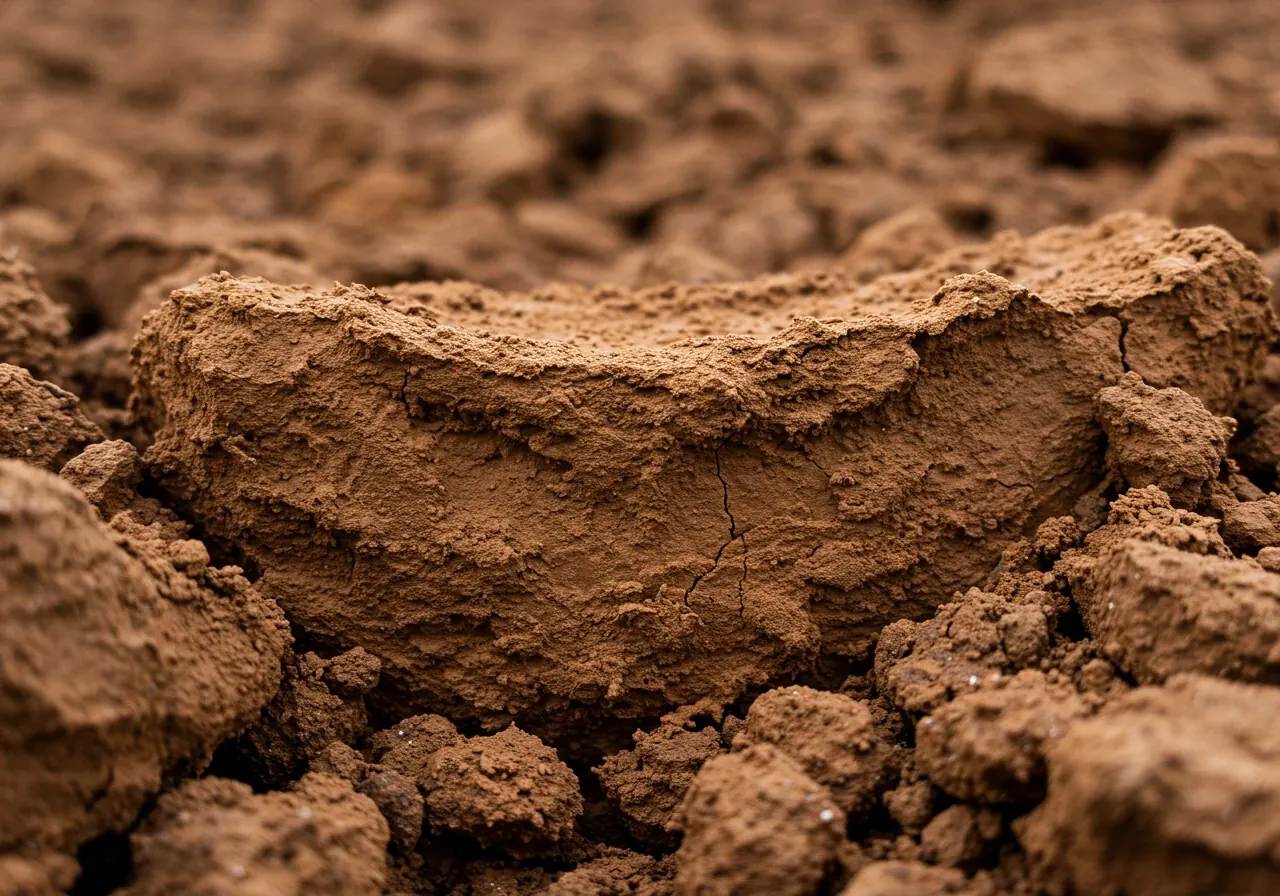
A detailed close-up photograph illustrating the dense, heavy texture of compacted clay soil, perhaps showing some cracking if dry, to visually represent the challenge discussed.
Dense, compacted clay soil typical in the Nepean area.

Alright, let's talk dirt! Specifically, the *soil* beneath our feet here in Nepean and much of the wider Ottawa region. If you've ever tried digging after a dry spell and felt like you hit concrete, or tried planting after a rainstorm and ended up with muddy boots heavier than bricks, chances are you've met our local celebrity: clay *soil*. Let's face it, while it might be great for making pottery, it can be a bit of a diva when it comes to *gardening* and growing that perfect *lawn*.

What Makes Clay Soil Unique?

It's all about particle size. Clay soil is made up of teeny-tiny mineral particles packed tightly together. This density means it holds onto water like a champ (sometimes *too* well) and is often rich in nutrients. But that tight packing is also its downfall for *landscaping*. It drains slowly, which can lead to soggy roots – grass roots need oxygen too! When it dries, it can become incredibly hard and compacted, making it tough for delicate *grass seed* roots to push through.

Here in Ottawa, our famous freeze-thaw cycles add another wrinkle. As the ground freezes and thaws repeatedly, it can heave the *soil* and make compaction even worse, creating a tough barrier for water and air. This is a challenge across the region, whether you need a Barrhaven yard cleanup service to prep for spring or are dealing with similar conditions further out, requiring something like a Marionville property cleanup service.

Clay Soil: The Good and The Bad

Pros:

  • High water retention (good in droughts, if roots can access it)
  • Usually high in plant nutrients

Cons:

  • Slow drainage (can lead to waterlogging, root rot)
  • Prone to compaction (restricts root growth, air, water penetration)
  • Difficult to work (sticky when wet, rock-hard when dry)
  • Warms up slowly in spring

Understanding these challenges is key before starting projects like garden installation or sod installation.

Can Clay Soil Be Improved?

Yes! The *best* long-term strategy is to improve its structure by regularly adding organic matter like compost. This helps bind the tiny clay particles into larger aggregates, improving drainage and aeration over time. Think of it as giving your soil a healthy diet. Core aeration also works wonders to temporarily relieve compaction and allow amendments to penetrate.

Improving heavy clay takes time and consistent effort, but it's achievable. For significant soil challenges or large areas, exploring professional soil preparation services might be beneficial. Reviewing our terms and conditions can clarify service agreements. For more information, feel free to contact us – we're happy to chat about your Nepean lawn!

Also, check out local resources like the [Link to Master Gardeners of Ottawa-Carleton Soil Advice] for community insights.

Relative Difficulty Working Different Soil Types

Clay (Wet/Dry)
Loam
Sandy

Timing is Everything: The Best Season to Overseed in Ottawa

Ah, Ottawa weather. Predictably unpredictable, right? When it comes to *gardening* chores like overseeding your *lawn*, trying to guess the perfect moment can feel like playing the lottery. But fear not! There actually *is* a "Goldilocks" season for scattering that *grass seed* for the best results, especially here in our neck of the woods, whether you're in Barrhaven or closer to Manotick.

The absolute sweet spot for overseeding in Ottawa is late summer to early fall. Think late August through September, maybe sneaking into the first week or two of October if Mother Nature is feeling generous. Why then? It’s pure genius, really:

  • Warm Soil: The ground is still holding onto that lovely summer warmth, which is perfect for encouraging quick *grass seed* germination. Seeds love cozy toes!
  • Cooler Air: Those scorching summer days are fading. Cooler air temperatures mean less stress on delicate new grass seedlings as they sprout.
  • Less Weed Drama: Most annual weeds (like crabgrass) are finishing their life cycle and starting to check out. This gives your new grass a much better chance to establish without battling these pesky invaders.
  • Time Before the Deep Freeze: Seeding during this window gives your new *turf* several weeks to grow strong roots before the first hard frost typically hits Ottawa (usually mid-to-late October). Getting your lawn ready often involves a good tidy-up first, similar to what our general Ottawa yard cleanup service provides. It's all part of smart fall preparation, much like the specific tasks involved in a thorough Marionville garden clean up service before winter hits.

"But what about spring?" you ask. Good question! Spring *seems* logical for *landscaping* tasks, but it’s often less ideal for overseeding here. Aggressive weed seeds germinate right alongside your grass, leading to major competition. The *soil* can be cold and wet, slowing germination, and then BAM! Summer heat arrives, potentially scorching your tender new grass before it’s ready. Plus, many spring *lawn care* routines involve crabgrass preventers, which stop *all* seeds from growing – including your new grass seed!

The key is beating that first hard frost. Give your seeds at least 4-6 weeks of good growing weather *before* winter clamps down. As you can learn more About us, we've seen the difference good timing makes! If you're unsure about the perfect window or need more drastic help like Sod installation, don't hesitate to Contact us. Happy seeding!

Your Step-by-Step Guide to Overseeding Clay Soil Like a Pro

Okay, team lawn! Let's roll up our sleeves and tackle that clay soil overseeding challenge head-on. Follow this timeline for the best results.

Step 1: Prep Work

Mow lawn short (1.5-2 inches). Rake vigorously to remove thatch and debris. Crucial for seed-to-soil contact. Similar to prep by a Metcalf yard cleanup service.
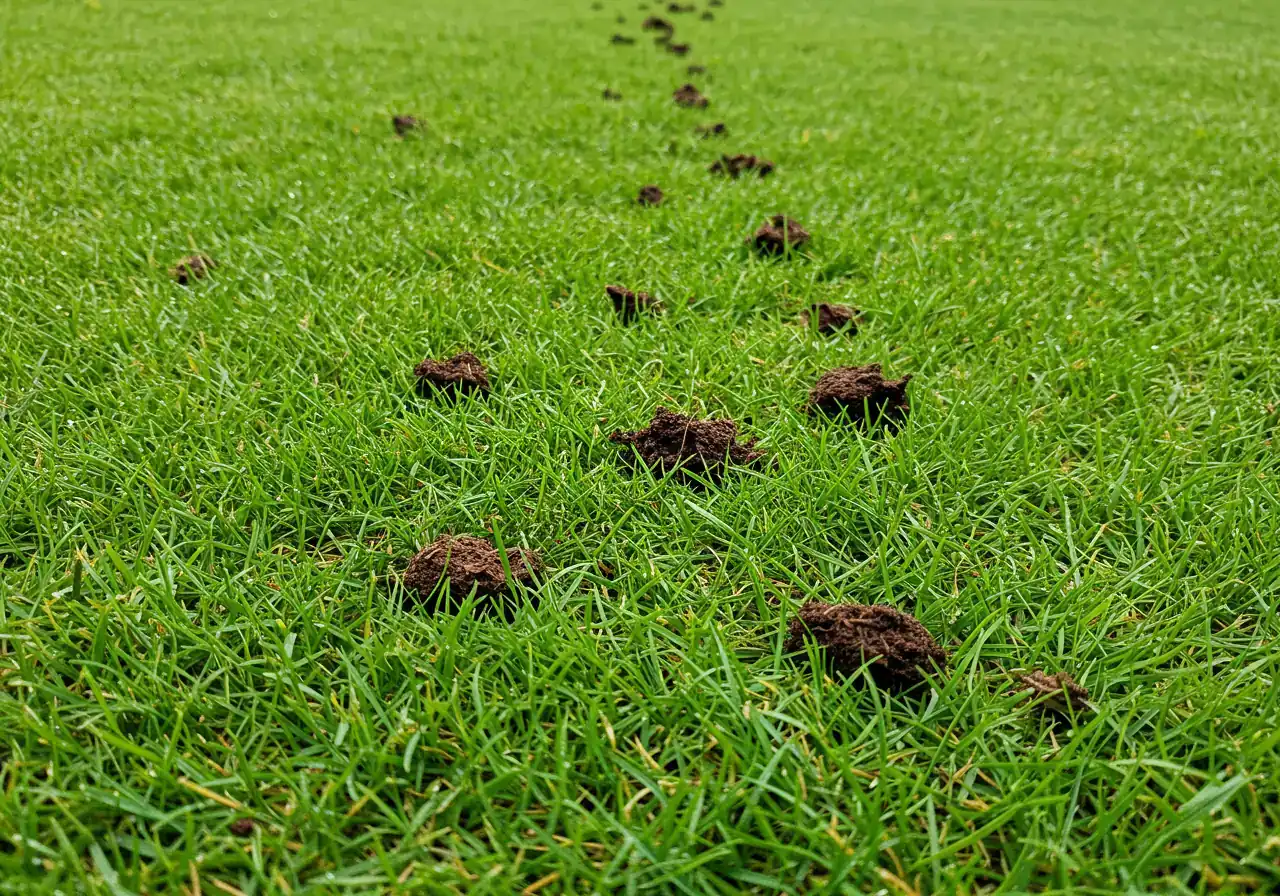
A clear image showing the result of core aeration on a lawn. Focus on the pattern of holes and the small soil plugs left on the grass surface, emphasizing this crucial step for clay soil.
Lawn after core aeration showing soil plugs.

Step 2: Aeration (Vital!)

Rent and use a *core aerator*. This pulls soil plugs, relieving compaction and allowing air, water, and seed penetration. Don't skip this on clay!

Step 3: Amend Soil

Spread a thin layer (¼ inch) of compost or screened topsoil after aerating. Improves soil structure and provides a good seedbed. Essential for future garden installs too.

Step 4: Choose Seed

Select high-quality seed mix for overseeding, suited for Ottawa climate, clay, and sun conditions (e.g., Tall Fescue blends).

Need help with material selection? Let us know!

Step 5: Spread Seed

Use a spreader for even application at the recommended overseeding rate. Ensure good seed-to-soil contact.
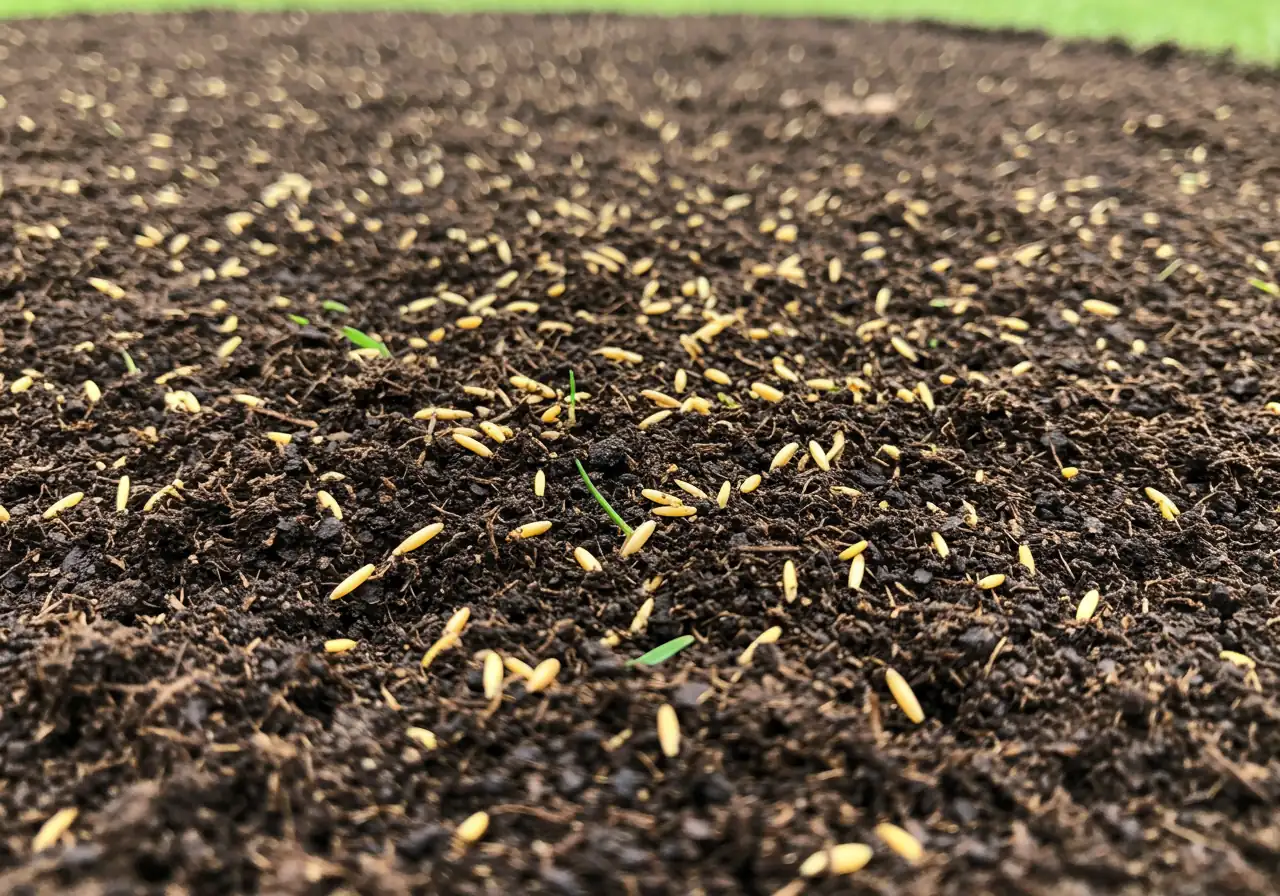
A close-up view demonstrating good seed-to-soil contact after overseeding on prepared clay soil. Show grass seeds scattered evenly, resting within aeration holes and amongst a thin layer of compost or top dressing.
Grass seed making good contact with prepared soil.

Step 6: Fertilize (Optional)

Apply starter fertilizer (low N, high P) to boost root development. Follow package directions carefully.

Step 7: Watering

Keep top layer consistently moist (light, frequent watering) until germination (7-21 days). Then water deeper, less often.

Check out the [Link to City of Ottawa Water Conservation Tips].

Step 8: Aftercare

Minimize traffic. Mow when new grass is ~3 inches, removing only 1/3 of the blade. If you need help with significant cleanup, consider a Metcalf property cleanup service.

Overseeding clay soil takes a bit more effort, but the results – a thicker, healthier, greener lawn – are totally worth it. If the process seems overwhelming, or if your lawn has significant bare patches where perhaps full sod installation might be a better bet, don't hesitate to reach out. You can even use our estimate feedback form if you've received a quote and want a second opinion.

Keep it Growing: Caring for Your Newly Seeded Lawn
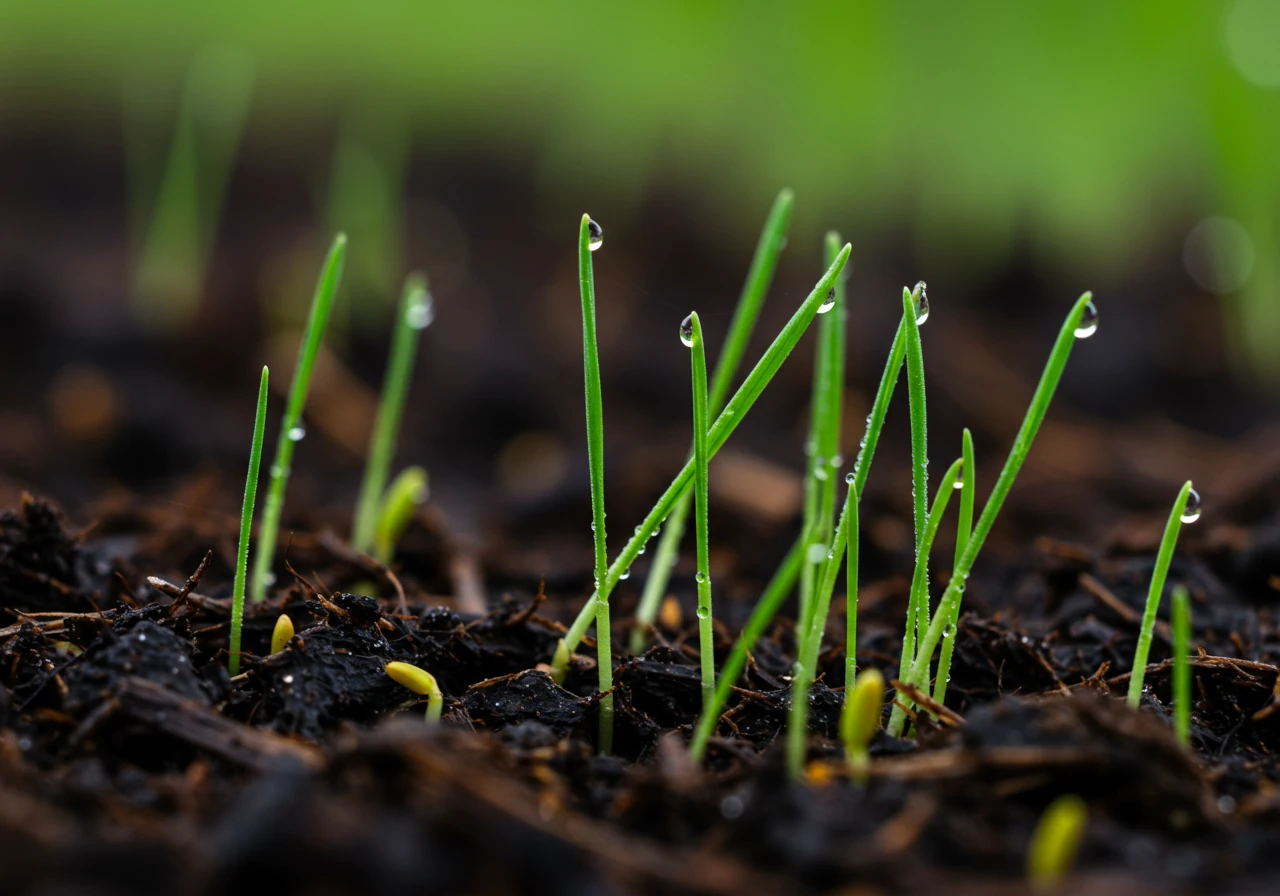
An encouraging close-up image capturing delicate, bright green new grass seedlings sprouting from the soil surface a week or two after overseeding.
New grass seedlings emerging after successful overseeding.

Alright, you've done the hard part – the seeding is complete! High five! But don't put your feet up just yet, lawn whisperer. Those tiny seeds need some serious TLC to transform into the lush green carpet you're dreaming of, especially here in the Ottawa area. Think of this next phase as nurturing your little grass babies. It's less back-breaking, but just as crucial.

Watering: The Golden Rule
Remember how we talked about that initial soil preparation? That groundwork helps, but now consistent moisture is key. Your mission, should you choose to accept it, is to keep the top inch of soil consistently damp, like a wrung-out sponge, *not* a swimming pool.
- *Initially:* Water lightly and frequently, maybe 2-3 times a day for 10-15 minutes, especially if dealing with slow-draining clay. You don't want to wash the seeds away!
- *Post-Sprouting:* Once you see green fuzz (yay!), gradually water less often but for longer periods. This encourages roots to grow down deep, searching for water.

Mowing: The First Haircut
Hold your horses (or lawnmowers)! Let the new grass grow to about 3-3.5 inches before its first trim. Make sure your mower blade is *sharp* (a dull blade tears grass, inviting disease). And never cut off more than one-third of the grass blade height at a time. Gentle does it!

Traffic Control: Keep Off the Grass (Seriously!)
Those new seedlings are delicate little things. Minimize foot traffic – kids, pets, your neighbour from Manotick popping over for a chat – as much as possible for the first few weeks. Give the grass a chance to establish strong roots without being trampled.

Weed Patrol: Patience is a Virtue
You *will* see weeds pop up alongside your grass. It’s inevitable. Resist the urge to apply weed killers right away, as these can harm your new grass. The best approach? Let the grass thicken up – it will crowd out many weeds naturally. Hand-pull any obvious offenders if you must. A robust lawn is the best long-term weed defence. Maintaining a tidy area around the lawn, perhaps like the professionals handle a city property cleanup service, can also help prevent weed seeds from blowing in.

Future Feeding: Fueling the Growth
Your starter fertilizer gave the seeds a kickstart. Plan for another feeding about 4-6 weeks *after* germination, once the lawn is actively growing and you've mowed it a couple of times. Use a balanced lawn fertilizer suited for established grass. Regular, appropriate feeding is part of good long-term lawn care, contributing to the overall health and look of your property – just like keeping things tidy with seasonal help, maybe even inspired by the thoroughness of a Metcalf yard cleanup service. A healthy, established lawn looks fantastic next to neat garden beds, which you can enhance further with services like professional mulching and edging. And remember, ongoing tidiness across your yard supports lawn health; if things get overwhelming, a comprehensive city yard cleanup service can always reset the stage.

Stick with this care plan, and you’ll be enjoying that thicker, healthier lawn before you know it! Happy growing! Check out our Google reviews to see what clients say!

Clay Soil Overseeding Cheat Sheet

Alright neighbours, let's cut to the chase! Tackling overseeding on that classic Ottawa clay *soil* can feel like wrestling a bear wearing muddy boots. But don't despair! Whether you're in Nepean, Osgoode, or anywhere blessed with this tricky *turf* base, these key tips will give your *grass seed* the fighting chance it deserves. Think of this as your quick guide to avoid common *gardening* pitfalls. Remember, getting the area ready *before* you start is vital; a good rake-up is essential, almost like doing a thorough pre-seeding tidy-up to remove debris.

Here's your clay-busting cheat sheet:

  • Aeration is Your Best Friend (Seriously!): If you do *one* thing, make it core aeration. Those little plugs pulled from the lawn are golden tickets for air, water, and seed to get past the compaction barrier. Don't skip this – it's the cornerstone of proper soil preparation for clay. Your grass roots will thank you!
  • Feed the Soil, Feed the Seed: After aerating, spread a thin layer (about ¼ inch) of compost or good quality screened topsoil. This organic matter helps break up clay over time and gives seeds a better start. Imagine you're making a cozy bed for them after clearing the area first, much like a city garden clean up service ensures no debris gets in the way.
  • Choose Tough Seeds: Go for *grass seed* blends designed for our climate and that handle clay well. Tall Fescues are often champs due to their deep roots. Read the bag – look for varieties known for resilience and suitability for your sun conditions.
  • Water Wisely, Not Wildly: Keep the seedbed *consistently moist* (not soggy!) until germination. This means light, frequent watering (maybe 2-3 times daily) initially. Once sprouted, water deeper but less often to encourage strong roots. It’s a key part of essential lawn care for new seedlings.

Stick to these basics, and you'll significantly boost your chances of turning patchy clay into a lush *lawn*. And remember, a healthy lawn loves a healthy neighbourhood – keeping the rest of your yard tidy, like the results from a Marionville yard cleanup service, can even help reduce weeds blowing onto your new grass! Happy overseeding!

FAQs: Your Nepean & Ottawa Overseeding Questions Answered

Absolutely, it's worth it! While clay soil presents challenges like compaction and slow drainage, overseeding *can* be very successful. The trick is *how* you do it. Proper preparation, especially core aeration and potentially adding a bit of compost, makes a world of difference. Don't just toss seed and hope – follow the right steps (like the ones we outlined earlier!), and you can definitely achieve a thicker, healthier *lawn*, turning patchy problems into lush *turf*. Consider professional garden maintenance services for ongoing care.

We know, it sounds like a hassle! But honestly? For clay *soil*, core aeration is pretty much non-negotiable for great overseeding results. It breaks up that dense structure, allowing critical air, water, and *grass seed* to penetrate. Skipping aeration is like trying to plant flowers on pavement – the seeds just won't get what they need. Think of aeration as step one in a full yard refresh; getting the foundation right is key, much like how a thorough Marionville yard cleanup service preps an area for success.

Great question! Besides skipping aeration (see above!), the most common blunder is probably improper watering. Either folks drown the seed on slow-draining clay, creating puddles and washing seed away, *or* they let the seedbed dry out completely after germination starts. Consistent, light moisture initially, followed by deeper, less frequent watering once sprouts appear, is crucial. Getting it right leads to amazing results – check out some real-life Clean Yards lawn transformations to see the potential!

Adding a thin layer (about ¼ inch) of good quality compost or screened topsoil *after* aerating is highly recommended for clay *soil*. It's not strictly *essential* if you aerate well, but it provides a much better environment for *grass seed* germination and helps improve soil structure over time. Spread it evenly with a rake *after* pulling the aeration plugs. It’s a great investment in your lawn’s future health, complementing other *gardening* best practices like those employed by a detailed Metcalf garden clean up service that focuses on soil and plant well-being. Also, review our privacy policy.

Patience, grasshopper! Germination time depends on the *grass seed* type, soil temperature, and moisture. Quick-germinating varieties like perennial ryegrass might show fuzz in 5-10 days, while Kentucky bluegrass can take 14-30 days. Clay soil might slow things down slightly if not perfectly prepped. Keep the faith (and the sprinkler handy!), follow the care steps, and you *will* see results. If weeks pass with no action, feel free to reach out – you can find our contact details easily, perhaps even starting from our Thank You page after browsing our site. For major cleanups before starting, consider services like the Ottawa property cleanup service.

Conclusion: Get Ready for Your Best Nepean Lawn Yet!

Okay, Nepean neighbours, you’ve survived the crash course in battling clay *soil* and winning the overseeding game! Phew. Remember, turning that patchy *lawn* into a neighbourhood showstopper isn't rocket science, but it does take a little know-how, especially with our local *landscaping* quirks. The big secrets? Don't skip that crucial *aeration* step to give roots a fighting chance, pick the right *grass seed* mix for our tough Ottawa climate, and water wisely to keep that seedbed happy. Getting good seed-to-*soil* contact is your golden ticket to lush *turf*.

Imagine your *lawn* looking thick and green, maybe even rivalling some of those beauties you see out in *Barrhaven* or *Manotick*! That fantastic Nepean *lawn* is totally within reach, even on stubborn clay.

Feeling a bit overwhelmed by the thought of renting aerators or timing everything just right for your *gardening* schedule? No worries! We’re here to help. Let the pros handle the heavy lifting with our expert *aeration and overseeding services*, designed specifically for lawns like yours right here in *Nepean* and across *Ottawa*. Or, if you're unsure about your lawn's specific needs, why not *book a lawn analysis* with us? Your best lawn yet is waiting – let's help you achieve it!

document.addEventListener('DOMContentLoaded', function() {// --- Progress Bar --- const progressBar = document.getElementById('progressBar'); function updateProgressBar() { const scrollTotal = document.documentElement.scrollHeight - document.documentElement.clientHeight; const scrolled = window.scrollY; const progress = (scrolled / scrollTotal) * 100; progressBar.style.width = progress + '%'; } window.addEventListener('scroll', updateProgressBar); updateProgressBar(); // Initial update// --- Back to Top Button --- const backToTopBtn = document.getElementById('backToTopBtn'); function toggleBackToTopButton() { if (window.scrollY > 300) { backToTopBtn.classList.add('visible'); } else { backToTopBtn.classList.remove('visible'); } } window.addEventListener('scroll', toggleBackToTopButton); toggleBackToTopButton(); // Initial checkbackToTopBtn.addEventListener('click', () => { window.scrollTo({ top: 0, behavior: 'smooth' }); });// --- Collapsible Sections (FAQ) --- const collapsibleTriggers = document.querySelectorAll('.article-container .collapsible-trigger'); collapsibleTriggers.forEach(trigger => { trigger.addEventListener('click', function() { this.classList.toggle('active'); const content = this.nextElementSibling; if (content.style.maxHeight && content.style.maxHeight !== '0px') { content.style.maxHeight = '0px'; content.style.paddingTop = '0'; content.style.paddingBottom = '0'; } else { // Temporarily set display to block to measure scrollHeight content.style.display = 'block'; content.style.maxHeight = content.scrollHeight + 'px'; content.style.paddingTop = '15px'; // Match CSS padding content.style.paddingBottom = '15px'; // Match CSS padding // Optionally reset display after transition if needed, though maxHeight 0 handles hiding setTimeout(() => { if (!this.classList.contains('active')) { content.style.display = 'none'; // Hide fully if closed quickly } }, 300); // Match transition duration } }); });// --- Tabs --- const tabButtons = document.querySelectorAll('.article-container .tab-button'); const tabContents = document.querySelectorAll('.article-container .tab-content'); const tabsContainer = document.querySelector('.article-container .tabs-container'); // Use container for delegation if preferredif (tabsContainer){ // Check if tabs exist before adding listeners tabsContainer.addEventListener('click', function(event) { if (event.target.classList.contains('tab-button')) { const targetTab = event.target.getAttribute('data-tab');// Deactivate all buttons and content tabButtons.forEach(button => button.classList.remove('active')); tabContents.forEach(content => content.classList.remove('active'));// Activate clicked button and corresponding content event.target.classList.add('active'); const activeContent = document.getElementById(targetTab); if (activeContent) { activeContent.classList.add('active'); } } }); }// --- Bar Chart Animation --- const chart = document.getElementById('soilChart'); if (chart) { const bars = chart.querySelectorAll('.article-container .bar');const animateChart = () => { const chartPosition = chart.getBoundingClientRect().top; const screenPosition = window.innerHeight;// Animate when the chart is partially visible if (chartPosition { const height = bar.getAttribute('data-height'); bar.style.height = height + '%'; }); // Optional: Remove listener after animation starts // window.removeEventListener('scroll', animateChartOnScroll); } };const animateChartOnScroll = () => { animateChart(); // Check visibility on scroll };window.addEventListener('scroll', animateChartOnScroll); animateChart(); // Initial check in case chart is already visible }// --- Timeline Animation Trigger --- const timelineItems = document.querySelectorAll('.article-container .timeline-item');const revealTimelineItems = () => { const triggerBottom = window.innerHeight * 0.85; // Trigger animation when item is 85% up the screentimelineItems.forEach(item => { const itemTop = item.getBoundingClientRect().top; if (itemTop < triggerBottom) { item.style.opacity = '1'; // Use CSS animation defined item.style.animationPlayState = 'running'; } // Optional: Could add logic to hide items again if they scroll out of view // else { item.style.opacity = '0'; item.style.animationPlayState = 'paused'; } }); };window.addEventListener('scroll', revealTimelineItems); revealTimelineItems(); // Initial check});
Share This Article
Facebook
X
Pinterest
Email
Print

Thank you for sharing!

Contact Us Today

To request a quote, kindly fill out the form below.

Where Can we Reach you?
Which Service Do You Require? (Click all that apply)
Provide a Breif Description of The Work You'd Like Done

Before You Go

We’re confident in our services, we offer a 30-day money-back guarantee. Not 100% satisfied? We’ll swiftly refund all labor costs. Your satisfaction is our top priority!

Get in touch today for expert service and satisfaction guaranteed. You won't regret it!

Where Can we Reach you?
Which Service Do You Require? (Click all that apply)
Provide a Breif Description of The Work You'd Like Done
Where Can we Reach you?
Which Service Do You Require? (Click all that apply)
Provide a Breif Description of The Work You'd Like Done
Where Can we Reach you?
Which Service Do You Require? (Click all that apply)
Provide a Breif Description of The Work You'd Like Done