
Guides
Garden Bed Edging Options for Ottawa Homeowners
A clean edge is the single biggest thing separating a sharp-looking garden bed from an average one. Before you call us for re-edging, here is every option worth considering, with real costs, real durability, and an honest take on where each one makes sense.
How to choose the right edge for your beds
Every edging option comes down to three decisions: budget (one-time install vs. annual re-edging), aesthetic (invisible and natural vs. a deliberate architectural feature), and how long you want it to last (a season vs. decades).
There is no single right answer. A heritage home in Old Ottawa South might look best with a simple spade edge and fresh mulch, while a new build in Barrhaven with crisp hardscape might benefit from a snap-edge install that never needs to be recut.
Our top picks for Ottawa properties are Spade / Natural Edge and Snap Edge. Natural stone is a beautiful upgrade for the right property, but for the majority of homeowners the first two give the best balance of appearance, cost, and long-term value.
Spade / Natural Edge
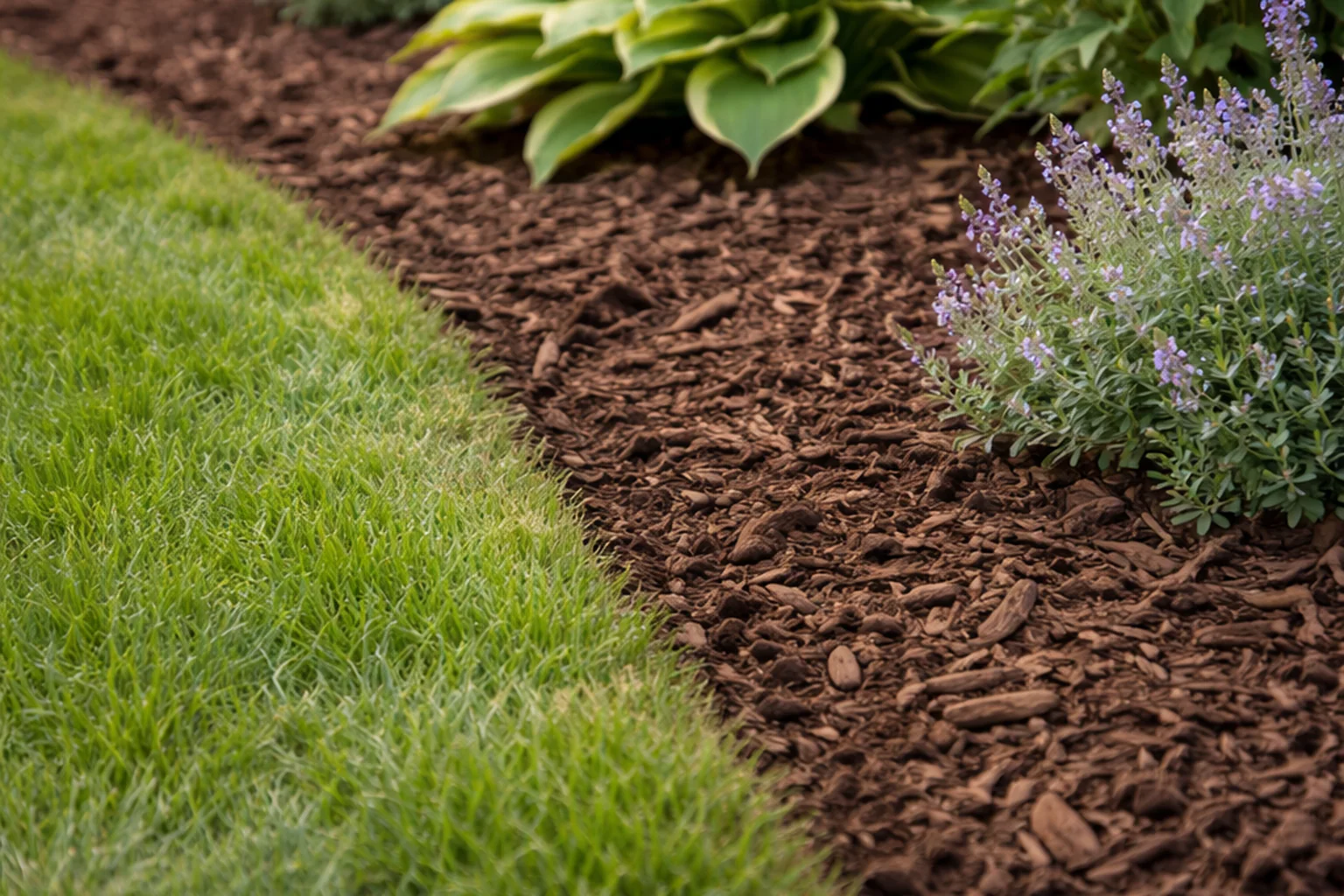
CleanYards PreferredA clean, V-cut trench between lawn and bed, with no hardscape material required.
A spade edge is a crisp, angled trench cut by hand or with a powered edger right where the lawn meets the bed. There is no plastic, metal, or stone involved. The shape of the trench itself holds the line, and fresh mulch or soil inside the bed hides the cut. It is the most common choice on Ottawa properties because it looks natural, flows with any bed shape, and is easy to reshape year after year as your plantings mature.
Pros
- Zero hardscape material cost, so you only pay for labour
- Works with any bed shape, including tight curves and island beds
- Easy to widen, narrow, or reshape the bed in future seasons
- Clean, traditional look that suits heritage and modern homes alike
- Root barrier effect helps slow lawn grass creeping into the bed
Cons
- The trench softens over the season and needs to be re-cut each spring (or every 12–18 months)
- Not a true physical barrier, so aggressive runners and stolons can still jump the gap
- Requires firm soil to hold a crisp edge; very sandy beds lose definition faster
- Typical cost
- $4 – $7 per linear foot (annual re-edging)
- Durability
- Holds a crisp line for 6–12 months between re-cuts
- Maintenance
- Re-cut annually each spring; top up mulch to maintain the visible depth
- Best for
- Homeowners who want a clean, natural look with no visible edging strip and full flexibility to reshape beds.
Our take: This is our #1 recommendation for most Ottawa properties. It looks the most natural, ages well with your landscape, and we can knock out an entire property in a day.
Snap Edge (Commercial Plastic)
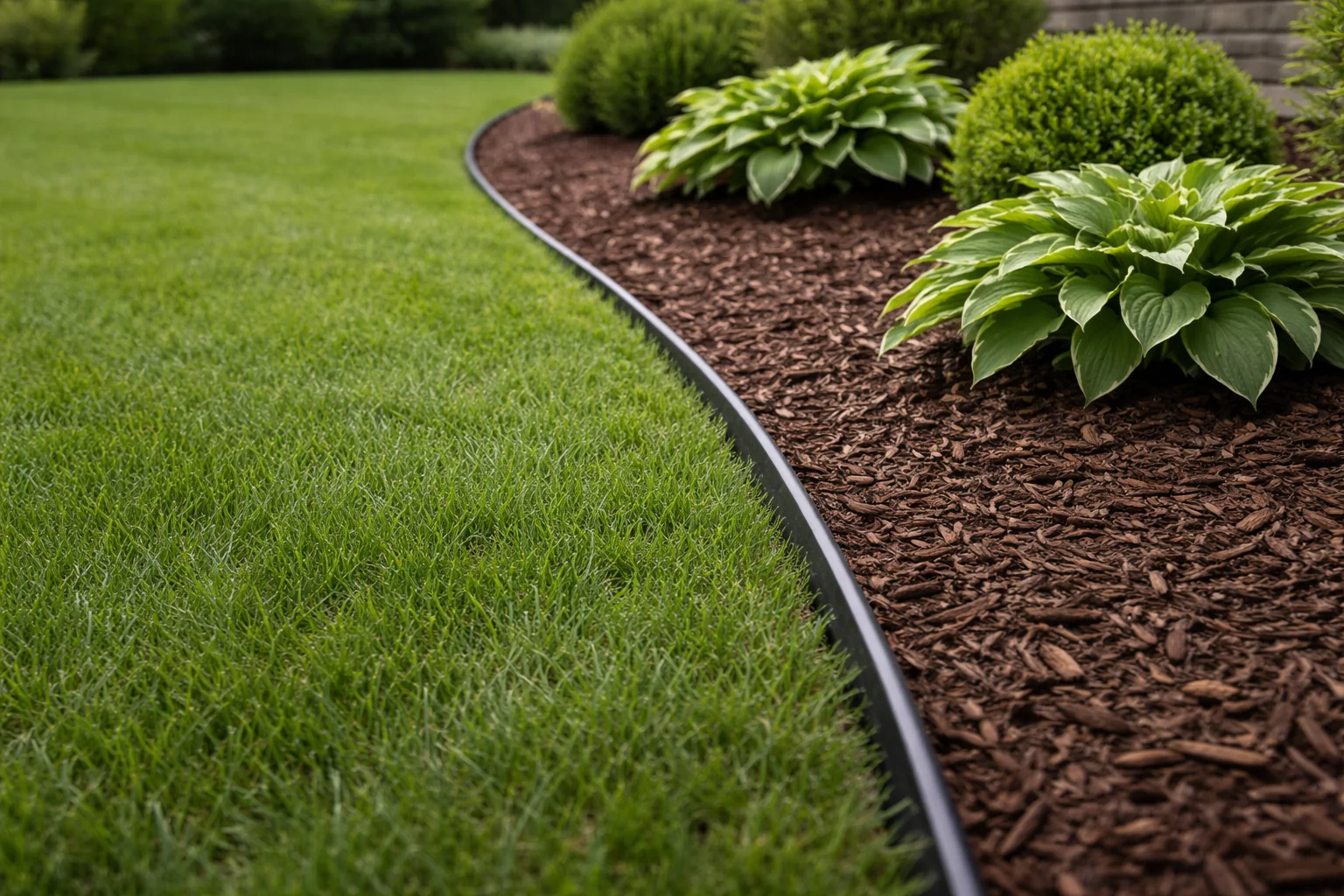
CleanYards PreferredPro-grade plastic edging anchored with steel spikes and hidden below the mulch line.
Snap Edge is a commercial-grade polyethylene edging system anchored into the soil with 10-inch steel spikes. It is not the flimsy black ribbon you see at big-box stores. The profile is thick, the connections lock together, and once it is mulched over, only a thin lip is visible at ground level. It gives you a long-lasting, defined boundary that follows the exact curve you lay out, and it will not rust or rot. Ottawa's frost/thaw cycles do catch up with it eventually, so expect around a decade of service before sections start lifting and a reinstall is needed.
Pros
- Permanent, physical barrier that stops lawn grass from creeping into the bed
- Bends to match any curve, but holds its shape once the spikes are set
- Hidden under mulch, so you get the function without a visible border
- Flexes with frost movement better than rigid materials, though it isn't fully frost-proof
- No annual re-cutting. Install once and leave it alone for about a decade.
Cons
- Material and labour are higher upfront than a spade edge
- Harder to reshape the bed later, since you have to pull the spikes and re-route the strip
- If installed too shallow or without the correct spike spacing, sections can lift over time
- Typical cost
- $12 – $18 per linear foot installed
- Durability
- Around 10 years in Ottawa. Frost/thaw cycles eventually lift and loosen even well-installed runs.
- Maintenance
- None. Just an occasional visual check to confirm no sections have lifted after a hard freeze/thaw.
- Best for
- Homeowners who want the edge done once and never want to think about re-edging again.
Our take: Our second pick, and our go-to whenever a homeowner wants to skip the annual re-cut. We only install commercial-grade Snap Edge, not the thin homeowner plastic from retail stores. Installed correctly, you can count on roughly a decade of service before frost heave starts lifting sections and it needs to be reset.
Natural Stone Edging
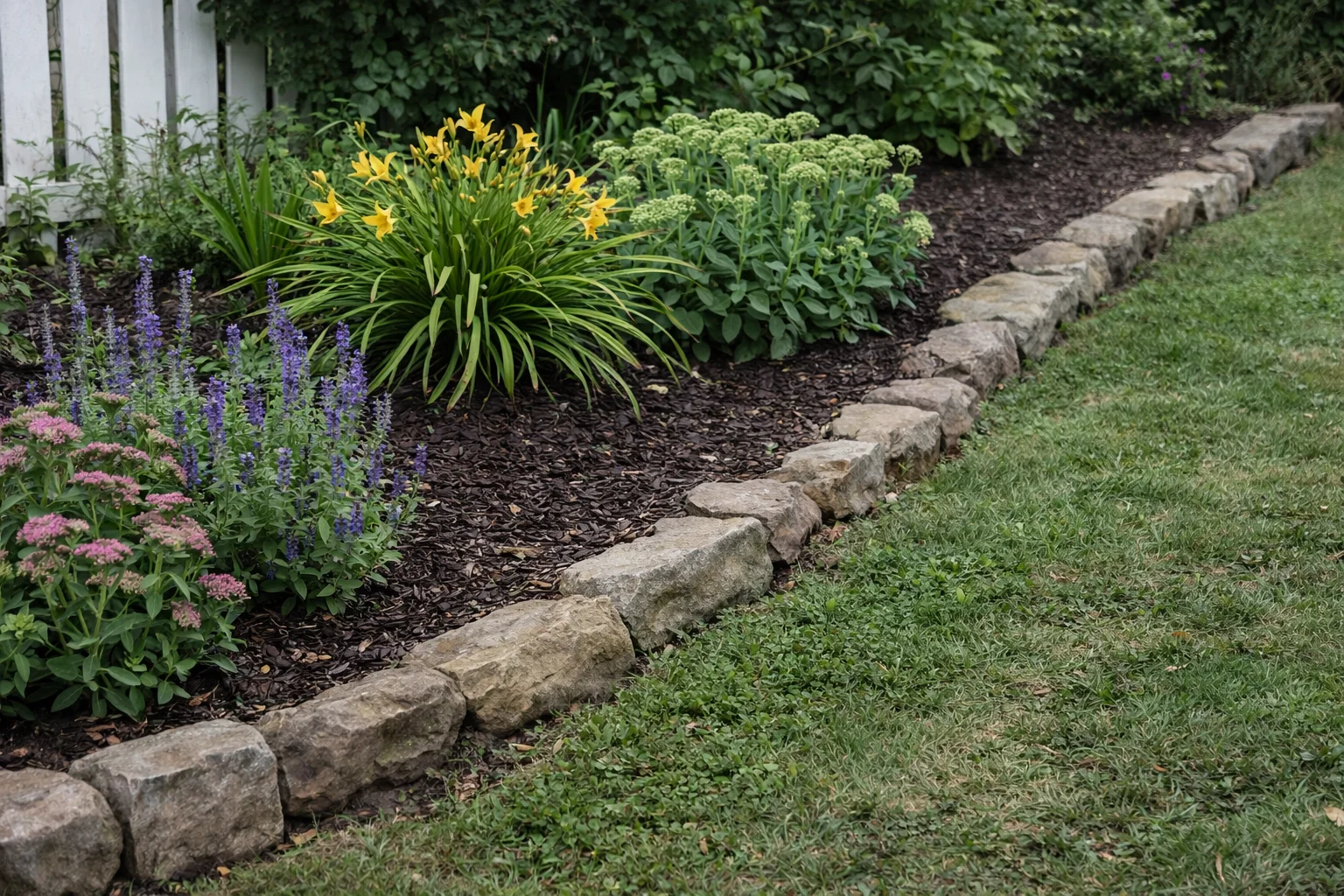
Flagstone, fieldstone, or armour stone set as a border along the bed.
Natural stone edging uses fieldstone, flagstone, or armour stone to create a rustic, organic border. Stones can be dry-stacked flush with the lawn or set taller as a low retaining edge that lifts the bed a few inches above grade. It is the most premium-looking option on this list and it pairs beautifully with country properties, cottage gardens, and homes with existing stone features. It also happens to be the most expensive and the hardest to move once it is in.
Pros
- Premium, timeless look that improves with age
- Works as a low retaining wall when stones are stacked 6–12 inches high
- Every run is unique, since no two stones match exactly
- Essentially zero maintenance once set
Cons
- Highest material and labour cost of any option here
- Uneven stone heights can make line-trimming and mowing slower
- Very heavy, so reshaping the bed means moving significant weight
- Not every property style suits the rustic aesthetic
- Typical cost
- $35 – $75+ per linear foot installed
- Durability
- Effectively permanent. Decades without any attention.
- Maintenance
- Pull weeds from between stones once or twice per season
- Best for
- Larger rural and estate properties, cottage-style gardens, and yards with existing stone walls or patios.
Still not sure which edge fits your yard?
Send us a few photos of your beds and we will walk you through the options that make the most sense for your property, your budget, and the look you are after. Most homeowners end up with a spade edge on the main beds and a snap-edge install along high-traffic areas, but every yard is different.